
NATO’s Fragile Foundation: How Trump’s Greenland Stance Undermined Alliance Trust
In a period marked by escalating global tensions and a renewed commitment from European allies and Canada to bolster Ukraine’s defenses and their own military budgets, the North Atlantic Treaty Organization (NATO) finds itself in a paradoxical state. Despite billions poured into collective security, the alliance’s credibility as a unified force, particularly under U.S. leadership, has suffered a significant blow. At the heart of this erosion of trust lies former U.S. President Donald Trump’s controversial overtures towards Greenland, a semi-autonomous territory of NATO ally Denmark, alongside his disparaging remarks about allied troops.
A Deepening Rift: The Greenland Controversy and Beyond
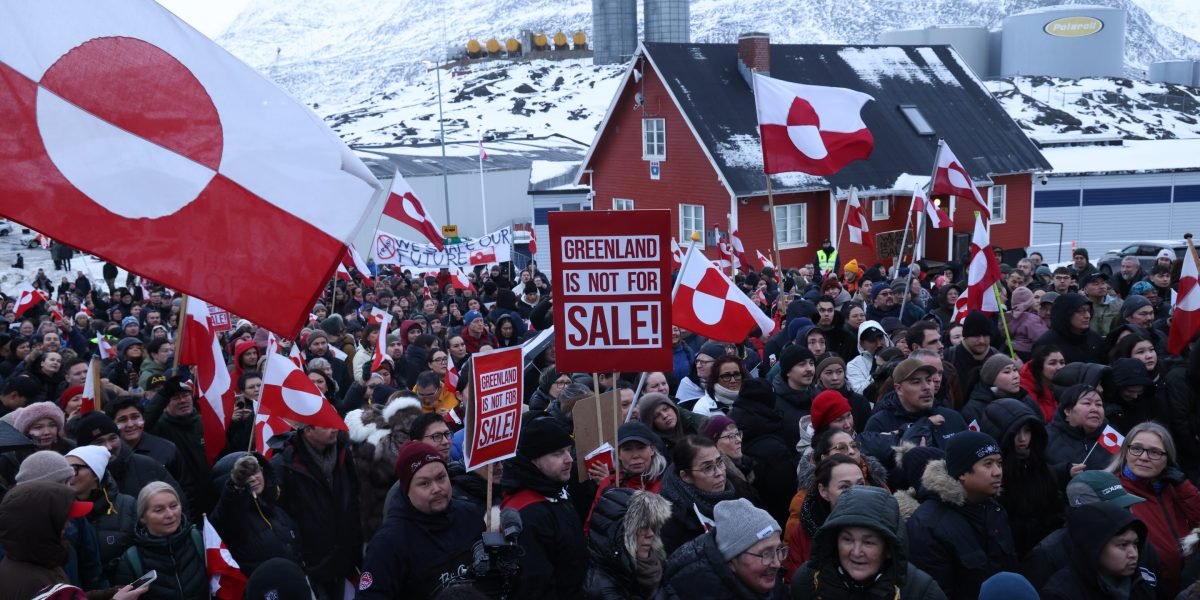
The notion of the United States acquiring Greenland, repeatedly floated by President Trump, sent shockwaves through the 32-nation military organization. This unprecedented suggestion, targeting the territory of a sovereign ally, was not merely a diplomatic gaffe but, as Sophia Besch of the Carnegie Europe think tank articulated, “crossed a line that cannot be uncrossed.” This breach, she argued, weakens the alliance in a lasting way, irrespective of any direct force or sanctions. Further compounding the strain were Trump’s critical comments regarding the contributions of NATO allies’ troops in Afghanistan, drawing widespread condemnation and raising serious questions about the U.S. commitment to its partners.
While the immediate furor over Greenland has receded, the underlying infighting has severely hampered NATO’s capacity to deter adversaries. This internal discord has not gone unnoticed by Russia, NATO’s primary geopolitical threat. Russian Foreign Minister Sergey Lavrov openly acknowledged the “major upheaval for Europe,” indicating that Moscow is keenly observing the cracks in the alliance’s unity. Effective deterrence against Russia hinges on President Vladimir Putin’s conviction that NATO would retaliate if his aggression extended beyond Ukraine – a conviction that now appears precarious.
Bolstering Defenses, Battling Distrust
For decades, U.S. leaders have criticized European allies for insufficient defense spending, a critique that intensified relentlessly under Trump’s administration. In response, European nations and Canada pledged in July to significantly increase their defense investments, aiming to allocate 5% of their gross domestic product to defense. This ambitious target includes matching the U.S. core defense spending of approximately 3.5% of GDP by 2035, with an additional 1.5% earmarked for security-related infrastructure projects.
NATO Secretary-General Mark Rutte has lauded these pledges as evidence of the alliance’s robust health and military prowess, even crediting Donald J. Trump for making NATO “stronger than it ever was.” However, Rutte’s public flattery of the American leader, particularly given his role in preventing a potential U.S. withdrawal from NATO, has raised eyebrows. Notably, he has consistently sidestepped direct commentary on the Greenland rift, highlighting the delicate balance required to maintain alliance cohesion.
Article 5 Under Scrutiny: The Alliance’s Core Principle
The Inviolable Pledge
Formed in 1949 to counter the Soviet threat, NATO’s deterrence rests on the foundational principle of collective security enshrined in Article 5: an attack on one ally is an attack on all. This pledge underscores the belief that the territories of all 32 member states must remain inviolate. Trump’s designs on Greenland directly challenged this core tenet, even though Article 5 typically applies to external aggression and requires unanimous consent for activation in internal disputes.
Undermining America’s Interests
U.S. Senators Jeanne Shaheen (Democrat) and Lisa Murkowski (Republican) articulated the profound implications in a New York Times op-ed: “Instead of strengthening our alliances, threats against Greenland and NATO are undermining America’s own interests.” They warned that suggestions of seizing or coercing allies to sell territory project unpredictability, weaken deterrence, and offer adversaries precisely what they desire: proof of democratic alliances’ fragility and unreliability.
Even prior to the Greenland escalation, many European allies harbored doubts about Trump’s willingness to defend them in the event of an attack. Trump, in turn, expressed skepticism about allies reciprocating aid. His controversial questioning of European and Canadian troops’ sacrifices in Afghanistan further fueled anger, though he later partially walked back his remarks. U.S. Secretary of State Marco Rubio, however, dismissed criticisms of Trump undermining the alliance, arguing that stronger NATO partners grant the U.S. more flexibility globally, reflecting a “reality of the 21st century.”
The Unwavering Russian Threat
Despite NATO’s renewed focus on increased spending, Moscow appears largely undeterred. The EU’s foreign policy chief, Kaja Kallas, recently underscored the grim reality: “it has become painfully clear that Russia will remain a major security threat for the long term.” She detailed a litany of ongoing threats, including cyberattacks, sabotage against critical infrastructure, foreign interference, information manipulation, military intimidation, territorial threats, and political meddling. This persistent and multifaceted aggression from Russia highlights the urgent need for a truly unified and resolute NATO, even as internal divisions continue to test its resilience.
For more details, visit our website.
Source: Link