
China’s Robotic Ascent: Why Your First Humanoid Coworker Will Likely Be Made in the East
The scene at the World Artificial Intelligence Conference in Shanghai is a glimpse into a future rapidly taking shape. Amidst the bustling halls along the Huangpu River, a 4-foot-tall humanoid robot captivates, its movements akin to a tipsy dancer, leaping from leg to leg, arms flailing, before abruptly halting and striding forward with an outstretched arm. This isn’t just a spectacle; it’s a potent symbol of China’s aggressive push to dominate the next frontier of automation.
Beyond the Dazzling Demos: The Current Reality of Humanoids
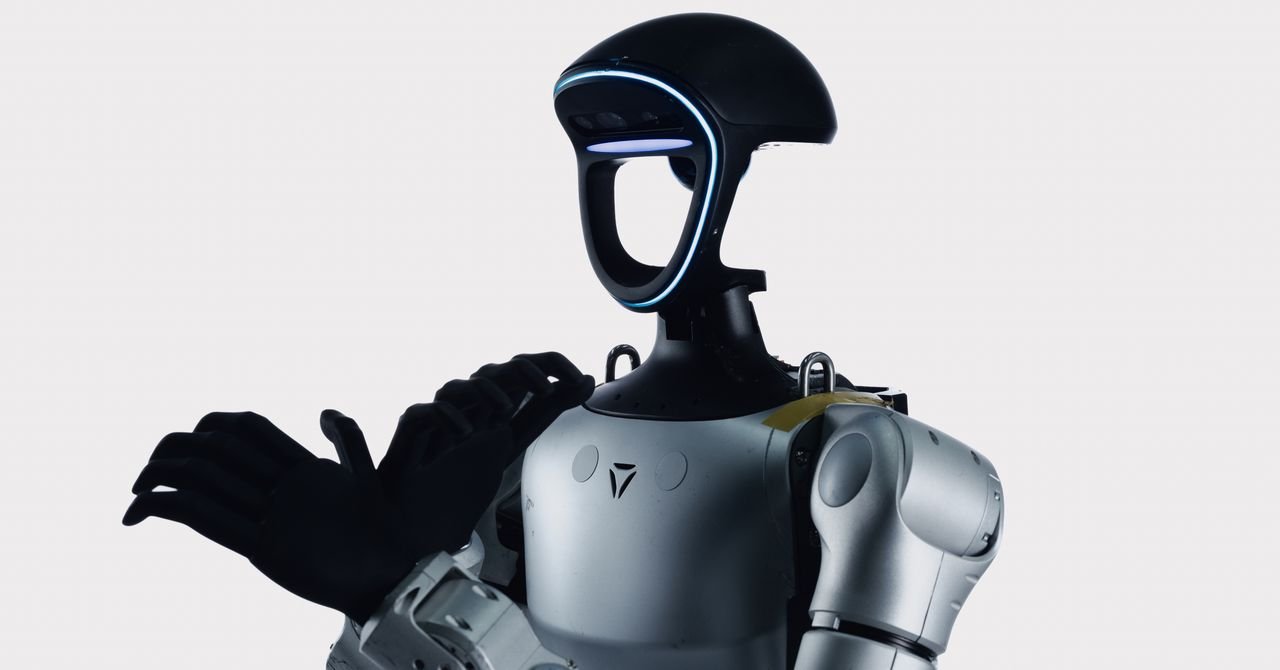
While the convention center teems with an array of humanoids—some dancing, others carrying boxes, and even robot dogs on patrol—the impressive displays often mask a simpler truth. Many of these robots, for now, are still guided by human hands, their high-level instructions fed via game controllers. They excel at maintaining balance and executing pre-programmed routines, but the nuanced decisions of navigation, interaction, or complex manipulation still fall to their human operators. A significant limitation also lies in their physical design: many humanoids lack dexterous fingers, their arms ending in stumps, restricting them to lifting and carrying rather than grasping.
The Inevitable March of the Robotic Workforce
Despite these present-day constraints, the trajectory of humanoid integration into the global workforce is undeniable. Industry giants are already making moves; Amazon, for instance, is reportedly testing humanoids from American startup Agility, with leaked memos suggesting a significant shift towards robotic labor in the coming years. Financial powerhouses echo this sentiment: Bank of America analysts project 10 million humanoid shipments annually by 2035, while Morgan Stanley forecasts a staggering billion humanoids in use globally by 2050. Crucially, almost a third of these—302.3 million—are predicted to be in China, dwarfing the US’s projected 77.7 million.
Unitree: China’s Unrivaled Robotics Champion
At the forefront of this revolution is Hangzhou-based Unitree, a company rapidly establishing itself as a global leader. While competitors like Elon Musk’s Optimus are still finding their footing, Unitree’s robots are performing sprints, executing kung-fu kicks, and even pulling off acrobatic backflips. The dancing greeter at the Shanghai conference? A Unitree creation. What truly sets Unitree apart, beyond its advanced capabilities, is its affordability. Its legged robots cost tens of thousands of dollars or less—a mere tenth of the price of a typical US humanoid.
Unitree isn’t just a startup; it’s a national champion, reportedly eyeing a $7 billion IPO in Shanghai. But even if Unitree were to falter, China’s ambition wouldn’t. A staggering 200-plus other Chinese companies are concurrently developing humanoids, a proliferation so intense that the Chinese government has issued warnings about potential overcapacity and redundant efforts. In stark contrast, the US boasts only about 16 prominent firms in the same space.
Hangzhou: The Epicenter of Innovation
Unitree’s home city of Hangzhou, a mere 110 miles from Shanghai, is more than just a picturesque locale known for its West Lake. It’s a vibrant hub of technological innovation, home to Alibaba, Ant Group, and a burgeoning ecosystem of AI startups, including DeepSeek, a developer of globally popular open-source AI models. Unitree itself stands out, not only for its diverse range of legged robots but also for its profitability.
The company, largely off-limits to visitors as it gears up for its IPO, bears the marks of intense development. Its headquarters is described as “battleworn,” with stairs visibly damaged from robots practicing heavy payload carries. Robotics entrepreneur Mike Cho, who has visited, paints a vivid picture: “Everywhere there are broken robots, broken parts, and broken concrete.” This raw, relentless pursuit of innovation is personified by Unitree’s CEO, Wang Xingxing, a celebrated figure in China who has even been invited to events hosted by Premier Xi Jinping, alongside other tech luminaries.
The Future is Here, and It’s Speaking Mandarin
With such overwhelming statistics, technological prowess, and governmental backing, the conclusion becomes clear: the first nation to truly integrate humanoids into everyday life, to reach a million robot coworkers, will undoubtedly be China. The global race for robotic supremacy is on, and the East is pulling decisively ahead.
For more details, visit our website.
Source: Link