

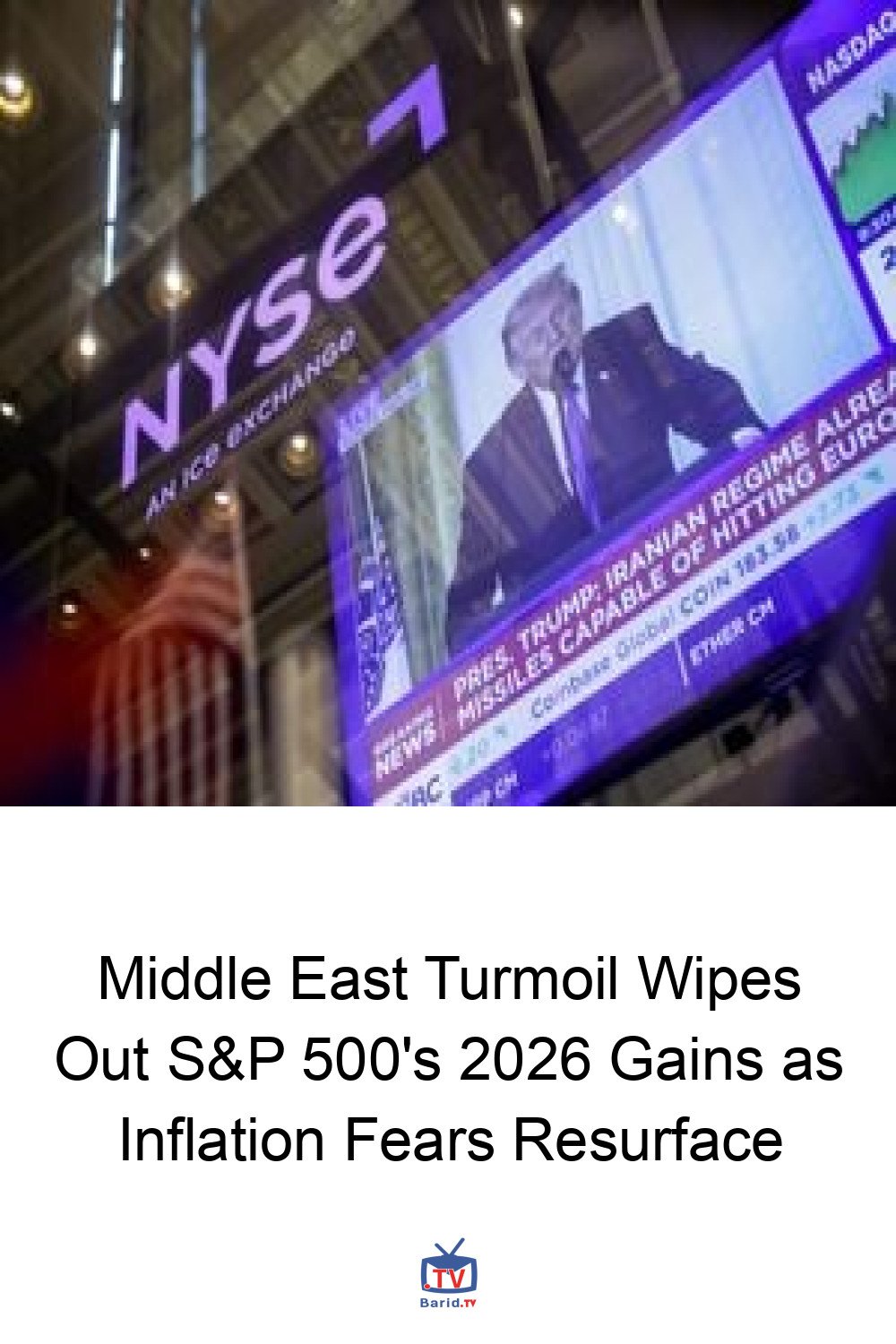
Middle East Turmoil Wipes Out S&P 500’s 2026 Gains as Inflation Fears Resurface
Wall Street faced a stark reality check this week, as escalating geopolitical tensions in the Middle East sent shockwaves through global markets. The S&P 500, a key benchmark for U.S. equities, dramatically surrendered all its gains for 2026, plunging to its lowest level in over two months and signaling a significant repricing of risk across the financial landscape.
The Geopolitical Jolt: Energy Prices and Inflation Fears
The primary catalyst for this sudden market downturn lies squarely in the intensifying Middle East conflict. Fears of a widening regional confrontation immediately translated into a surge in crude oil and natural gas prices. Threats to block vital shipping lanes like the Strait of Hormuz, coupled with reported production halts by regional energy producers, ignited supply anxiety that quickly spilled beyond the commodities desk.
This isn’t merely a transient commodity spike; investors are now pricing in a “longer, stickier inflation problem.” The prospect of higher energy costs permeating the global economy has forced a fundamental re-evaluation of the inflation outlook, directly impacting expectations for monetary policy.
A Shift in Monetary Policy Expectations
The immediate consequence of these inflationary fears was a recalibration of the Federal Reserve’s rate-cut calendar. Treasuries, typically a safe haven during market turmoil, offered little comfort as the 10-year yield pushed higher. Traders swiftly shifted their expectations for the next Fed rate cut, moving it from July to September. Concurrently, the market’s volatility gauge, the VIX, popped to a three-month high, nearing levels last seen when markets began their upward turn in October, a clear signal that hedging strategies are back in focus.
Broad Market Contagion: Sectors and Credit Under Scrutiny
The market selloff was far from isolated, acting as a stress test across various sectors. Travel-related stocks bore the brunt of rising crude prices, while miners experienced declines. Small-cap companies, often characterized by thinner margins and greater refinancing risk, dropped harder than their larger counterparts, finding themselves in the usual penalty box during periods of heightened uncertainty.
Cracks in the Credit Market?
Perhaps most concerning for traders were the emerging signs of strain in credit markets. In Europe, default insurance costs jumped significantly, with the iTraxx Crossover index (representing junk bonds) rising to approximately 270 basis points and the iTraxx Main (investment grade) reaching about 57 basis points on Monday. While such movements don’t guarantee a crisis, they certainly indicate that the market is demanding a higher premium for optimism.
Stateside, the private credit sector delivered its own plot twist. Blackstone’s flagship private credit fund, BCRED, reported substantial withdrawals totaling $3.7 billion during the quarter, with redemption requests reaching 7.9%. This prompted Blackstone to lift its usual redemption cap to 7% and inject $400 million of employee capital into the fund to help meet the demand, highlighting potential liquidity pressures in this rapidly growing asset class.
The Cost of Energy Risk
Taken together, these developments paint a picture far more complex than simply “the S&P had a bad day.” Instead, global markets are undergoing a profound repricing of energy risk, with the Federal Reserve’s carefully planned monetary policy calendar becoming collateral damage. As the S&P 500 retreats to its year-start levels, the overarching question for investors and policymakers alike becomes: What is the true cost of stability in an increasingly volatile world?
For more details, visit our website.
Source: Link