
Nvidia Accelerates Autonomous Future with 2027 Robotaxi Ambition
Nvidia, the chipmaking titan, is charting an ambitious course into the future of transportation, announcing plans to power Level 4 robotaxi services as early as 2027. This bold move underscores the company’s strategic pivot, positioning self-driving cars and robotics as its second most critical growth vector, trailing only its dominant AI infrastructure business.
Driving Innovation: Nvidia’s AI and Software Ecosystem
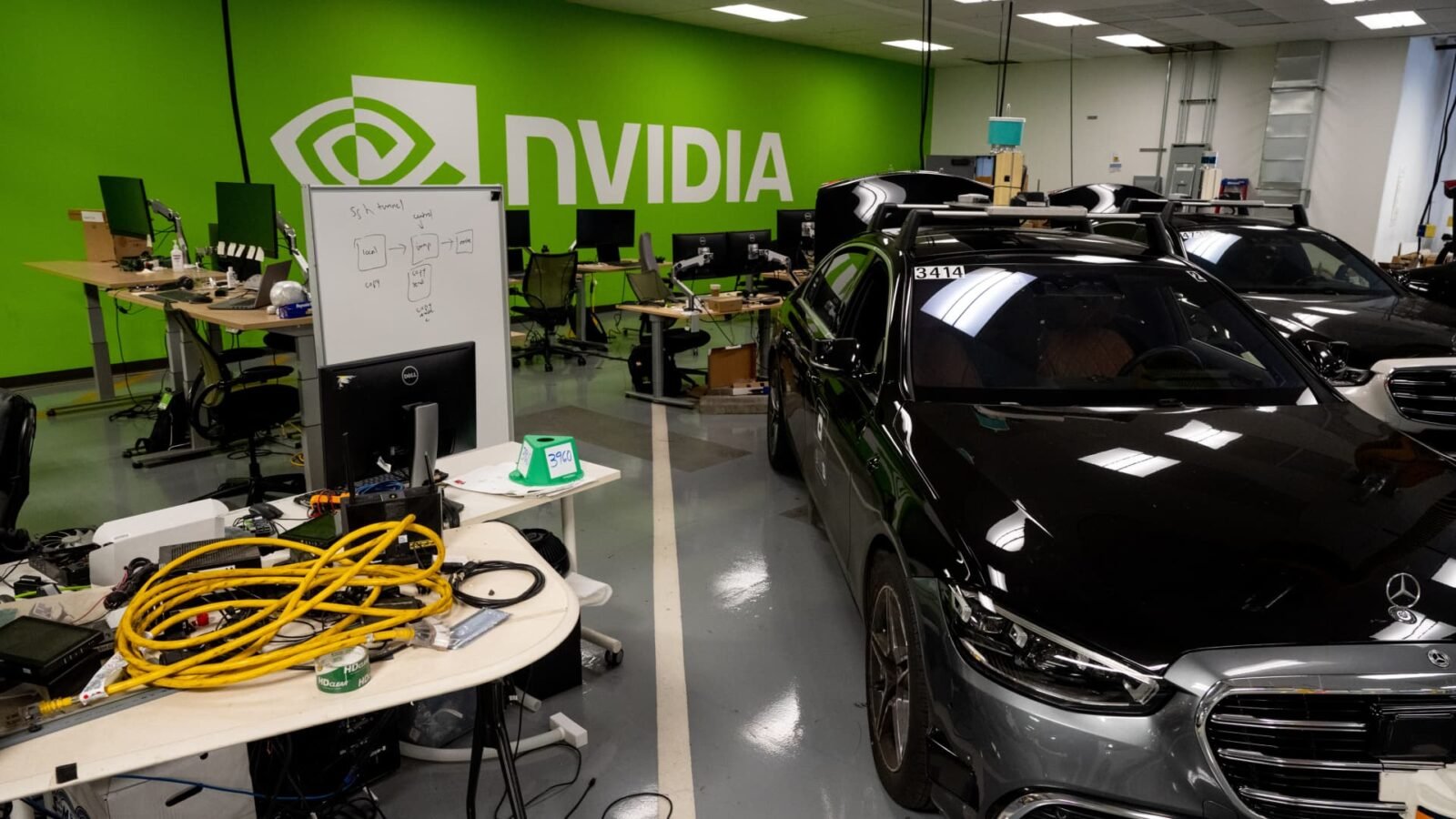
At the heart of Nvidia’s autonomous vehicle strategy lies its formidable AI chips and the sophisticated Drive AV software stack. These technologies are designed to enable fleets of autonomous vehicles to operate without human intervention in predefined regions – the hallmark of “Level 4” autonomy. Xinzhou Wu, Nvidia’s vice president of automotive, highlighted the company’s intent to collaborate closely with partners, ensuring a robust and gradual rollout. While automotive and robotics currently represent a modest fraction of Nvidia’s total revenue, the company’s long-term vision, as articulated by CEO Jensen Huang, foresees a future where “a billion cars on the road will all be autonomous.”
Strategic Partnerships Paving the Way
Nvidia is not navigating this complex landscape alone. The company has already forged significant alliances, including a robotaxi partnership with Uber announced in October. Furthermore, Mercedes-Benz models slated for release in late 2026 are expected to leverage Nvidia’s technology for advanced city navigation, including challenging urban environments like San Francisco. Beyond direct integration into vehicles, Nvidia also offers its renowned AI chips and simulation software to automotive companies, empowering them to train self-driving models and accelerate development cycles. The Drive AGX Thor automotive computer, priced at approximately $3,500 per chip, is touted as a solution to reduce R&D costs and expedite market entry for self-driving features.
The Robotaxi Revolution: Beyond Personal Ownership
The burgeoning robotaxi market, currently spearheaded by players like Alphabet’s Waymo with commercial services in multiple U.S. cities, presents a significant opportunity for Nvidia. The company’s latest announcement signals a clear intent to target self-driving fleets in addition to consumer-owned autonomous vehicles. This dual approach allows Nvidia to capitalize on both the ride-sharing economy and the evolving personal mobility landscape. Customization is key, with Nvidia working alongside car manufacturers to fine-tune its technology, from acceleration profiles to overall in-car experience, ensuring seamless integration and brand differentiation.
A Glimpse into the Future: The San Francisco Test Drive
Reporters and analysts recently experienced Nvidia’s self-driving capabilities firsthand during an hour-long ride through the notoriously challenging streets of San Francisco in a 2026 Mercedes-Benz CLA sedan. Operating at what Nvidia terms “Level 2 Plus Plus” – akin to Tesla’s Full Self-Driving mode – the vehicle autonomously handled approximately 90% of the journey. While the ride was largely uneventful and comfortable, a safety driver intervened during a particularly complex traffic jam involving multiple buses and another autonomous vehicle. This incident underscores the ongoing complexities and the critical need for continued development before full Level 4 deployment. Nevertheless, the experience demonstrated Nvidia’s significant progress and the potential for a future where drivers can focus on conversation rather than navigation, even in dense urban settings.
Nvidia’s Vision: The Autonomous Horizon
As Nvidia continues to invest heavily in its automotive division, its vision for an autonomous future becomes increasingly clear. By combining powerful AI hardware with sophisticated software and strategic partnerships, the company aims to be a foundational enabler of the global transition to self-driving vehicles, transforming both personal mobility and public transportation in the years to come.
For more details, visit our website.
Source: Link