





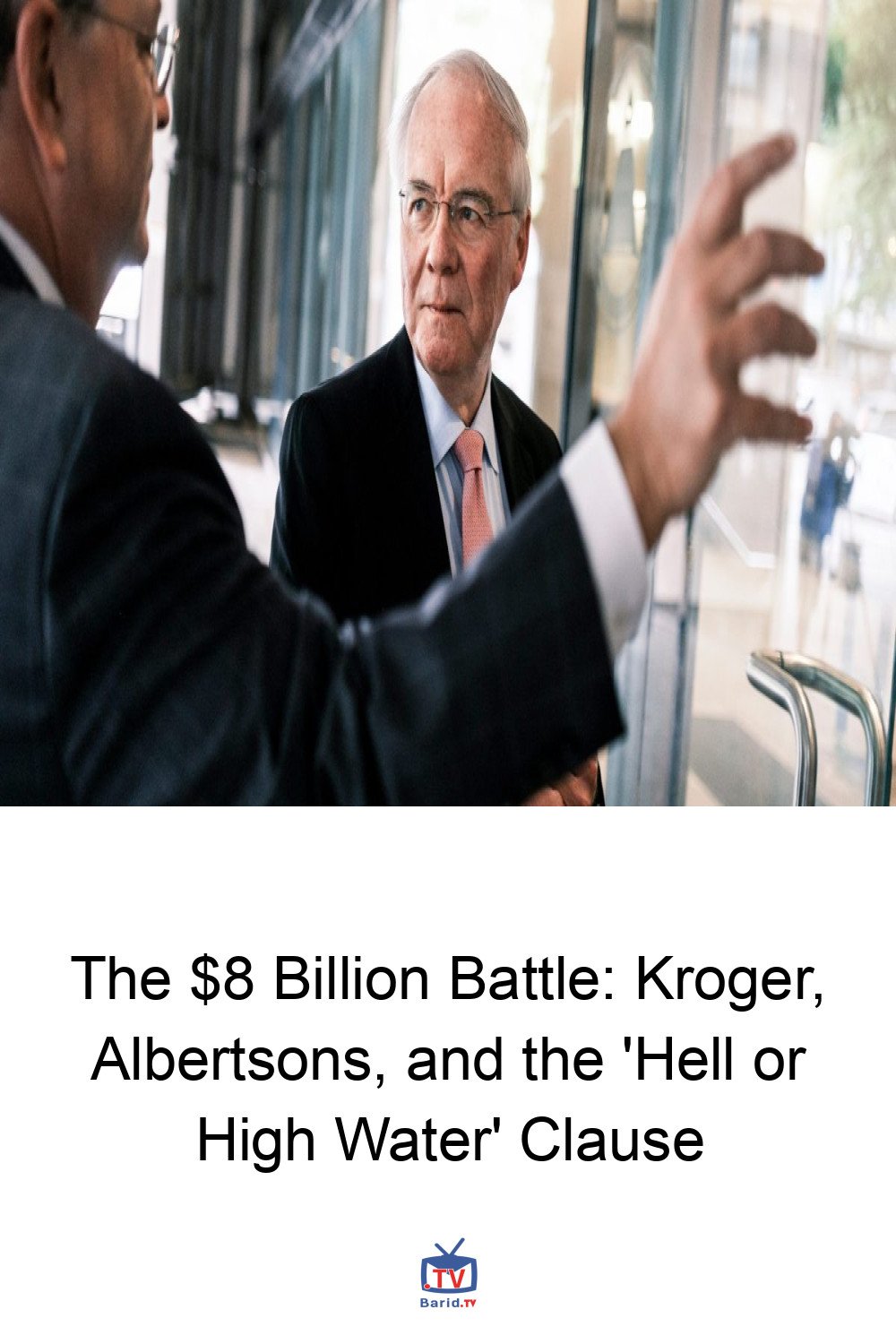
In the high-stakes world of corporate mergers, a simple promise to use “reasonable best efforts” often suffices. It implies a good-faith attempt to navigate regulatory hurdles. However, when supermarket behemoth Kroger set its sights on acquiring Albertsons for a staggering $24.6 billion in 2022, the stakes were considerably higher. Kroger didn’t just promise to try; it committed to taking “any and all actions” necessary for regulatory approval – a legal pledge often dubbed a “hell or high water” clause. This extraordinary commitment was, understandably, interpreted by Albertsons as an ironclad guarantee of Kroger’s dedication to closing the deal.
When the Waters Rose: The Deal’s Demise
The “high water” arrived in December 2024. In a swift one-two punch, a federal judge in Oregon, followed by a state judge in Seattle, granted the Federal Trade Commission’s (FTC) and Washington’s Attorney General’s requests to block the merger. The very next day, a stunned Albertsons terminated the agreement and promptly sued Kroger. The core of Albertsons’ grievance: despite the “any and all actions” pledge, they allege Kroger ‘bailed’ when the going got tough.
This week, the Delaware Court of Chancery commenced hearings in what promises to be a landmark legal showdown. Formidable legal teams from both grocery giants are now presenting their cases, with the court tasked with determining whether Kroger truly exhausted all possible avenues to honor its contractual obligations. Early indications from pre-trial briefings suggest a challenging road ahead for Kroger.
The Stakes: An $8 Billion Question Mark
Should Albertsons prevail, the financial repercussions for Kroger could be monumental. Plaintiff calculations suggest a potential damage award exceeding $8 billion. This figure carries a sharp irony, as Albertsons intends to argue that Kroger ultimately prioritized its financial returns and strategic assets over its explicit contractual duties. This case is not merely about a failed merger; it’s a critical watch for every dealmaker in America, as its outcome could redefine the legal interpretation of “any and all actions” clauses.
Kroger’s Defense: A Valiant Effort Against Regulatory Headwinds
Kroger’s defense hinges on the argument that it genuinely, exhaustively tried. The company asserts it invested heavily in the approval process and possessed every economic incentive to see the deal through. Their narrative suggests that the Biden administration’s increasingly skeptical regulators were simply never satisfied with Kroger’s proposed divestiture plans, which aimed to protect competition and consumers. Kroger’s stance is clear: they cannot be held accountable for the politically motivated actions of external regulatory bodies.
Albertsons’ Accusation: Prioritizing Assets Over Obligations
Albertsons, however, counters that the contract’s language is unambiguous: merely ‘trying hard’ falls short of the “any and all actions” requirement. Even former Kroger CEO Rodney McMullen reportedly conceded under oath that Kroger had agreed to do whatever the contract demanded. A standard strategy to mitigate anti-competitive concerns in such large mergers involves spinning off a new, viable competitor. This isn’t just about offloading a certain number of stores or assets; it’s about creating a genuinely competitive entity. Albertsons alleges that Kroger failed even in this fundamental aspect, focusing instead on safeguarding its ‘crown jewels’ – its most valuable stores and assets – and offering only ‘leftovers’ to any potential new competitor. This alleged strategy, Albertsons argues, led directly to the courts and the FTC deeming the proposed competition inadequate.
The Shadow of Executive Incentives and Departures
Further complicating Kroger’s position are allegations that executive compensation structures may have inadvertently incentivized resistance to comprehensive divestitures. Senior leaders reportedly stood to gain bonuses up to six times their base salaries if the merger closed while achieving Kroger’s financial targets. This, Albertsons suggests, created a perverse incentive to resist selling off more valuable stores or assets, even if it jeopardized the entire deal.
Adding to the intrigue are the unexplained departures of key executives. Rodney McMullen, Kroger’s Chairman and CEO throughout much of the approval battle, and CFO Gary Millerchip both left the company at crucial junctures. McMullen’s exit was vaguely attributed to “unspecified personal behavior issues,” while Millerchip moved to a lucrative position at Costco. The true reasons behind McMullen’s departure, in particular, remain shrouded in secrecy, fueling speculation.
Beyond the Headlines: A Landmark Contract Case
Ultimately, the Delaware court’s task is not to dissect corporate culture, executive avarice, or the specifics of a divestiture process. At its core, this is a contract dispute. Kroger made an exceptionally demanding promise to take “any and all actions” to secure merger approval. Albertsons contends that when fulfilling this promise became too costly – specifically, when it required divesting assets Kroger wished to retain – Kroger capitulated, failing to uphold its commitment. The outcome of this legal battle will send ripples through the M&A landscape, potentially setting a new precedent for what ‘hell or high water’ truly entails.
For more details, visit our website.
Source: Link







Leave a comment