





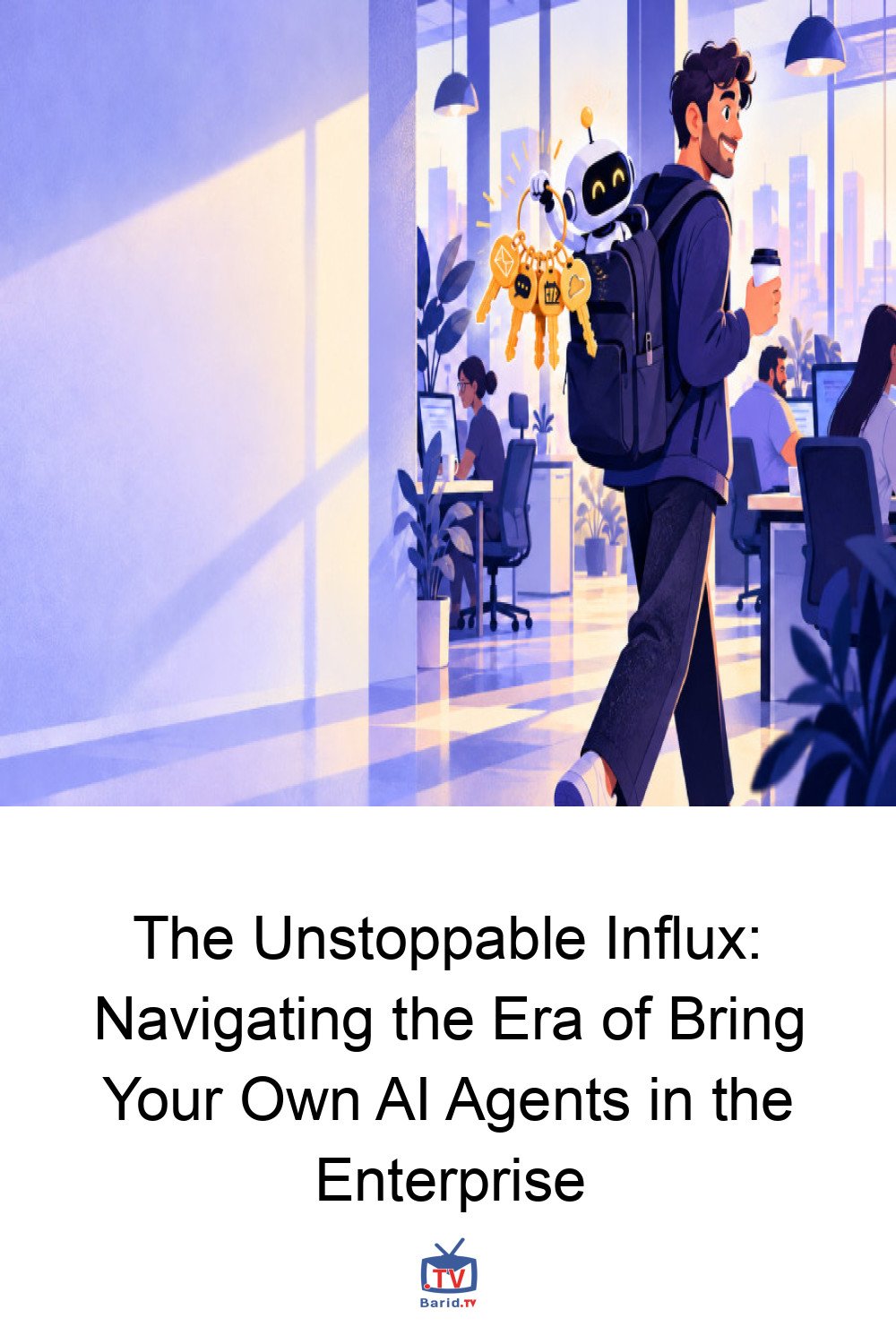
The Inevitable Rise of Personal AI in the Workplace
The rapid proliferation of personal AI agents is reshaping our digital lives, and the workplace is next. While headlines often focus on privacy concerns and integration hiccups – from Amazon blocking Meta’s Muse to a cascade of “horror stories” – the underlying truth is undeniable: these intelligent assistants are here to stay. Tech giants are heavily investing in the vision of a personal AI for everyone, and less than a year after the open-source OpenClaw emerged, the momentum is irreversible. Your employees are already leveraging these agents for personal tasks; integrating them into work systems is not a matter of ‘if,’ but ‘how.’ This presents a critical juncture for enterprise security: instead of a futile attempt to block them, the strategic path forward lies in enabling safe usage, with identity at the core of your control plane.
Beyond BYOD: The BYOA Identity Challenge
The “Bring Your Own Device” (BYOD) paradigm offered a glimpse into user-driven tech integration, but “Bring Your Own AI” (BYOA) – or Bring Your Own Agent – introduces complexities that dwarf its predecessor. Unlike a device, which is a container for company data, an AI agent actively operates within company systems, often under the employee’s name. This isn’t just about securing data; it’s about managing autonomous entities wielding identities.
The Shifting Control Point
With BYOD, IT had a physical device to enroll and manage. A personal AI agent, however, is an ephemeral entity residing on a vendor’s server or deeply integrated into an employee’s personal computing environment. It’s a presence that often slips past traditional IT visibility, potentially already active within your systems without explicit approval or even awareness. The challenge escalates when considering agents that might mimic employees or operate with opaque ownership, demanding a robust identity-centric approach to ensure accountability and control.
Stealth Integration: How Personal AI Agents Infiltrate Your Systems
The integration of personal AI agents into corporate environments rarely follows a formal IT request. Instead, it mirrors the seamless, often unmonitored, adoption of other third-party applications.
Common Entry Vectors:
- OAuth Consent:
The most prevalent method. An agent requests access to platforms like Google Workspace, Microsoft 365, or Slack, and the employee, with a simple click of “Allow,” grants it. If your tenant settings permit user consent for third-party apps, the integration is complete.
- Text-Based Interaction: Agents like Instinct operate via text interfaces. Users link their personal accounts (Google, Apple, Facebook), and the agent then acts through those connected services.
- Browser-Based Access & Password Managers: Many agents can log into supported websites using stored passwords via an internal browser and password manager. To your corporate application, this appears indistinguishable from an employee logging in directly.
- API Keys and Personal Access Tokens: For more bespoke or “unofficial” integrations, agents can leverage long-term credentials like API keys and personal access tokens, which users generate and provide.
- Local Machine Integration: Agents such as OpenClaw or Mac apps like Muse (which gained file, note, calendar, and email access, plus optional Full Disk Access, on September 18th) operate directly from the user’s laptop, accessing whatever the machine can see. AI browsers like Atlassian’s Dia similarly read open pages and connect to services like Slack and Gmail.
A Glimpse at the Nascent AI Agent Landscape
Despite being a category less than a year old, the personal AI agent market is already diversifying, with offerings ranging from consumer-first to more corporate-aligned solutions. Yet, truly enterprise-tailored agents, designed with specific work environment constraints and security protocols in mind, remain elusive.
Key Players and Their Approaches:
- OpenAI’s Dots: Positioned as a more corporate offering, “Specialist dots” are envisioned with their own identities and credentials. OpenAI is collaborating with Microsoft for deployment under Agent 365, leveraging connectors similar to those for ChatGPT. Its rollout is currently restricted to enterprise accounts and high-tier subscriptions, signaling a more controlled, business-centric approach.
- xAI’s GrokBot: Accessible via R&D channels like Cursor, GrokBot aims to transform an AI bot tied to a work-controlled development environment into a personal assistant. However, this integration doesn’t inherently enhance governance. Like its counterparts, GrokBot readily signs into tools without requiring clean APIs, often operating through its virtual computer.
- Meta’s Muse: A consumer-first agent, currently limited to the US and Canada. Despite its consumer focus, it rapidly acquired numerous organizational connectors (Slack, Linear, Vercel) post-launch and is projected to be one of the fastest-growing personal AI agents by late 2026.
- Instinct: A buzzy personal AI agent from a startup, operating through text applications. It boasts broad connectivity to various work environments, highlighting the ease with which these tools can integrate.
Embracing the Future: Identity as the Control Plane
The instinct to block these agents is understandable, but ultimately futile. A more pragmatic and beneficial strategy is to embrace their potential while mitigating risks through an identity-centric security framework.
Strategies for Safe BYOA Adoption:
- Centralized Identity Management: Ensure all agents, regardless of origin, are associated with a verifiable owner of record. Implement robust identity verification and authentication protocols for agent access.
- Granular Access Controls: Move beyond simple “allow” or “deny.” Define precise, least-privilege access for agents based on their function and the employee’s role. This means limiting what data they can access and what actions they can perform.
- Continuous Monitoring and Auditing: Implement systems to continuously monitor agent activity for anomalous behavior, unauthorized data access, or policy violations. Maintain detailed audit trails of all agent interactions within corporate systems.
- Clear Offboarding Procedures: Establish clear processes for revoking agent access when an employee leaves or an agent’s utility is no longer required, preventing orphaned access.
- Employee Education: Educate employees on the risks and best practices for connecting personal AI agents to work systems, emphasizing data privacy and security policies.
Conclusion
Personal AI agents are not just a technological trend; they are an evolving force already embedded in our digital ecosystem. Their integration into the workplace is an inevitability, not a possibility. By shifting from a defensive posture of blocking to a proactive strategy of secure enablement, enterprises can harness the productivity benefits of BYOA while safeguarding their critical systems and data. The future of work is intelligent, and securing that future means mastering the identity challenge posed by our new AI assistants.
For more details, visit our website.
Source: Link





Leave a comment