





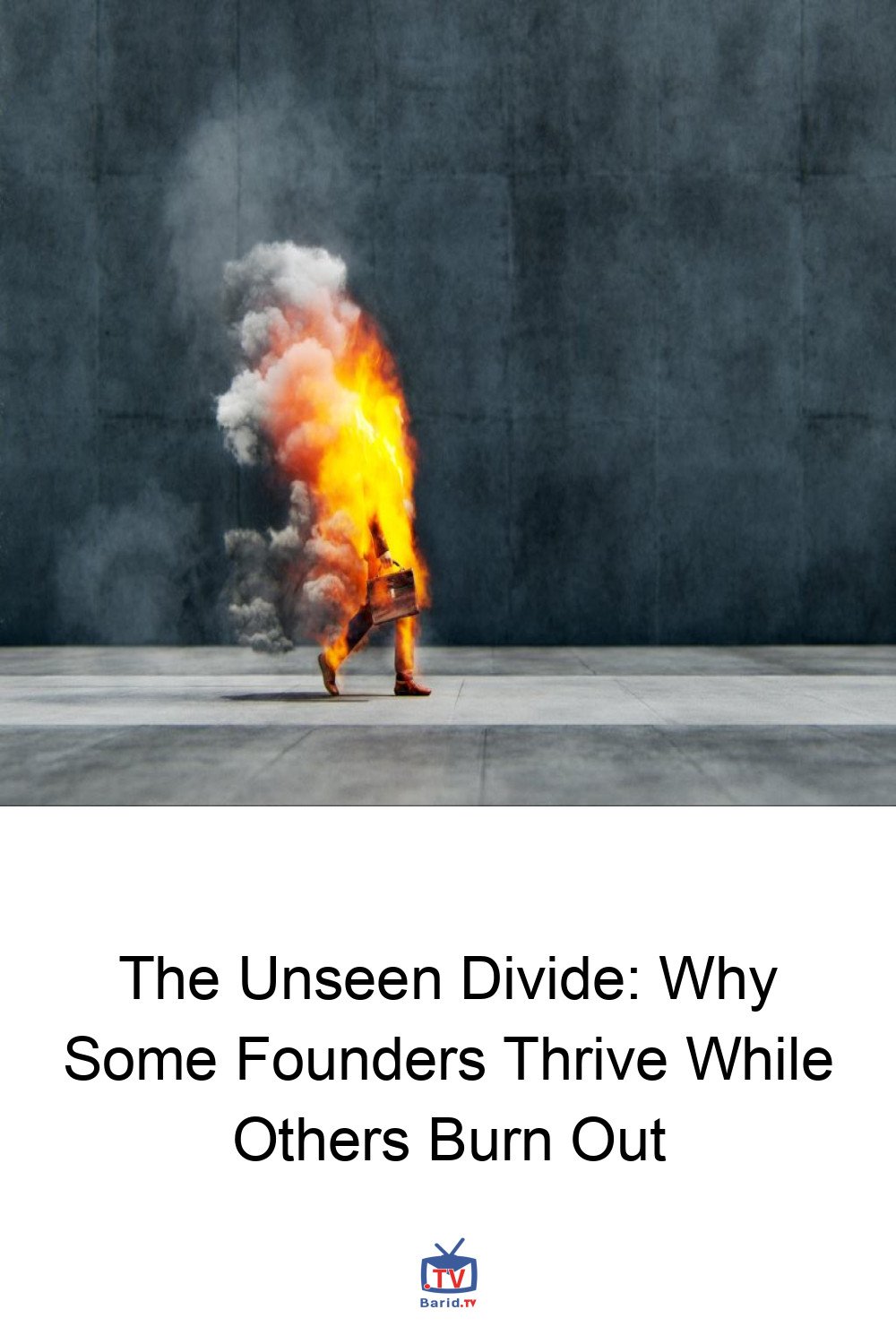
In the relentless world of entrepreneurship, the line between dedication and self-destruction often blurs. While popular narratives celebrate the ‘hustle culture’ and endless grind, a critical distinction emerges among founders: those who build enduring legacies and those who succumb to burnout. The secret, it turns out, isn’t superior talent or boundless funding, but a fundamental shift in how rest and recovery are perceived and integrated into the very fabric of their business.
A recent CNBC feature highlighted a small-business owner whose approach to company operations might strike many as radical: a full-week shutdown, company-wide, every quarter. No emails, no meetings, no work. This isn’t a reaction to impending collapse but a proactive measure, baked into the business model, with clients notified and automated systems bridging the gap. Her philosophy? Prevention over cure. This counter-intuitive strategy underscores a profound truth: sustainable success isn’t about avoiding breaks, but about strategically embedding them.
Having observed countless founders and executives navigate the high-stakes journey of scaling businesses, it’s clear that the longevity of a venture often mirrors the longevity of its leader. A 2026 Wilbur Labs survey of 200 startup founders painted a stark picture, revealing that a staggering 90% had experienced stress or burnout severe enough to contemplate quitting, with 15% reporting this feeling as constant. The repercussions weren’t confined to the office, impacting social lives (over 60%) and personal relationships (46%).
The founders who defy this trend share a common, powerful pattern that transcends sheer willpower. They don’t view rest as a prize to be claimed after a monumental achievement, like a successful funding round or product launch. Instead, they treat it as essential infrastructure, a non-negotiable component scheduled and protected with the same rigor as critical hires or financial runway. Here’s how they do it:
Treating Recovery as a Fixed Cost, Not a Reward
Imagine payroll or rent as optional. Unthinkable, right? Yet, many founders treat their own well-being with less priority. The quarterly shutdown example illustrates this perfectly: it’s a fixed line item, communicated in advance, with systems in place to ensure a smooth transition and a backlog-free return. This structural integration transforms ‘time off’ into genuine ‘rest,’ free from the gnawing anxiety of unfinished tasks. Neglecting this crucial ‘cost’ has tangible consequences; the Wilbur Labs survey noted 48% of founders suffered physical health issues linked to poor sleep, diet, or fitness – precisely the toll that planned recovery is designed to avert.
Embracing the Proactive Long Reset
Jason Fried, co-founder and CEO of 37signals (the force behind Basecamp and HEY), recently embarked on his first sabbatical in nearly 23 years. His month-long absence served as a powerful validation: the company could thrive without his constant presence. Many founders, however, operate under the assumption that their business is load-bearing only with them at the helm, often waiting decades to test this theory. Proactive, planned sabbaticals or extended breaks, taken on one’s own terms and when stakes are manageable, are invaluable. They offer a far less costly and less disruptive alternative to being forced into a break by a health crisis or complete burnout.
Cultivating Delegation Capacity
The ability to step away meaningfully is intrinsically linked to a founder’s capacity to delegate effectively. If every decision, every critical task, funnels back to a single individual, true rest remains an elusive dream. DDI’s Global Leadership Forecast 2025, a comprehensive study involving over 10,700 leaders globally, identified delegation as the single most effective skill in preventing burnout. Yet, alarmingly, fewer than one in five of the 70,000+ managers assessed by DDI demonstrated strong delegation abilities. Mastering delegation isn’t just about offloading tasks; it’s about empowering a team and building a resilient operational structure that allows the founder to truly disengage and recharge.
Safeguarding Small Recovery Windows
While extended breaks are vital, they cannot compensate for a daily grind devoid of respite. Autonomic CEO Jamie Wood exemplifies the power of micro-recovery, treating her morning routine – including movement before checking emails – as absolutely non-negotiable. She attests that this primes her focus for hours. The principle is universally applicable: small, protected pockets of recovery, consistently observed each day, contribute more to sustained high performance than a single annual vacation squeezed in just before a burnout deadline. These daily rituals are the bedrock upon which long-term resilience is built.
Ultimately, this strategic approach to rest is not a concession to ambition but a catalyst for it. A founder who intentionally prioritizes their capacity is one who can continue to make sharp, impactful decisions not just in year one, but in year eight and beyond. They recognize their own well-being as a critical asset, safeguarding it with the same diligence they apply to cash flow or market share. This is the hallmark of founders who don’t just survive, but truly last.
For more details, visit our website.
Source: Link







Leave a comment