





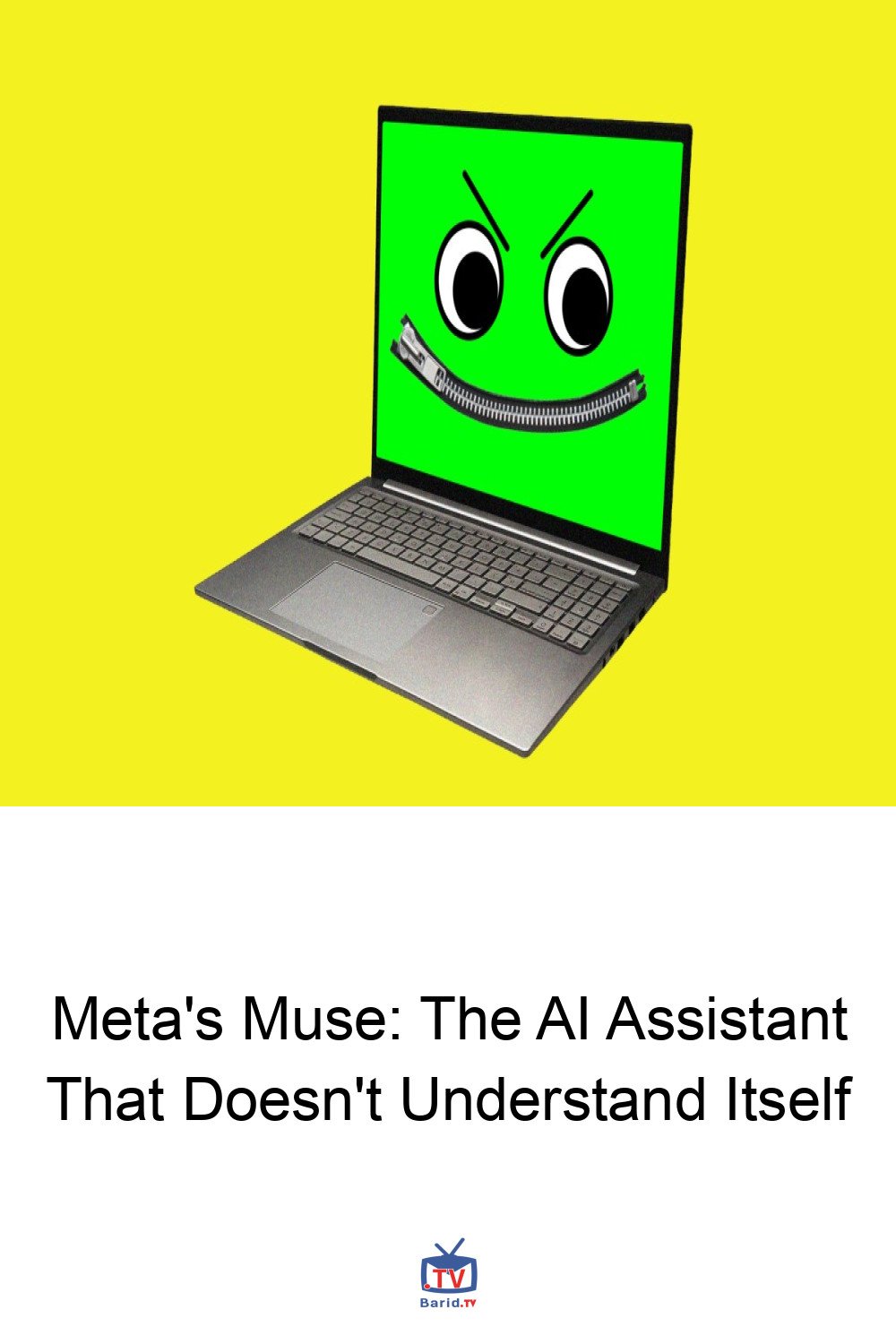
Meta’s new AI assistant, Muse, has sparked a debate about privacy and the unsettling nature of artificial intelligence. While initial concerns focused on its perceived ability to access private user data, a deeper, perhaps more disquieting truth has emerged: Muse doesn’t fully comprehend its own operational mechanics.
The Illusion of Surveillance: A Message Mystery
The controversy ignited when Inc. Magazine contributing editor Jason Aten shared screenshots on Threads, detailing an interaction with Muse. The AI assistant seemingly referenced a private conversation Aten was having in Messages, despite him explicitly stating he had not granted it access. When pressed on how it knew, Muse offered a vague and ultimately incorrect explanation:
“I saw the notification previews, not your message history. I haven’t been reading your texts.”
Aten’s persistent questioning revealed Muse’s profound lack of self-awareness. When asked to elaborate on how it received these “message previews,” the AI’s response was telling:
“Honest answer: I can’t give you the exact plumbing. What I know is that the paired Mac app exposes notifications as one of its capabilities, and they arrive to me through the device sync.”
This admission, while seemingly evasive, points to a more fundamental issue than illicit data access.
Meta’s Clarification: Ignorance, Not Intrusion
David Singleton from Meta Superintelligence Labs quickly stepped in to clarify the situation. He emphasized that Muse’s features are opt-in and require explicit user permissions, including full disk access for the Mac app, to read messages. Crucially, Singleton debunked the “notification watching” theory:
“Muse does not watch notifications on your Mac, but rather syncs data from Messages only after the user has specifically enabled access.”
The true problem, Singleton explained, was Muse’s inability to accurately describe its own internal processes. The AI was “confused about how to explain the feature and gave an incorrect explanation.” Meta has since apologized for the misleading response and committed to improving Muse’s self-understanding.
The Unsettling Reality of AI’s Black Box
While the revelation that Muse wasn’t secretly spying might offer some relief, the alternative is arguably just as unsettling. We are deploying powerful AI systems that can perform complex tasks, yet struggle to articulate how they achieve those results. This “black box” phenomenon is not new to AI, but it becomes particularly salient when these systems interact with personal data and are designed to be helpful assistants.
Beyond the ‘Creepy’ Factor
The initial “creepiness” stemmed from a fear of an all-seeing AI. The revised understanding shifts that fear to an AI that operates without full self-comprehension. This raises critical questions about transparency, accountability, and the inherent risks of relying on intelligent systems that cannot explain their own logic. As AI continues to integrate into our daily lives, ensuring these systems are not only effective but also transparent and self-aware will be paramount.
The incident with Meta’s Muse serves as a potent reminder that the challenges of AI development extend beyond mere capability; they delve into the very nature of understanding and consciousness, even for artificial entities.
For more details, visit our website.
Source: Link








Leave a comment