
Apple’s Latest Innovation: A Constant Companion, Always Listening
During its recent keynote, Apple unveiled the Apple Watch Series 12 and Ultra 4, introducing a groundbreaking yet controversial suite of features dubbed “Audio Intelligence.” These innovations promise unparalleled convenience by passively listening to your daily conversations and summarizing them on demand. But as the tech giant pushes the boundaries of wearable technology, a critical question emerges: at what cost to privacy?
Live Rewind: Instant Recall at Your Fingertips
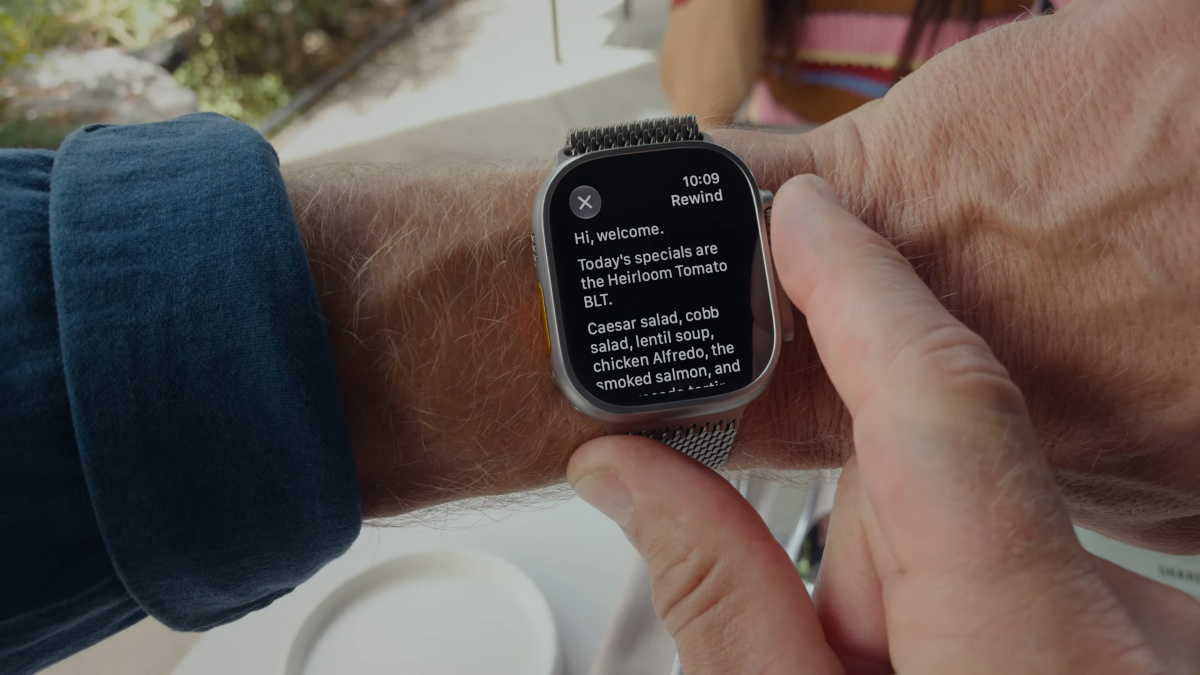
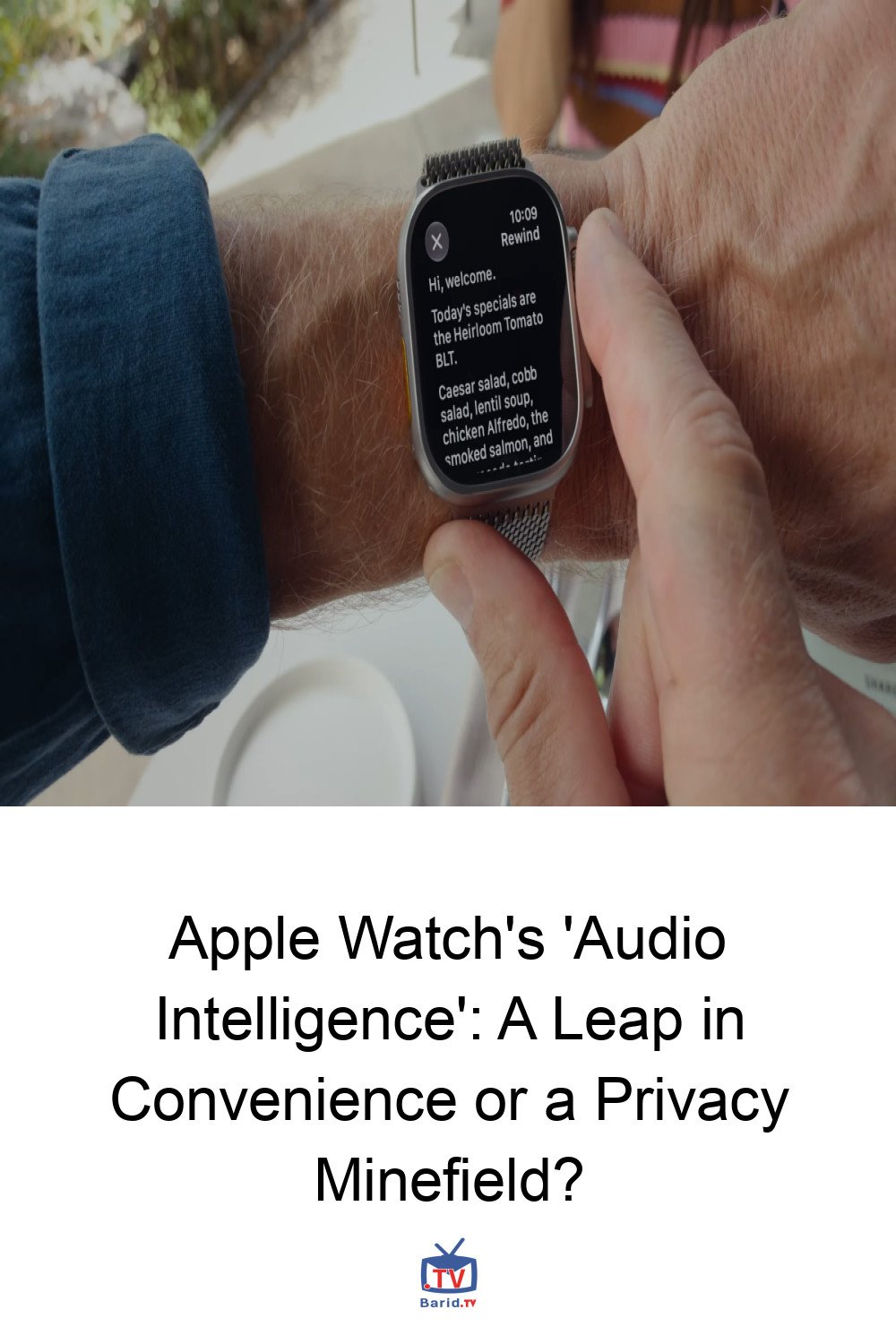
Imagine needing to recall a detail from a recent conversation. With Live Rewind, a simple double-press of the Digital Crown on your Apple Watch instantly conjures a text snippet of the last fifteen seconds of your audio. It’s a feature designed for those moments when a crucial piece of information slips away.
Siri Recaps: Your Daily Conversational Digest
Beyond instant recall, Siri Recaps takes a more expansive approach. Throughout your day, your watch diligently listens to your conversations, leveraging AI to generate a concise summary of all transcribed audio, delivered at the close of each day. This daily digest aims to keep you effortlessly abreast of your interactions.
The Privacy Paradox: Apple’s Safeguards vs. User Concerns
At first glance, the notion of a device constantly listening can evoke a sense of unease. Apple, however, has anticipated these concerns, implementing a multi-layered privacy architecture to reassure users.
On-Device Processing and Secure Enclaves
The core of Apple’s privacy promise lies in its on-device processing. Audio captured by the Series 12 and Ultra 4 watches is immediately routed to an S11 chip featuring a Secure Exclave—a highly protected local storage compartment inaccessible even to the operating system. Here, the ambient audio is encrypted and then securely transferred to a matching Secure Enclave on your paired iPhone.
Your iPhone then transcribes the audio locally using an on-device AI model. This process creates a summarized version, stripping out non-essentials and any identifying information, effectively halving the original audio’s length. Crucially, the original audio data is overwritten and deleted in real-time, never recorded or stored.
Private Cloud Compute: Anonymized AI Processing
Only a truncated, anonymized transcript, along with generic metadata like a rough location and timestamps, is sent to Apple’s Private Cloud Compute servers for further AI processing. At this stage, none of the audio data is linked to your Apple ID. To further bolster anonymity, Apple employs a third-party relay to mask your IP address during upload, ensuring even their employees cannot identify you from your device.
Within the Private Cloud Compute, Siri AI summarizes your data, generating the daily text recaps for those who opt into Siri Recap. These summaries are automatically deleted after seven days unless you choose to save them individually.
The Unsettling Reality: Consent, Control, and Cloud Vulnerabilities
While Apple’s technical safeguards are robust, the implementation of Audio Intelligence raises significant ethical and practical questions, particularly concerning consent and data security.
The Silent Listener: A Breach of Third-Party Consent?
Apple’s protections, while comprehensive for the device owner, do not extend to others in the vicinity. The Live Rewind feature does offer a brief audio chime and visual cue on the watch when activated, signaling to those nearby that they are being listened to. It also avoids identifying speakers in transcripts. However, these measures fall short of explicit consent.
The Siri Recap feature presents an even greater concern. It operates without any audio or visual cues, meaning individuals around an Apple Watch user have no indication that their conversations are being passively monitored and summarized. Apple’s privacy documentation offers only a vague admonition to “be mindful of those around you,” sidestepping the critical issue of informed consent.
This oversight is particularly problematic in regions with all-party consent laws for audio recording, such as 12 U.S. states, where undisclosed surveillance could carry legal ramifications for the Apple Watch user.
The iCloud Conundrum: When Convenience Meets Risk
The most significant vulnerability arises if you choose to save your Siri Recap summaries. Once saved, this data is uploaded to your iCloud storage and can be stored in apps like Apple Notes or Journal. While server-level breaches at Apple are rare, account-level hacks are a more frequent occurrence. A recent incident in January saw 900,000 compromised iCloud logins exposed on a public server.
Should your Apple ID be compromised or your iPhone unsecured, these saved conversation summaries could become accessible to unauthorized parties. This exposes not just the user, but potentially everyone they’ve conversed with, to a significant privacy risk.
Conclusion: Balancing Innovation with Fundamental Rights
Apple’s Audio Intelligence features represent a fascinating leap in personal technology, offering unprecedented convenience and recall. Yet, they also force a critical examination of the boundaries of privacy in an increasingly connected world. While Apple has invested heavily in technical safeguards, the ethical implications surrounding third-party consent and the inherent risks of cloud storage for sensitive personal data remain potent concerns. As these features roll out, the conversation around convenience versus fundamental privacy rights will undoubtedly intensify.
For more details, visit our website.
Source: Link