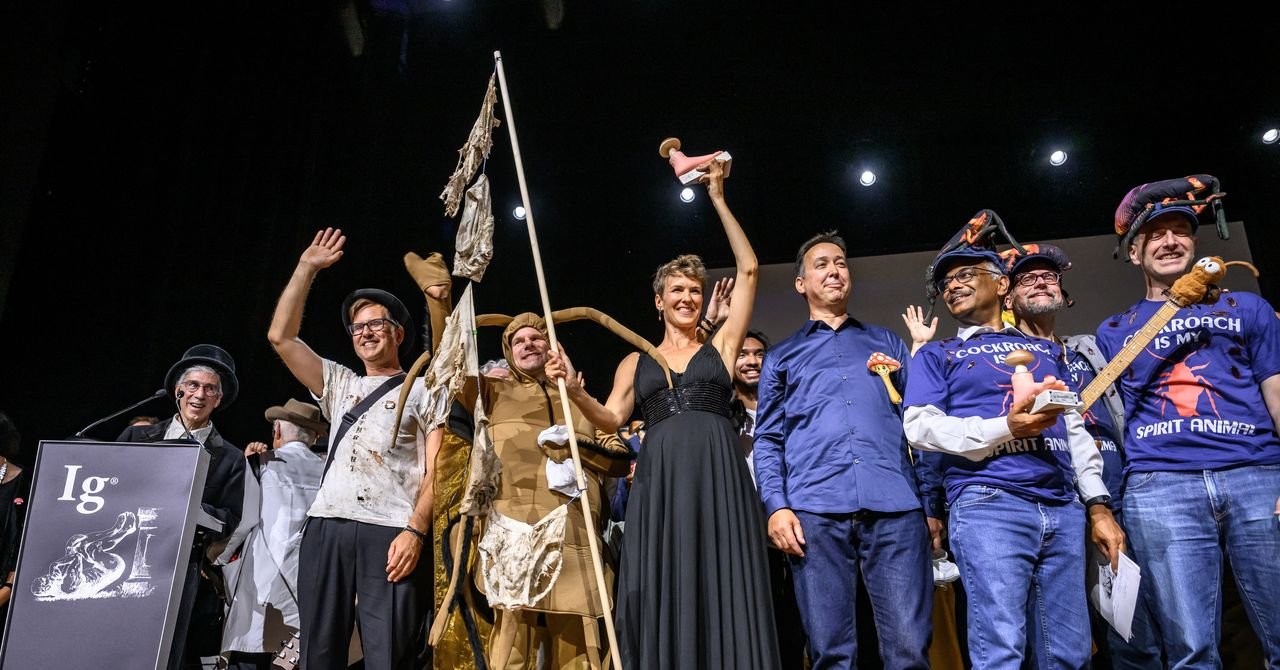

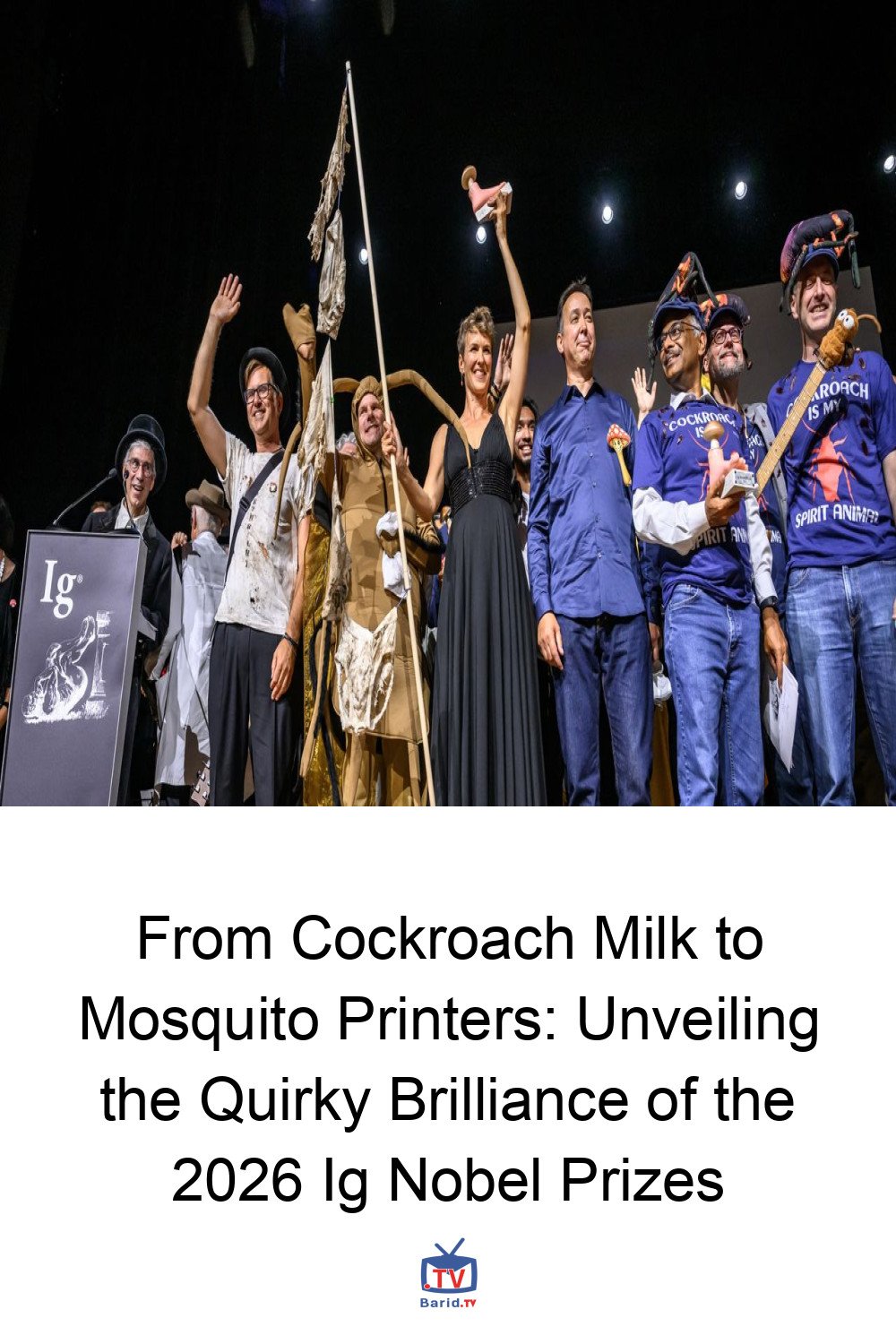
In a world often dominated by serious scientific pursuits, the Ig Nobel Prizes stand as a delightful anomaly, celebrating achievements that first elicit a chuckle, then provoke profound thought. This annual parody of the Nobel Prizes, orchestrated by Improbable Research since 1991, shines a spotlight on the most unusual and imaginative scientific studies, reminding us that the quest for knowledge can be both rigorous and wonderfully whimsical.
The 2026 ceremony, held in the picturesque city of Zurich, Switzerland, once again honored a diverse array of ten research projects. From an ambitious attempt to scientifically categorize the act of kissing across species to an ingenious method of assessing soil health using buried underwear, this year’s laureates pushed the boundaries of conventional inquiry in the most unconventional ways.
Defining Affection: The Biomechanics of a Kiss
What truly constitutes a kiss? A team of dedicated researchers embarked on a mission to establish a universal scientific definition, one that extends beyond human affection to encompass the entire animal kingdom. Their meticulous classification defines a kiss as “a non-agonistic interaction involving directed intraspecific oral-oral contact, with some movement of the lips or oral structures and without the transfer of food.” This surprisingly broad definition reveals that our furry and feathered friends—from great apes and domestic pets to pigeons, penguins, squirrels, black bears, and even tortoises—are all, in their own unique ways, participants in this age-old act of contact, albeit with varying meanings.
The Price of Prosperity: Money and Morality
Does wealth corrupt? A compelling study titled “Higher Social Class Predicts Increased Unethical Behavior,” published in PNAS, delved into this intriguing question. Through seven carefully designed experiments, researchers explored the link between socioeconomic status and a propensity for unethical actions, including traffic violations, failure to yield, cheating, and even the seemingly trivial act of taking candy from children. The findings were stark: a higher social class, on average, correlated with a greater tendency to prioritize self-interest. It appears the adage “more money, more problems” might hold a deeper, more problematic truth.
The Future of Food: Cockroach Milk’s Nutritional Powerhouse
Prepare to rethink your protein sources. This year’s Ig Nobel in Chemistry highlighted a study suggesting that the future of nutrition might just be crawling. The “milk” in question is not dairy, but a highly potent, protein-rich substance produced by mother cockroaches of the species Diploptera punctata. These remarkable insects concentrate proteins, fats, and sugars into an incredibly energy-dense crystalline form within their embryos. A team of scientists meticulously analyzed these crystals, unraveling the secrets of how such a tiny space can store such a vast array of nutrients. While perhaps not destined for your morning cereal, it certainly offers food for thought on sustainable nutrition.
The Art of Exhalation: Blowing Your Nose, Scientifically
A posthumous award in Medicine went to scientist Unno Tokuji, whose final years were dedicated to an unexpectedly profound inquiry: the correct way to blow one’s nose. His exhaustive research delved into the aerodynamics and volume of nasal breathing, alongside the pressure exerted on the ears. His scientific recommendation? When one nostril is more congested than the other, blow one nostril at a time, employing a long, relatively forceful exhalation rather than a short, weak puff. This seemingly mundane topic, elevated by scientific rigor, resonated widely for its practical, if slightly humorous, implications.
When Snakes Strike: A Boot-On-Ground Investigation
For those who might, for some inexplicable reason, find themselves needing to step on a snake, the Ig Nobel in Biology offers crucial, if unsettling, advice. To understand what triggers a defensive bite, researchers bravely applied pressure to various parts of the highly venomous South American pit viper, Bothrops jararaca. Wearing protective boots and proceeding with controlled caution, they discovered that stepping on the head resulted in a 44 percent probability of a bite. Pressure on the body yielded a 20 percent chance of attack. The safest bet, if such a scenario ever arises, is the tail, where the risk plummets to a mere 11 percent. A truly “don’t try this at home” experiment that nonetheless provides valuable insights into snake defense mechanisms.
The Splash-Free Solution: Physics in the Urinal
Public restroom hygiene received a scientific boost with the Ig Nobel in Physics. Researchers, employing mathematical models, determined the optimal angle for a stream of liquid to hit a urinal to minimize splash-back. Their findings revealed that lower angles of impact significantly reduce unwanted droplets. Based on this principle, they designed prototypes for scientifically backed urinals, promising a cleaner, more sanitary experience for all. A testament to how even the most overlooked aspects of daily life can benefit from rigorous scientific inquiry.
From Pest to Printer: Mosquitoes as 3D Printing Components
In a remarkable feat of ingenuity, the Ig Nobel in Technology recognized research demonstrating that dead mosquitoes can be repurposed into low-cost 3D printer components. The mosquito’s proboscis, the delicate, ultra-fine needle it uses to draw blood, proved to be an ideal candidate for the nozzle of a 3D printer – often one of its most intricate and expensive parts. Instead of inventing new precision instruments from scratch, researchers realized that evolution had already perfected a solution, optimizing the mosquito’s mouthparts for an entirely different, yet equally precise, purpose. This innovative approach highlights the potential for bio-inspired design and resourcefulness in technological advancement.
The 2026 Ig Nobel Prizes once again celebrated the wonderfully weird and undeniably valuable contributions to science that challenge perceptions, spark curiosity, and, most importantly, make us think. These are the discoveries that remind us that the pursuit of knowledge is not always solemn, but can be filled with laughter, wonder, and the occasional cockroach milk latte.
For more details, visit our website.
Source: Link