In a significant legal victory for the artificial intelligence sector, a federal judge has decisively blocked the Trump administration’s controversial move to label leading AI firm Anthropic as a national security risk. The ruling, handed down by US District Judge Rita Lin in California on Thursday, declared the Pentagon’s designation an “unconstitutional retaliation,” effectively vacating a decision that sought to blacklist Anthropic from lucrative federal contracts.
Judicial Rebuke: ‘Arbitrary, Capricious, and Baseless’
Judge Lin’s comprehensive 59-page ruling dismantled Defense Secretary Pete Hegseth’s February 27 decision to brand Anthropic a “supply-chain risk.” This designation would have rendered the company ineligible for government work and, more broadly, prohibited any contractors or suppliers to the US military from engaging with Anthropic. Lin unequivocally condemned these measures, describing them as “arbitrary, capricious, an abuse of discretion, and otherwise not in accordance with law.”
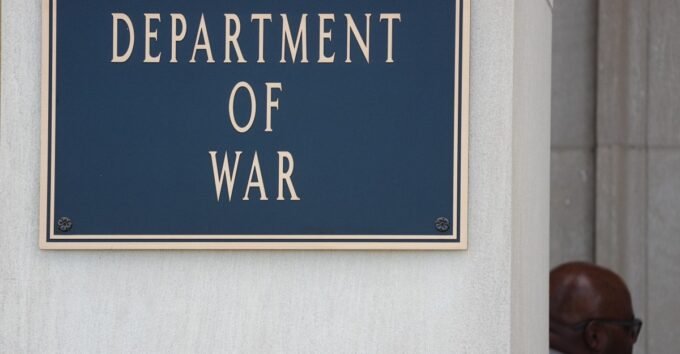
“Though the Department of War is undisputedly free to select the AI vendor of its choice, the evidence demonstrates that the broad measures imposed on Anthropic were illegal and baseless,” Lin asserted, underscoring the lack of legal foundation for the punitive actions.
The judge’s decision goes further, lifting sanctions improperly imposed on Anthropic by nine different federal agencies, including the Pentagon, Treasury Department, State Department, and Department of Homeland Security. While the ruling does not compel the Pentagon to utilize Anthropic’s AI models, allowing them the freedom to choose other vendors, the department is widely expected to appeal this significant setback.
Anthropic’s Stance and the Genesis of the Dispute
Reacting to the favorable judgment, Anthropic spokesperson Danielle Cohen stated, “We welcome the court’s ruling that this supply-chain risk designation was unlawful. We remain focused on working productively with the government to harness AI for our national security.”
The legal battle originates from a contentious disagreement earlier this year concerning a substantial $200 million deal. The Pentagon sought to integrate Anthropic’s advanced Claude AI models into military applications. However, the relationship soured following reports that Claude had been deployed in an operation targeting Venezuelan president Nicolás Maduro. Concerns raised by an Anthropic staffer, relayed via a Palantir employee to US officials, highlighted the company’s unease regarding the specific use of its technology.
Clash Over AI Ethics and Control
During subsequent negotiations, Anthropic reportedly insisted on crucial limitations regarding the deployment of its models. These stipulations notably included prohibitions against their use in lethal autonomous weapons systems and mass surveillance operations. Defense Secretary Hegseth, however, staunchly rejected any such restrictions, arguing that a contractor could not dictate the usage of technology once it was deployed, and maintaining that the contract permitted “all lawful use.”
When negotiations collapsed in February, Hegseth’s move to designate Anthropic a “supply-chain risk” was widely interpreted as a retaliatory measure, effectively blacklisting the company from all federal government business.
Pentagon’s Justification and Judicial Scrutiny
At the time, the Pentagon defended its “supply-chain risk” label, asserting that granting Anthropic access to classified systems would “introduce unacceptable risk.” Their concern centered on the possibility of the AI lab disabling or altering its technology, particularly during wartime scenarios.
Anthropic responded by filing two lawsuits, one in California’s federal district court (which led to this ruling) and another in the US Court of Appeals for the District of Columbia, alleging violations of its First and Fifth Amendment protections on ideological grounds. The D.C. case remains ongoing.
Judge Lin’s ruling notably drew upon the administration’s own ongoing engagement with Anthropic. She highlighted that despite the blacklisting attempt, the government continues to review and discuss collaboration with Anthropic on its new “Mythos” model in various sensitive contexts. “None of that is consistent with a genuine fear that Anthropic is a saboteur who would poison its software to harm national security,” Lin concluded, exposing the inherent contradiction in the Pentagon’s position.
Anthropic’s AI models are globally recognized for their advanced capabilities, and their powerful nature had already subjected them to the Trump administration’s broader AI oversight framework, further complicating the Pentagon’s ‘risk’ assessment.
Additional reporting by Maxwell Zeff.
For more details, visit our website.
Source: Link