
Nvidia Forges Unprecedented $500 Billion Alliance to Redefine AI Infrastructure as an ‘Investable Asset’
In a groundbreaking move poised to reshape the landscape of artificial intelligence investment, Nvidia has announced a monumental $500 billion financing initiative. Partnering with six of Wall Street’s most formidable asset managers, the chipmaking titan is transforming its cutting-edge AI chips from rapidly depreciating hardware into a new, long-term asset class, akin to commercial real estate or toll roads.
A Half-Trillion Dollar Push for AI Dominance
Nvidia has signed memorandums of understanding with financial powerhouses Apollo Global Management, Blackstone, BlackRock, Brookfield Asset Management, Goldman Sachs, and KKR. This formidable alliance aims to establish robust financing platforms, mobilizing over $500 billion in third-party capital. The primary beneficiaries will be hyperscalers, frontier AI labs, and enterprises seeking to build out data centers and acquire Nvidia’s essential hardware.
The announcement, made during a rare joint interview on CNBC featuring executives from all seven companies, signals a pivotal shift in how AI infrastructure will be funded. By leveraging institutional credit, insurance funds, and private capital, Nvidia is empowering its customers to secure crucial financing without straining their own balance sheets.
Jensen Huang’s Vision: AI Chips as Revenue-Generating Assets
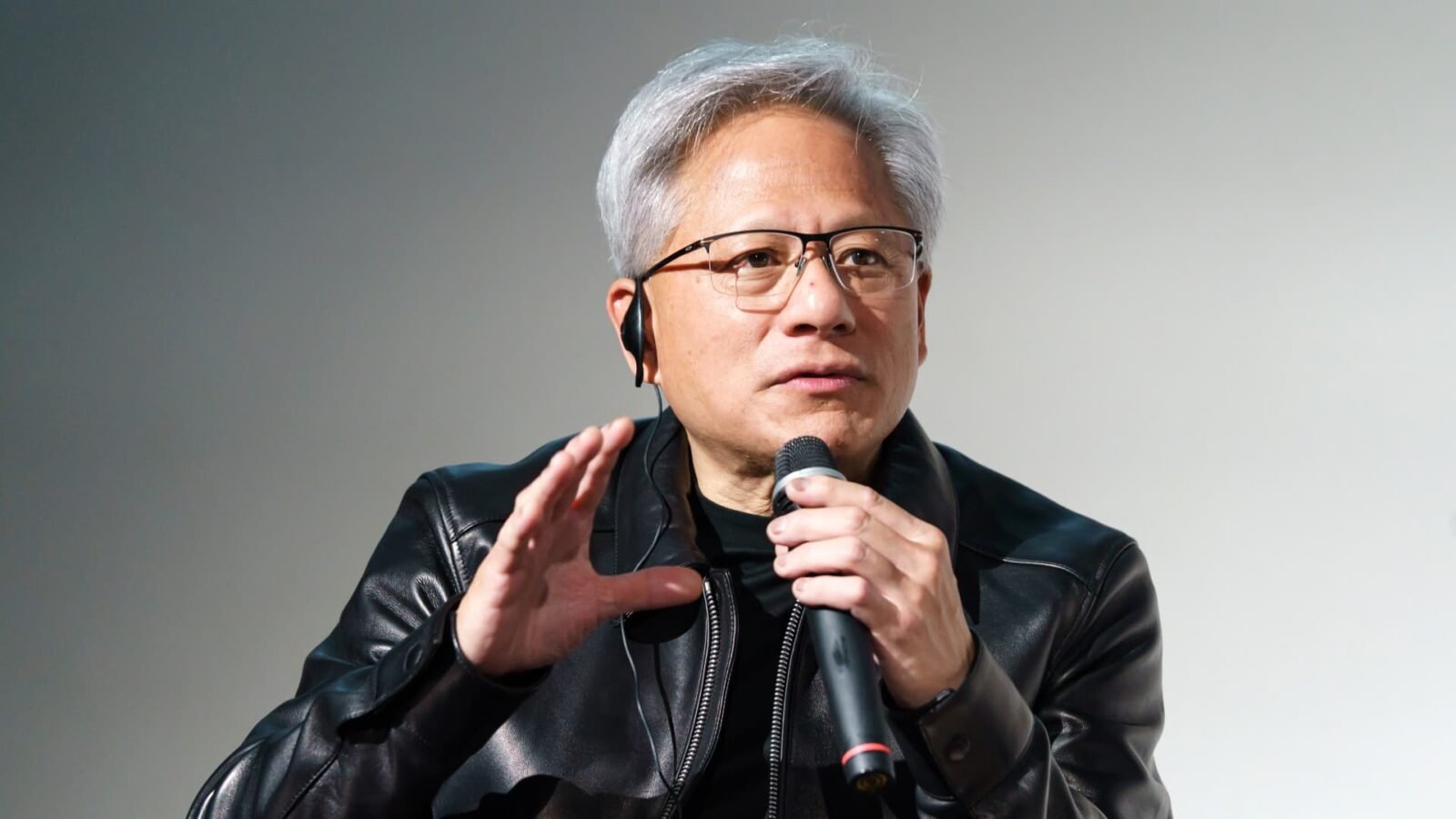
Nvidia’s charismatic founder and CEO, Jensen Huang, articulated the core philosophy behind this initiative to CNBC: “This is really the first time that technology chips have become an investable asset class. These are revenue-generating assets now. They’re productive, they’re long-lived, they’re fungible, they’re flexible.”
Huang posits that due to the broad adoption and transferability of Nvidia’s hardware across various customers, lenders can confidently underwrite compute capacity as a revenue-generating asset with an extended operational life. This directly challenges the historical perception of GPUs as rapidly depreciating components, instead positioning AI compute as long-term, bankable infrastructure.
“Fundamentally, what’s different about this industry and this way of doing computing is that the computer is now part of the infrastructure, like electricity, like the internet, and so you have to think about it like it’s infrastructure,” Huang emphasized, underscoring a fundamental platform shift in the computing industry.
Wall Street Embraces the “Next Future for Financial Engineering”
The enthusiasm from Wall Street is palpable. Leaders from the partnering financial institutions, including BlackRock CEO Larry Fink, Blackstone President Jon Gray, and Goldman Sachs CEO David Solomon, lauded AI compute as a critical asset class driving global economic growth.
Goldman Sachs CEO David Solomon highlighted the significance: “We’re in a pivotal moment of a historic AI investment cycle. Our investment and distribution roles reflect our confidence in NVIDIA’s leadership, and we’re excited for the new opportunity to create a market for credit backed by NVIDIA compute.” Solomon revealed that Jensen Huang himself approached these financial giants with the innovative financing concept.
Blackstone President Jon Gray drew a parallel to the housing market, stating that AI compute will be viewed as a “financeable asset class” much like mortgage lenders assess homes. He noted a sevenfold surge in AI demand within Blackstone’s portfolio companies this year alone.
Perhaps most strikingly, BlackRock’s Larry Fink hailed the project as the genesis of the “next future for financial engineering,” drawing comparisons to the creation of mortgage-backed securities in the 1970s. Fink confirmed that initial funds have already been raised, with plans to “raise quite a bit more” rapidly to ensure the United States maintains its leadership in AI globally.
Strategic Timing Amidst Market Scrutiny
This aggressive financing push arrives at a strategic moment. Following a July market downturn, investors had begun questioning the return on investment for Big Tech’s massive AI expenditures. With hyperscalers committing hundreds of billions to data centers and hardware, rating agencies like Moody’s had cautioned that unprecedented capital expenditures were beginning to strain free cash flow and increase debt loads for tech giants.
Nvidia’s initiative directly addresses these concerns, providing a robust mechanism for sustained AI infrastructure development without solely relying on corporate balance sheets. It signals a maturation of the AI industry, where the underlying compute power is now recognized not just as a cost, but as a valuable, revenue-generating asset capable of attracting significant institutional investment.
For more details, visit our website.
Source: Link