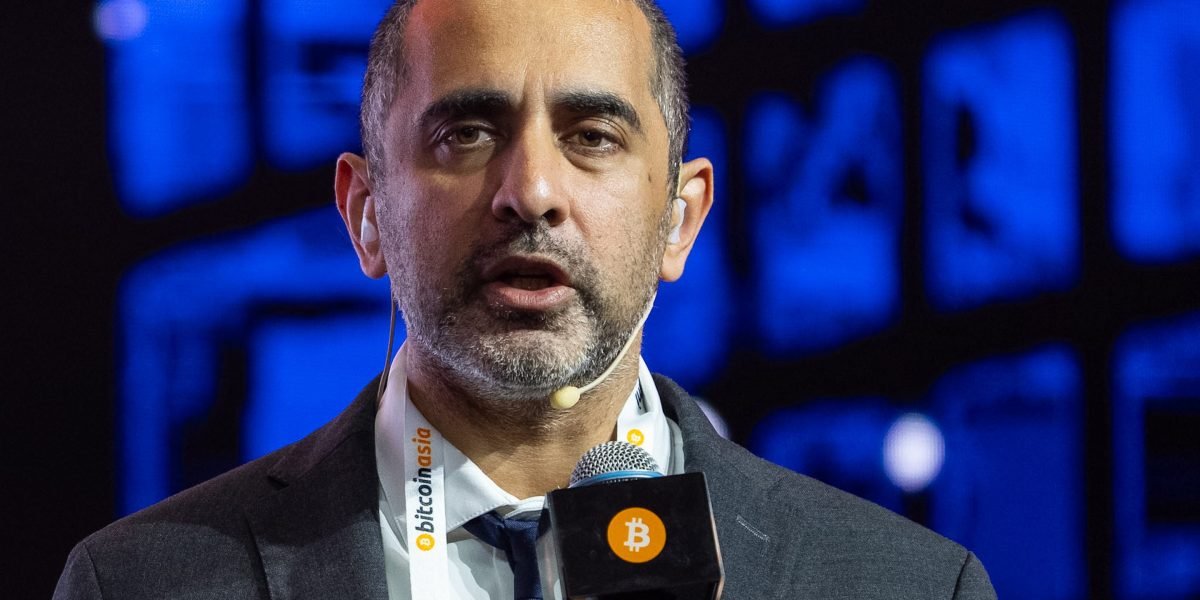

In a dramatic turn of events, Balaji Srinivasan, the controversial self-styled tech prophet and former chief technology officer for Coinbase, has found a new home for his ambitious ‘Network School’ in Kazakhstan, following its abrupt closure in Malaysia. This swift relocation marks the latest chapter in a saga that intertwines tech utopianism, geopolitical sensitivities, and the audacious vision of a ‘network state’.
Malaysia’s Unwelcome Mat: A Regulatory Crackdown
Srinivasan’s Network School had been operating for years without incident in Malaysia, specifically within a largely uncompleted complex in Forest City, Johor, strategically located near Singapore. The community, designed as a nomadic education hub for ‘technopreneurs’ and content creators, offered lodging, meals, gym access, and tech workshops for $1,500 per month – a significantly cheaper alternative to similar programs in Silicon Valley or the UAE.
However, the school’s discreet existence was shattered by a single, vaguely located social media video. This sparked online scrutiny, which quickly escalated into a regulatory investigation. Malaysian authorities launched a probe following allegations that Israeli nationals had participated in the program, entering the country on second-country passports. Malaysia does not recognize Israel and typically bars entry to Israeli passport holders.
While the investigation found no evidence of travel document violations, the Iskandar Puteri City Council moved to revoke Network School’s business and advertising licenses on July 21. The official reason cited was breaches of licensing conditions and premises-use requirements, as the business activities reportedly differed from its office-use license. Johor Chief Minister Onn Hafiz Ghazi publicly supported the decision, stating the state government fully endorsed the cessation of all Network School activities in Forest City.
The incident has since broadened into a diplomatic issue, with Malaysia’s foreign minister confirming that one dual U.S.-Israel citizen was ordered to leave the country. This prompted the U.S. State Department to summon Malaysia’s ambassador for an explanation regarding its stance on Israel.
The Genesis of the Controversy
The seeds of the dispute were sown earlier. In 2024, Srinivasan launched Network School as a 90-day pilot for around 100 global participants, expanding it into a year-long program in early 2025. He championed its proximity to Singapore, highlighting its “beautiful and sunny” environment and easy access to a major international airport, making it an attractive hub for global talent.
Ironically, Malaysian officials had initially welcomed the project. Just three months prior to the shutdown, Digital Minister Gobind Singh Deo lauded the campus as an an “emerging destination for global technology talent.” However, this endorsement drew criticism online, with netizens questioning government engagement given Srinivasan’s known views on alternative communities and governance, and his past use of the term “tech Zionism” in 2023 to describe the network-state strategy.
A social media advertisement on July 10, highlighting the school’s location on a “man-made island near Singapore,” further fueled online investigations. These sleuths quickly pinpointed Network School’s actual base in Johor, Malaysia. On the same day, a pro-Palestinian activist group on Instagram explicitly accused the school of bringing Israelis into Malaysia, directly contravening the country’s laws.
Kazakhstan: A New Frontier for Techno-Optimism
Undeterred by the Malaysian setback, Srinivasan wasted no time. The very next day after the school’s closure, he was in Central Asia, signing a Memorandum of Understanding with Kazakh authorities. In a July 22 post on X, Srinivasan declared, “Our new campus will become a haven for global techno-optimism, with expedited visas, streamlined redomiciliation, and active recruitment of talent.”
This rapid pivot underscores Srinivasan’s unwavering commitment to his vision of the “network state” – a novel political entity emerging from the global tech sector. Kazakhstan’s embrace of the project positions it as a potential new hub for crypto-friendly tech utopianism, offering a stark contrast to the regulatory challenges faced in Southeast Asia.
As the Network School prepares for its new chapter, the world watches to see if Kazakhstan will indeed prove to be the fertile ground Srinivasan seeks for his nomadic commune, free from the political and social tensions that led to its Malaysian expulsion.
For more details, visit our website.
Source: Link