
The AI Landscape Shifts: China’s Open-Source Surge
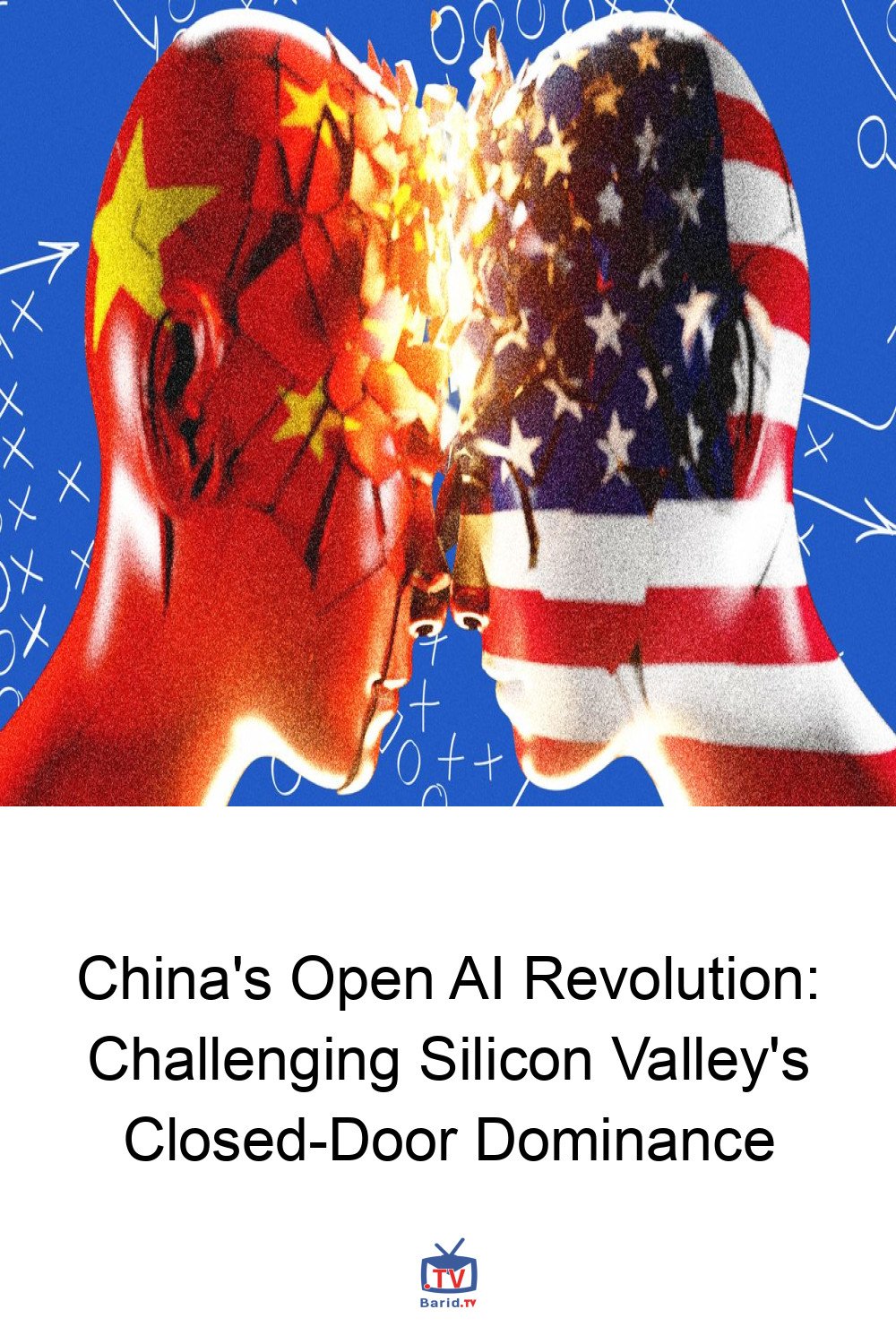
The artificial intelligence industry is on the precipice of a transformative moment, reminiscent of the game-changing DeepSeek 2.0. Leading Chinese AI laboratories have recently unleashed a torrent of nearly cutting-edge open-source models, sending ripples across the global tech community. Z.ai introduced GLM 5.2 in June, Moonshot AI unveiled Kimi K3 last week, and Alibaba followed swiftly with Qwen 3.8 this Monday. This rapid succession of releases has immediately captured the attention of Silicon Valley and Washington, with Kimi K3, in particular, being hailed as a standout performer.
US Voices Concern as Chinese AI Models Rise
The prowess of Moonshot AI’s Kimi K3 has not gone unnoticed, drawing sharp reactions from prominent US figures. Venture capitalist and AI adviser to former President Donald Trump, David Sacks, deemed the model’s performance “concerning.” This sentiment was echoed by Commerce Secretary Scott Bessent, who hinted at potential US sanctions against Chinese AI companies. The situation escalated further on Wednesday when Michael Kratsios, director of the White House Office of Science and Technology Policy, publicly alleged that the Trump administration possesses “information that Moonshot AI distilled Anthropic’s Fable for the development of its K3 model.” Kratsios condemned this as “stealing proprietary US technology and undermining American research,” labeling it “unacceptable.” Moonshot AI has yet to respond to these serious allegations.
What Defines China’s New Wave of AI?
The latest generation of Chinese AI models share several compelling characteristics that position them as formidable contenders. Third-party benchmarks consistently demonstrate their performance to be on par with, or very close to, the best Western models. Crucially, these models are optimized for agentic coding tasks—a rapidly evolving and highly sought-after capability in the AI sphere. Perhaps most significantly, they are, or soon will be, released with open weights, fostering unparalleled accessibility and transparency.
Diverging Paths: Open vs. Closed AI
This moment strikingly parallels January 2025, when DeepSeek’s R1 model first shattered the notion that only closed-source systems, backed by billions in compute infrastructure and training, could achieve frontier performance. Yet, Western AI labs have largely maintained their closed development strategies, making American frontier models feel even more proprietary than a year ago. Anthropic, for instance, famously restricted access to its Mythos model due to its perceived hacking capabilities, only for its wider release to trigger broad export controls from the White House, forcing Mythos and its sibling, Fable 5, offline temporarily. OpenAI similarly paused the release of GPT 5.6 at the White House’s request.
China’s Open-Source Offensive: A Strategic Advantage
In stark contrast, Chinese startups and tech giants have wholeheartedly embraced the open-source ethos. This approach grants users with suitable computing environments the freedom to download open-weight models, run them locally, customize them, and enjoy a degree of autonomy rarely afforded by the likes of OpenAI and Anthropic. This open versus closed debate is now more intertwined with the broader US versus China technological rivalry than ever before.
Several strategic factors underpin China’s commitment to open-source models. As newer, smaller players in the global AI arena, making their models free and open helps Chinese firms attract a wider user base, foster collaboration, and garner media attention. It also carves out a distinct competitive lane, separate from the deep-pocketed giants like OpenAI, Anthropic, Google, and SpaceX.
Earlier this year, rumors circulated that Alibaba might pivot towards a closed-source strategy after restructuring its AI model development teams. However, the tech giant’s recent announcement on Monday—releasing the latest version of Qwen, its globally acclaimed open-source model line, with open weights—firmly signaled its continued dedication to the open-source path.
Benchmarking Brilliance: Proving the Open-Source Model
The most compelling validation of China’s open-source strategy lies in the performance of the models themselves. Chinese labs have successfully developed what are widely regarded as the world’s best open-source AI models, effectively dismantling the notion that American companies hold an exclusive monopoly on building the most capable systems.
Arena AI, a leading crowdsourced model evaluation platform, now ranks K3 as the top model for web development tasks and fourth in agentic tasks, placing it just behind Anthropic’s Fable and Opus 4.8, and OpenAI’s GPT 5.6. Artificial Analysis, an independent AI benchmarking company, further solidifies K3’s standing, ranking it third in its intelligence index. The global demand for K3 was so immense following its preview release on July 16 that Moonshot AI had to temporarily restrict new user sign-ups due to overwhelming inference computing resource consumption.
The Future of AI: A Question of Value and Access
As more users discover and leverage open-source Chinese models that offer capabilities nearly on par with their Western counterparts, a critical question emerges: is paying for OpenAI or Anthropic’s offerings truly worth the premium? The fact that multiple Chinese labs have not only created highly capable agentic models but have also fearlessly released them to the public marks a significant turning point, democratizing access to advanced AI and fundamentally reshaping the global competitive landscape.
For more details, visit our website.
Source: Link