
The recent unveiling of Kimi K3 and Qwen3.8, two powerful AI models from Chinese tech giants Moonshot AI and Alibaba, has once again sent ripples of “surprise” through the American tech industry and global markets. Headlines scream of “breakthroughs” and “Sputnik moments,” echoing familiar refrains from previous Chinese AI advancements. Yet, a closer look reveals that this recurring shock is not only predictable but, frankly, unwarranted.
The Echo Chamber of Surprise
Last week’s announcements saw markets wobble and commentators declare Silicon Valley “shooketh,” with policymakers quickly reaching for the language of arms races and wake-up calls. The Associated Press reported a Chinese model had “taken the US tech industry by surprise,” while Bloomberg labeled it a “surprise breakthrough” causing global tech stocks to tumble. Business Insider questioned if this was “The next DeepSeek?”, referencing a previous Chinese model that similarly “blindsided” the US. Xprize founder Peter Diamandis even invoked the “AI Sputnik moment,” a comparison previously, and repeatedly, applied to other Chinese AI developments like DeepSeek.
The real surprise isn’t the models themselves, but the persistent astonishment. For years, experts have warned that China was rapidly closing the AI gap. The world, it seems, is perpetually caught off guard when these warnings materialize into tangible advancements.
An Inevitable Ascent: China’s AI Strategy
Narrowing the Performance Gap and Cost Advantage
The notion of China catching up is not new; it’s a reality that has been unfolding for some time. US and Chinese companies now train the vast majority of the world’s most-used AI models, with six of the top ten AI tools on OpenRouter’s leaderboard being Chinese. Models from companies like Z.ai and DeepSeek have consistently demonstrated performance highly competitive with offerings from leading US labs such as Anthropic and OpenAI. Crucially, these Chinese models often come at a significantly lower cost, prompting a growing number of US companies to explore their use amidst surging domestic provider prices.
Beijing’s Unwavering Support
Beijing’s commitment to fostering homegrown AI innovation is undeniable. Through substantial incentives, funding, and a firm stance against firms attempting to distance themselves from China, the state has mobilized its full force behind a singular technological goal. This contrasts sharply with Washington’s often-oscillating AI strategy, which has veered between heavy-handed intervention that raises allied concerns and a laissez-faire reliance on market forces to self-correct. Such an inconsistent approach struggles to compete against a unified national effort.
Kimi K3 and Qwen3.8: A New Benchmark
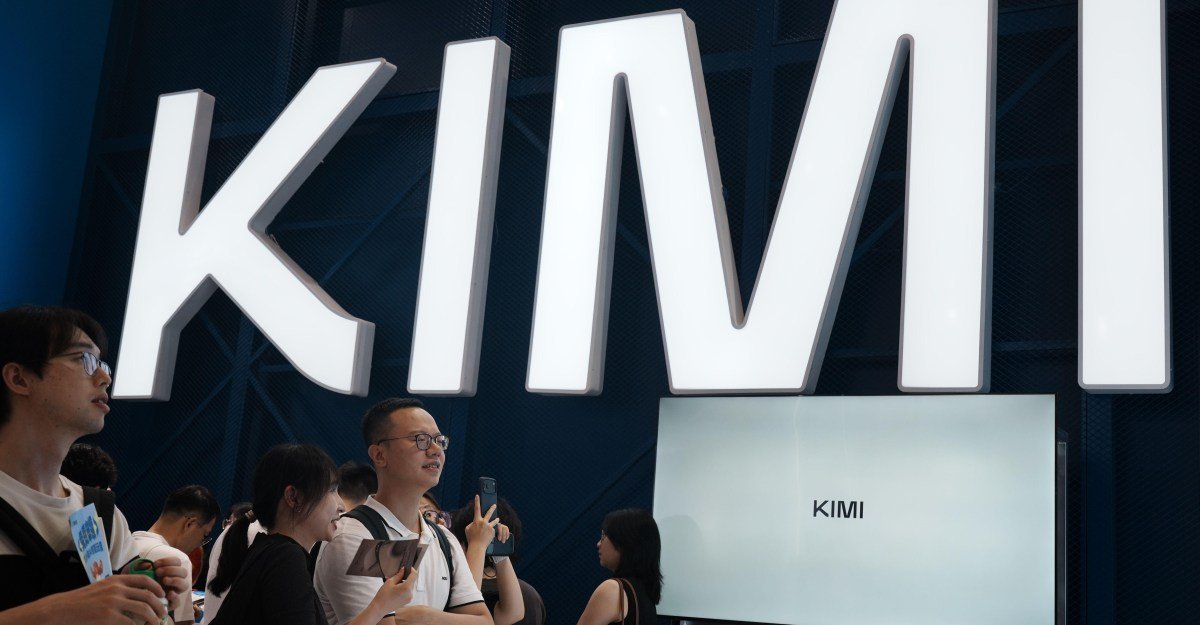
Moonshot AI’s Kimi K3, unveiled recently, boldly claims to outperform nearly every US model, reportedly trailing only OpenAI’s GPT-5.6 Sol and Anthropic’s Claude Fable 5. Its aggressive pricing strategy—$15 per million output tokens compared to roughly $30 for GPT-5.6 Sol and $50 for Fable 5—led to such overwhelming demand that Moonshot temporarily paused new subscriptions. Hot on its heels, Alibaba previewed Qwen3.8, describing it as “one of the most powerful models available today” and “second only to Fable 5,” further amplifying the market’s reaction.
The Open-Weight Advantage
A significant differentiator for both Kimi K3 and Qwen3.8 is the companies’ stated intention to release them as open-weight models. This approach allows developers to download, use, and modify the core training values that shape the AI’s responses. This stands in stark contrast to the closed, proprietary models favored by most leading US AI labs, including OpenAI, Anthropic, and Google. The open-weight strategy could accelerate adoption, foster a broader developer ecosystem, and potentially drive innovation at a faster pace.
Beyond the Hype: Economic Realities and Unanswered Questions
While the performance metrics and pricing are compelling, the economic underpinnings warrant deeper scrutiny. The ongoing debate about whether, and to what extent, Chinese companies utilize US models for training—potentially improving performance at a fraction of the cost—remains unsettled. Furthermore, direct token comparisons between models offer an incomplete picture of overall cost-effectiveness and performance. Nevertheless, the trend is clear: Chinese AI is not just catching up; it’s presenting a formidable, cost-effective, and increasingly open alternative.
Moving Forward: A Call for Strategic Realism
America’s recurring “surprise” at China’s AI advancements highlights a critical need for strategic realism. Instead of reacting with alarm to each new launch, Washington and Silicon Valley must acknowledge the sustained progress, understand the underlying drivers of China’s success, and formulate a consistent, proactive strategy that fosters innovation, addresses cost concerns, and leverages its own unique strengths. The era of being “shocked” by Chinese AI should be definitively over.
For more details, visit our website.
Source: Link