
A severe security incident has rocked the npm ecosystem, with the jscrambler npm package, version 8.14.0, found to be compromised. Simply installing this specific release is enough to unleash a sophisticated Rust-based infostealer onto your machine, posing an immediate and significant threat to developers and build systems globally.
Published on July 11, 2026, the malicious 8.14.0 version was quickly identified by Socket, just six minutes after its release. This swift detection highlights the urgency of the situation: if your systems pulled this package during that critical window, the infostealer has likely already executed with the privileges of your installation process.
A Stealthy Supply Chain Attack Unfolds
The Malicious Mechanism: How It Works
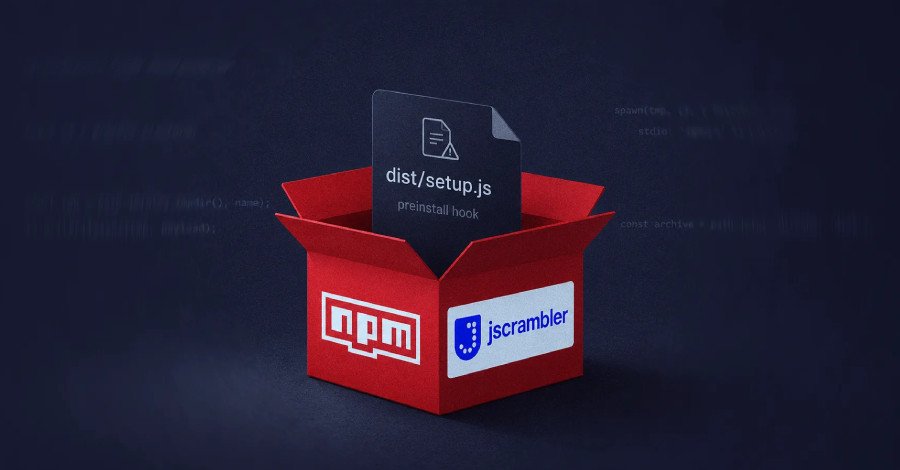
The compromise is insidious. Unlike its clean predecessor, 8.13.0, the 8.14.0 package introduces two new files: setup.js and intro.js. While setup.js acts as a small loader, intro.js is deceptively named. It’s not JavaScript at all, but a 7.8MB container housing three gzip-compressed native binaries, specifically compiled for Linux, Windows, and macOS.
During installation, a preinstall hook triggers setup.js. This script identifies the host operating system, extracts the corresponding binary, writes it to a randomly named file in the system’s temporary directory, marks it executable, and then launches it in a detached, hidden process. This entire operation occurs silently, without user intervention.
Bypassing Security: A Compromised Account?
Crucially, these added malicious files are present only in the published npm package and are entirely absent from jscrambler’s public source code repository. Security firms StepSecurity and SafeDep confirmed that there’s no matching commit, tag, or pull request for version 8.14.0 in the GitHub repository, where 8.13.0 remains the latest official tag. This strongly indicates that the malicious version was pushed directly to npm via a legitimate maintainer account, completely bypassing the project‘s standard release procedures. The exact vector—whether a compromised npm account or a hijacked build pipeline—is still under investigation.
The Infostealer: A Developer’s Worst Nightmare
Targeting a Treasure Trove of Developer Secrets
The payload is a multi-platform Rust infostealer designed to meticulously sweep developer machines for sensitive data. According to updated analysis from Socket and statements to The Hacker News, the target list is alarmingly comprehensive:
- Cloud Credentials:
AWS, Azure, and Google Cloud, including metadata endpoints used by CI runners.
- Cryptocurrency
Wallets:
Seed phrases and wallet data from MetaMask, Phantom, and Exodus. - Password Managers: Bitwarden vault data.
- Browser Data: Stored passwords and cookies.
Messaging & Gaming Sessions:
Discord, Slack, Telegram, and Steam.- AI Coding Tools: Configuration files for Claude Desktop, Cursor, Windsurf, VS Code, and Zed, often containing API keys and Model Context Protocol server credentials.
Beyond Theft: Kernel-Level Footholds and Persistent Threats
The capabilities of this infostealer extend far beyond simple data exfiltration. On Linux, the malware leverages the kernel’s BPF library, allowing it to load an eBPF program directly into the kernel from memory. This represents a significant escalation, providing a deep kernel-level foothold rather than merely userspace file access.
For Windows and macOS users, the binaries incorporate anti-debugging checks and establish persistence mechanisms to ensure survival across reboots. This includes a hidden Windows scheduled task set to relaunch every minute and a macOS LaunchAgent that reloads upon login. The command-and-control (C2) details remain encrypted within the binary, thwarting static analysis. However, StepSecurity’s runtime monitoring has observed the dropped binary communicating with two hard-coded IP addresses and Tor infrastructure, providing the first network indicators of the campaign.
Given that jscrambler is primarily a build-time tool, often installed as a development dependency or run within CI environments, the impact is magnified. These environments are precisely where the infostealer’s targets—cloud keys, deploy tokens, and sensitive source code—reside.
A Broader Context: npm’s Ongoing Battle and Irony of Timing
Echoes of Past Compromises
While the 15,800 weekly downloads of jscrambler are modest compared to the billions seen in other major npm compromises, the targeted nature of this attack is critical. For an infostealer aimed at build machines, widespread reach is less important than privileged access. This incident follows a pattern of npm supply chain attacks, such as the Shai-Hulud worm that spread through hundreds of packages, and the compromises of widely used packages like chalk, debug, and Axios via phished or hijacked maintainer accounts.
npm 12’s New Defaults: A Partial Shield
The timing of this compromise is particularly poignant. Just three days prior, on July 8, npm 12 was released with a significant security enhancement: dependency install scripts are now off by default. This means that on npm 12, a preinstall hook like the one used by the jscrambler infostealer will not run unless explicitly approved by the user. However, older npm clients still execute these hooks automatically, leaving a vast number of developers vulnerable.
Urgent Call to Action: Secure Your Systems Now
Despite version 8.15.0 having replaced the compromised 8.14.0 at the top of npm’s version list—published from the same maintainer account and free of malware alerts—the malicious 8.14.0 version has not been pulled from npm. This means any existing lockfile or command explicitly pinning to 8.14.0 will continue to install the infostealer.
Only the main jscrambler CLI package was affected; its plugins for webpack, gulp, Metro, and grunt remain on their clean June releases without install hooks.
What to do now:
- Immediately cease using jscrambler 8.14.0.
- Upgrade to jscrambler 8.15.0, which is confirmed clean.
- Alternatively, pin your dependency to 8.13.0 for a reliable, pre-compromise version.
- Audit your build systems and development environments for any instances of jscrambler 8.14.0 and take immediate remediation steps if found.
This incident serves as a stark reminder of the persistent and evolving threats within the software supply chain. Vigilance and proactive security measures are paramount to safeguarding developer infrastructure.
For more details, visit our website.
Source: Link