

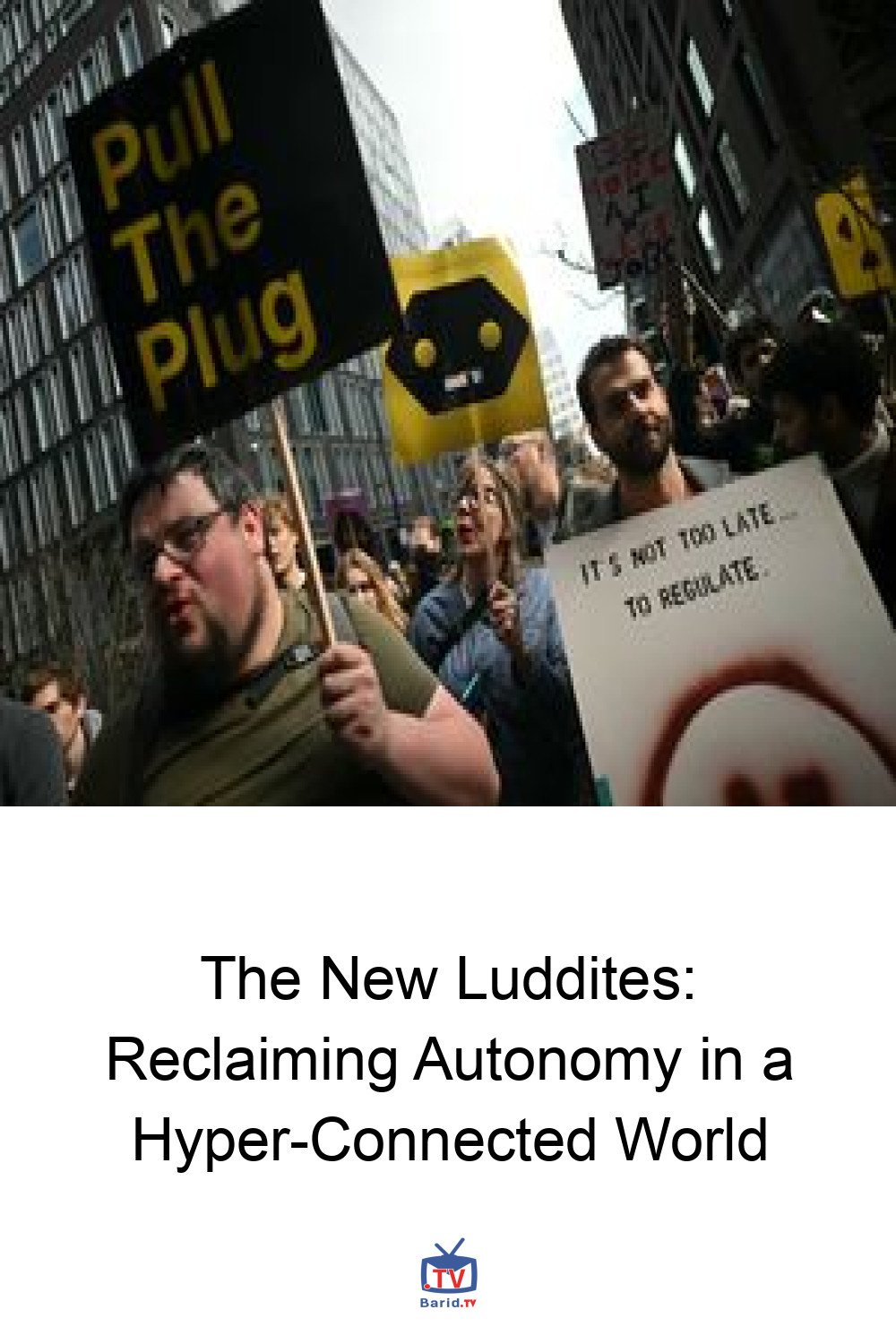
In an era dominated by digital noise and constant connectivity, a peculiar political campaign recently unfolded in the heart of New York City, signaling a growing societal unease with the omnipresence of Big Tech. Dan Fox, an individual deeply involved with a ‘dumbphone’ company and a comedian by inclination, declared his presidential candidacy not with a flurry of tweets or a livestream, but with a stark, refreshing absence of technology.
The Digital Detox Campaign: A Presidential Bid Without Pixels
From the iconic Washington Square Park, Fox addressed a modest crowd of around 40 people, proclaiming, “This revolution will not be televised.” He then playfully enumerated all the ways his campaign would not
engage with the digital sphere: no streaming, no emails, no Substack, no tweets, no BeReal. Instead, he invited attendees to power down their phones, connect with their neighbors, and engage in chants of “no platform.” His nostalgic musings about the early days of AOL, when the internet was a contained entity within a single room, resonated with many. This unconventional announcement was more than a performance; it was a cornerstone event of the “Summer of Ludd,” a week-long festival in the East Village dedicated to collectively exploring ways to opt out of the pervasive influence of Big Tech.
The ‘Boomcession’ and Big Tech’s Shadow
The timing of the “Summer of Ludd” is particularly poignant, coinciding with what economists are terming a “boomcession.” This paradoxical economic climate sees robust figures on paper—driven by AI productivity and soaring stock prices—while a significant portion of the populace reports feeling increasingly worse off, grappling with rising layoffs and escalating credit card debt. In this narrative, Big Tech, rather than elevating society, appears to be leaving many behind. Even industry leaders are acknowledging this disconnect. Microsoft CEO Satya Nadella recently emphasized the need for AI companies to earn “social permission” from the public, cautioning that a scenario where a few firms monopolize technological value while predicting widespread job displacement is unsustainable.
Reclaiming Autonomy: The Modern Luddite Manifesto
The festival itself was a testament to its offline ethos. Events, ranging from a play about the original Luddite movement to a conference at The New School exploring AI’s military and surveillance ties, and even a mending workshop, were advertised exclusively through physical flyers plastered across the neighborhood. Jonathan, a media professional attending the New School conference, discovered the festival through these flyers and expressed his astonishment at its complete lack of online presence. His growing discomfort with data handling in his industry has even led him to consider a career shift towards digital self-determination. Attendees shared personal anecdotes, with one demonstrating the ease of switching to a ‘dumbphone’ and another distributing stickers emblazoned with “Yes Birds! No AI.” and “all bots are cops.”
The term “Luddite” is often used dismissively, implying a technophobe. However, the original Luddites were 19th-century textile workers fighting for their livelihoods against automation, not against technology itself. The modern iteration echoes this sentiment. As one speaker at the conference clarified, the participants weren’t rejecting eyeglasses or indoor plumbing; rather, they were pushing back against technology’s “extraction on people’s autonomy”—be it over their attention, their employment, or their personal data.
Beyond the Fringe: A Growing Discomfort with Digital Dominance
This sentiment extends far beyond a single festival. Across the nation, opposition groups to data centers have more than doubled in the past year, successfully blocking or delaying projects worth tens of billions of dollars. Furthermore, a 2025 Pew study revealed that nearly half of teenagers now perceive social media as having a negative impact on their age group, a sharp increase from just two years prior. While these trends don’t necessarily signify a mass exodus from digital devices, they highlight a pervasive and growing discomfort. This unease is manifesting in various arenas, from state legislatures and city council meetings to public polling on teenage phone usage.
Even within the tech community, a shift is palpable. Chad Whitacre, a veteran open-source developer, recently announced his complete departure from the tech world, including AI, after years of grappling with open-source sustainability issues. He described his transition as “neo-Amish,” seeking a life more akin to 1980 than 2026. His decision, coming from an experienced professional, underscores that this isn’t merely a youthful, fleeting idealism.
A Glimpse into a Post-Digital Future?
Dan Fox’s presidential bid may never appear on a ballot, but the image of 40 individuals willingly disconnecting their phones to engage with a message of digital autonomy is a powerful symbol. It represents a crucial data point in a much larger, ongoing debate about who truly controls our attention and on what terms we engage with the digital world. The “new Luddites” are not against progress, but rather advocate for a more human-centric, intentional relationship with technology, reminding us that true innovation should empower, not enslave.
For more details, visit our website.
Source: Link