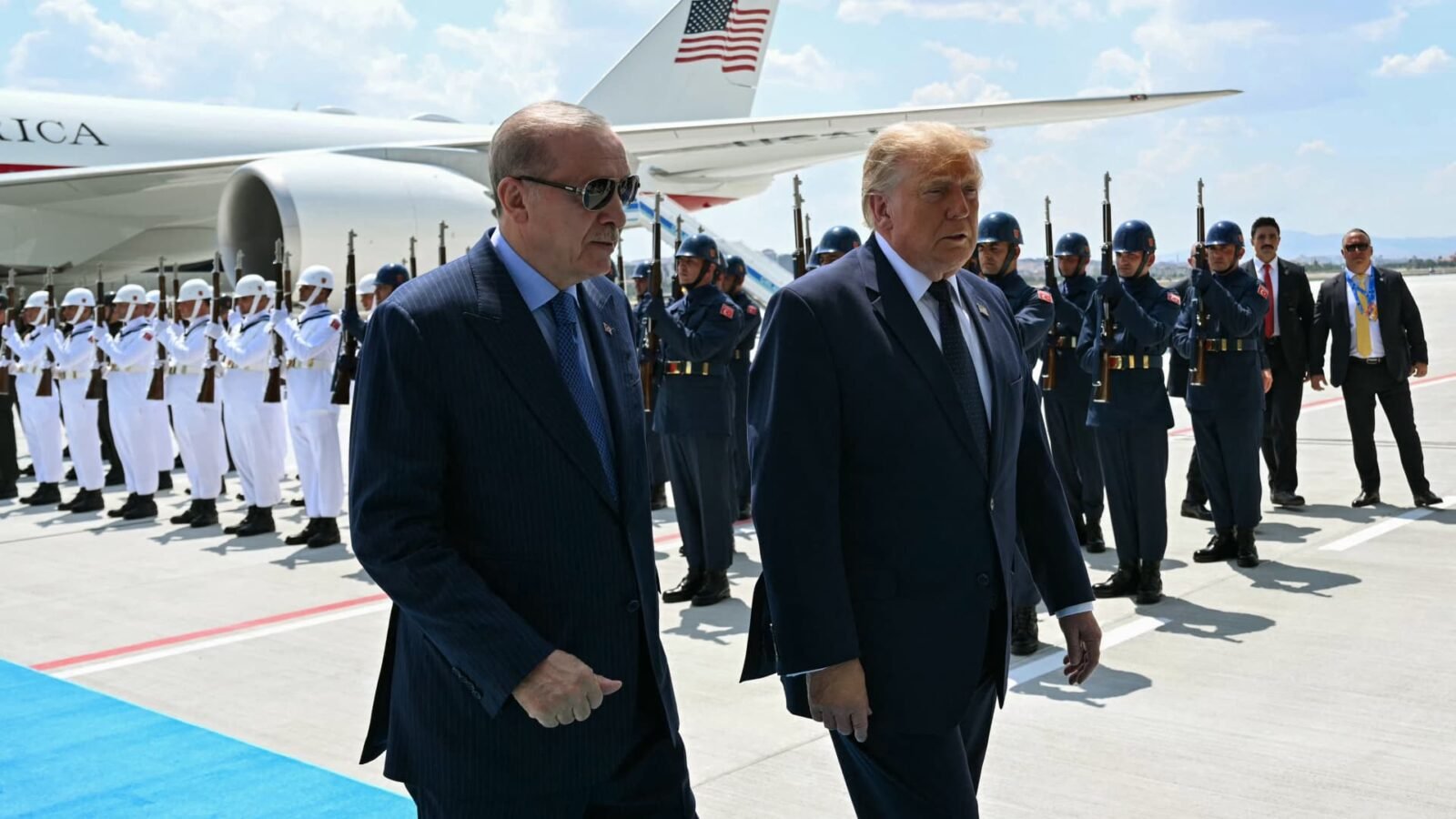

President Donald Trump‘s arrival in Ankara for the NATO summit has cast a spotlight on an alliance grappling with an array of geopolitical challenges. From Russia’s relentless aggression in Ukraine to America’s persistent demands for increased defense spending, and even lingering controversies like the U.S.’s past interest in Greenland, the North Atlantic Treaty Organization finds itself at a critical juncture. The stakes are undeniably high as leaders convene to navigate a complex global landscape.
NATO Under Immense Pressure
The 32-member alliance is facing unprecedented strain. Russia’s ongoing military campaign in Ukraine, particularly the recent missile and drone bombardments on Kyiv, serves as a stark reminder of the “gravest threat to Euro-Atlantic security in decades,” as NATO has formally declared. Ukrainian President Volodymyr Zelenskyy, slated to attend the summit, is expected to make an urgent plea for enhanced air defense systems, emphasizing that “The United States and Europe have enough strength to stop this terror.”
Adding to the external pressures is the internal friction caused by the United States’ insistence that member states significantly boost their defense expenditures. This long-standing demand, often voiced by President Trump, underscores a fundamental disagreement within the alliance regarding burden-sharing and strategic priorities.
Lingering Controversies and Trump’s Stance
Beyond the immediate crises, the summit agenda is further complicated by other contentious issues. The U.S.’s ongoing war against Iran and its prior, albeit unsuccessful, attempts to acquire Greenland (a territory of NATO member Denmark) highlight the broader geopolitical complexities and the unpredictable nature of American foreign policy under Trump.
President Trump himself arrived in Turkey expressing “very disappointed” sentiments regarding the alliance. His remarks, suggesting he might not have attended if the summit weren’t held in Turkey, reflected his often-critical view of NATO members’ contributions and their perceived reluctance to support U.S. initiatives, such as securing the Strait of Hormuz. Michael O’Hanlon of the Brookings Institution aptly summarized the prevailing sentiment, stating, “I can imagine so many issues where this could go wrong,” though he welcomed “even incremental progress and no blow-up.”
A Tense Schedule and Bilateral Dialogues
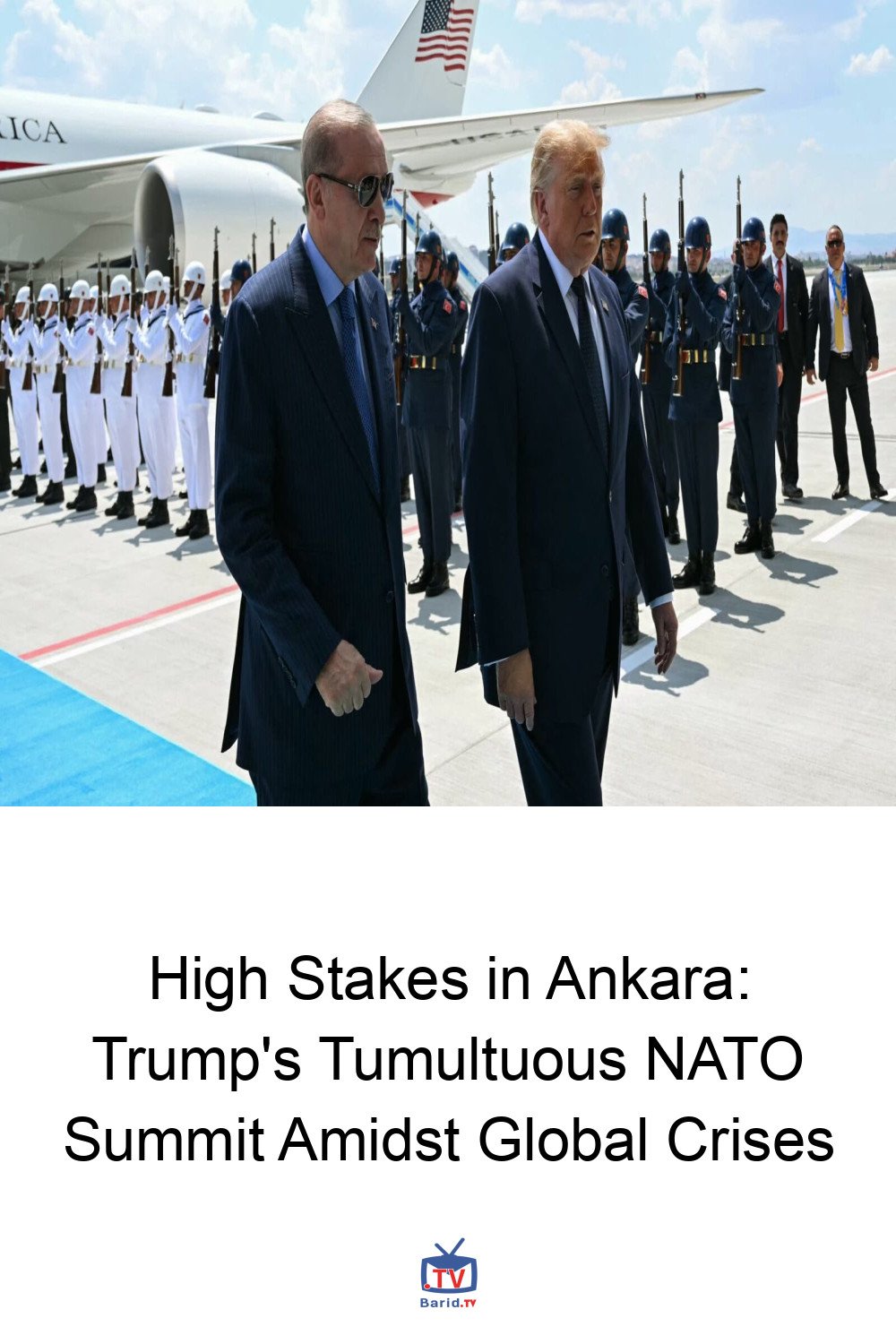
Upon his arrival in Ankara, President Trump was greeted by Turkish President Recep Tayyip Erdogan, with whom he immediately held a bilateral meeting. His schedule for the summit includes a leaders’ dinner, a “family photo,” a working session, and crucial bilateral meetings with both Ukrainian President Zelenskyy and Syrian President Ahmed Hussein al-Sharaa. A press conference is also slated before his departure for Washington.
The Shadow of Kyiv’s Bombardment
The recent devastating attacks on Kyiv, occurring just days before the summit, have undeniably set a somber and urgent tone. These strikes, which killed at least 11 and injured scores, underscore the immediate and dire need for NATO to present a united front against Russian aggression. Interestingly, these attacks followed a nearly 90-minute “business-like and constructive” phone call between Trump and Russian President Vladimir Putin, initiated by the U.S. During this call, Trump reportedly emphasized the potential for “mutually beneficial cooperation” once the war concludes, while Putin offered a “rosy picture” of Russian military efforts.
This juxtaposition of events — a direct dialogue with Putin followed by brutal attacks and a subsequent meeting with Zelenskyy — highlights the delicate and often contradictory nature of U.S. foreign policy in the region. Zelenskyy’s hope for robust commitments to Ukraine’s air defenses will face scrutiny, especially given Trump’s past skepticism regarding further strengthening Ukraine and his historical praise for Putin.
Looking Ahead: A Path Forward for NATO?
The summit’s success hinges on NATO’s ability to demonstrate unity and concrete action. Secretary General Mark Rutte’s earlier statement about turning “Allied commitments into concrete results” resonates deeply. While progress on burden-sharing appears achievable, the broader challenge remains: how to effectively counter Russian aggression while navigating the complex and sometimes conflicting agendas of its most powerful member, the United States. The world watches to see if Ankara will be the site of a renewed alliance or a further fracturing of its foundations.
For more details, visit our website.
Source: Link