

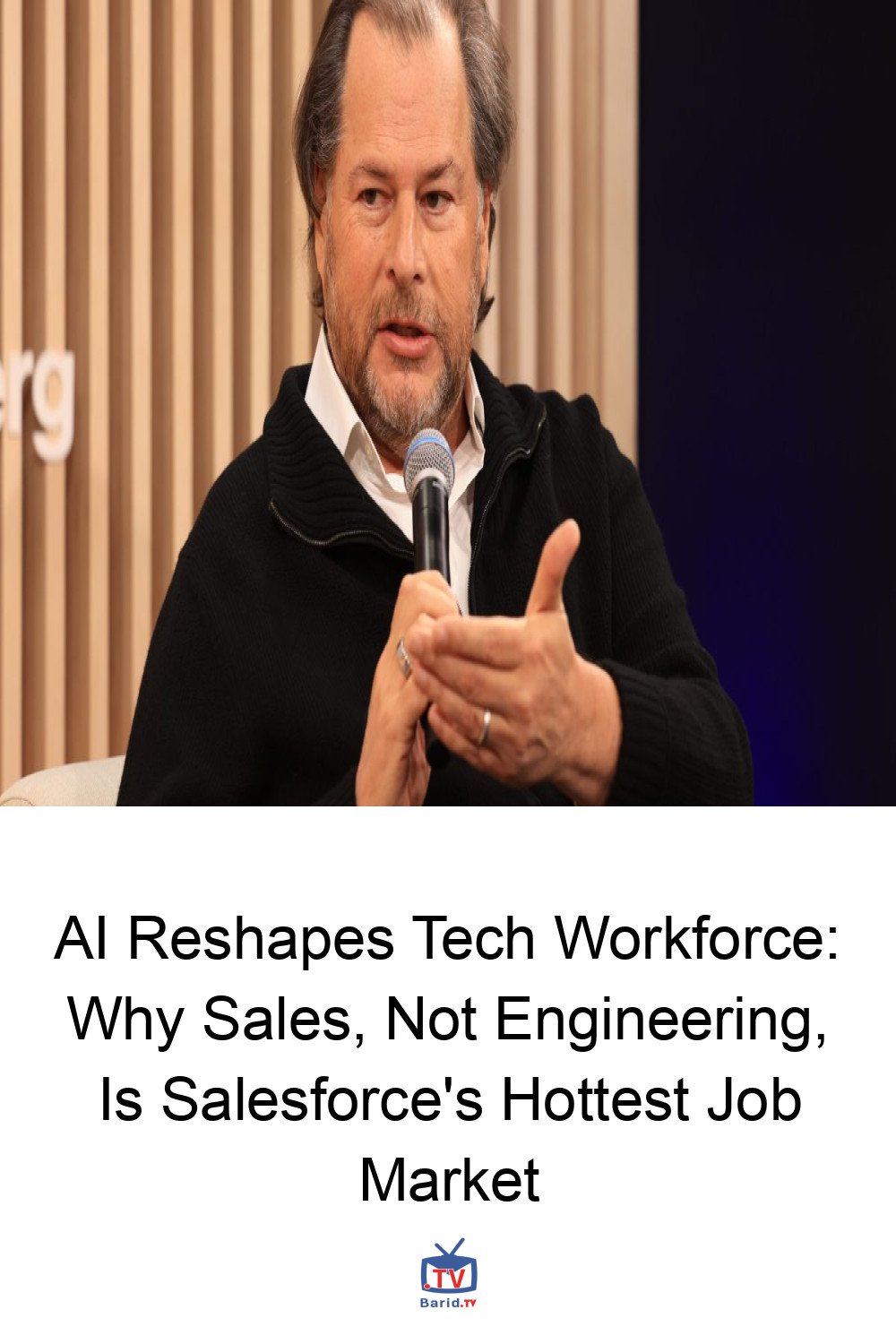
The traditional path to a lucrative career in technology, often paved through engineering degrees, is undergoing a seismic shift. Once the undisputed ‘hot commodity’ in the hiring market, engineering roles are now facing unprecedented headwinds, largely due to the accelerating capabilities of Artificial Intelligence. This dramatic reorientation of the tech workforce is perhaps best exemplified by Salesforce, the $145 billion cloud giant, whose CEO Marc Benioff has made a striking declaration: engineering headcount is stagnant, while sales is booming.
AI’s Productivity Surge Stalls Engineering Growth
During a recent quarterly earnings call, Benioff candidly revealed Salesforce’s strategic pivot. “We’re not hiring more engineers, we’re not hiring more GA [general and administrative roles], we’re mostly expanding only in one area,” he stated, pointing directly to the sales division led by Chief Revenue Officer Miguel Milano. For approximately two years, Salesforce’s engineering team has held steady at around 15,000 staffers, a stagnation Benioff attributes directly to AI-driven productivity gains. He even announced last year that no new engineers would be hired in 2025, underscoring AI’s profound impact.
The company’s headcount has, paradoxically, continued to tick upwards, fueled exclusively by the expansion of its sales force. This talent, adept at selling Salesforce’s diverse product suite—from customer clouds and AI agents to Slack—is now at the vanguard of the company’s recruitment efforts.
The Indispensable Human Touch in Sales
Benioff articulated a clear distinction between AI’s capabilities and the unique value of human sales professionals. “I think we all realize the one thing that we are doing here with you—selling and communicating—that agents are not exactly doing that,” he explained. While AI agents excel at qualification and service, the intricate art of sales, particularly in navigating diverse market segments, still demands human ingenuity and connection. This ‘human touch’ remains critical for closing deals and expanding market reach.
A Broader Industry Trend: Engineering Under Pressure
Salesforce’s cautious approach to engineering hiring is not an isolated incident; it mirrors a growing anxiety across the tech sector. AI and reduced hiring are indeed stifling traditional job opportunities for engineers. Benioff elaborated, “The reason it’s been mostly flat is because we’ve been using AI to create more efficiencies for our engineers. And especially this year—now with these new coding agents—we’ve seen even more dramatic capabilities.”
Layoffs and Declining Job Postings
The evidence of this shift is widespread:
- Amazon: Last year, over 14,000 layoffs saw engineers disproportionately affected, accounting for nearly 40% of job cuts in key regions.
- Microsoft:Software
engineers constituted the largest single category impacted by layoffs in May of the previous year.
- Job Market Data: An Indeed Hiring Lab analysis revealed a 49% decrease in software engineer job postings since early 2020 by early 2025.
However, a glimmer of hope emerges from a 2026 Citadel Securities analysis, showing an 11% year-over-year increase in software engineer job listings on Indeed. This suggests a potential thaw, though companies are increasingly prioritizing specialized roles like AI and cybersecurity engineers, alongside the evergreen demand for sales talent.
Sales: The Resilient Career in the AI Era
While some tech workers grapple with automation woes—one software engineer, laid off in the AI era, resorted to living in a trailer—sales roles are proving remarkably resilient. The latest tech revolution, while challenging for some, is a gold mine for others, particularly AI engineers. Goldman Sachs, for instance, hired Devin, an AI-powered autonomous software engineer, signaling a future where AI augments, or even replaces, certain engineering tasks.
Yet, the human element in driving product adoption remains paramount. Sales representatives, engaging clients face-to-face, were among the top 10 fastest-growing jobs in the U.S. in 2025, according to LinkedIn. This ranking placed them above almost all engineering roles, with the notable exception of AI engineers, which claimed the top spot.
Salesforce recognized this trend early. In 2024, Benioff announced plans to hire 2,000 new sales employees to meet the surging demand for its AI tools. Furthermore, a significant 66% of SaaS firms indicated intentions to ramp up sales hiring in 2025. As companies continue to invest in the people who champion and sell their innovations, sales emerges as a robust and future-proof career choice in the evolving landscape of the AI boom.
For more details, visit our website.
Source: Link