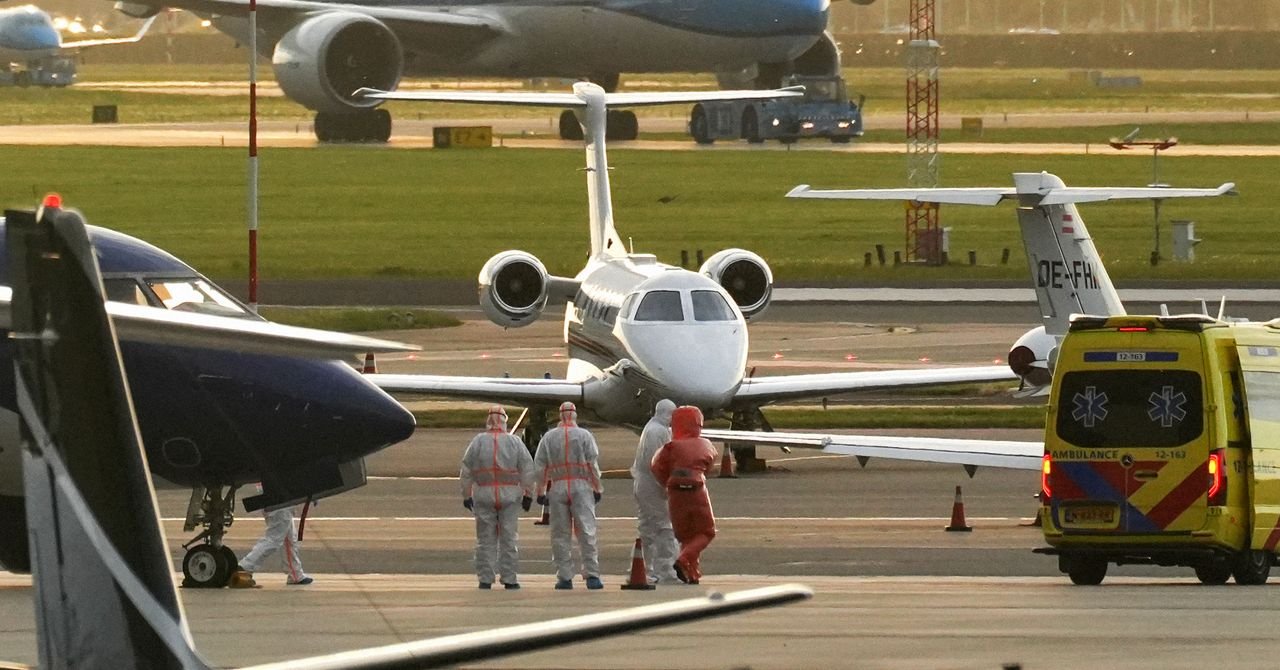

As passengers from a cruise ship linked to a rare Andes hantavirus outbreak returned to the United States, a critical gap in the nation’s public health arsenal became starkly apparent: the absence of a readily available test to diagnose the illness in its earliest, most crucial stages. Amidst this challenge, the University of Nebraska Medical Center (UNMC) in Omaha emerged as a beacon of rapid innovation, swiftly developing its own diagnostic tool.
Nebraska’s Unprecedented Breakthrough
In a remarkable feat of scientific agility, a lab at UNMC engineered a diagnostic test for the Andes virus within days. This proactive measure was taken in anticipation of receiving 16 American passengers from the affected vessel. Peter Iwen, director of the Nebraska Public Health Laboratory, highlighted the singularity of their achievement, telling WIRED, “I believe we might be the only lab in the nation that has this test available at the moment.” He was referring to the polymerase chain reaction (PCR) testing method, a cornerstone of rapid diagnostics, famously utilized during the COVID-19 pandemic. PCR’s unparalleled ability to detect minute quantities of a virus before symptoms fully manifest is vital for swift identification, prompt patient care, and effective disease containment.
A Hub for High-Stakes Infectious Disease Care
UNMC’s medical center is renowned for its highly specialized biocontainment unit, a facility meticulously designed to manage patients afflicted with severe infectious diseases for which vaccines or treatments are scarce. This unit’s expertise was previously demonstrated during the 2014 Ebola outbreak and again in 2020, when it provided care for some of the first Americans diagnosed with COVID-19. This established infrastructure and experienced personnel proved invaluable in their rapid response to the hantavirus threat.
The Diagnostic Dilemma: Beyond Antibodies
Upon learning that Nebraska would receive passengers, Iwen reached out to the US Centers for Disease Control and Prevention (CDC) to inquire about available tests. He discovered that while the CDC possessed a serological test capable of detecting hantavirus antibodies, this method had a significant limitation: antibodies only develop once a person is actively ill and their immune system has had time to mount a response. This delay is precisely what early detection aims to circumvent.
Andrew Nixon, a spokesperson for the US Department of Health and Human Services, confirmed to WIRED that the CDC did have a PCR test for the Andes virus. However, it was categorized as a “research test,” meaning it lacked the rigorous validation required for patient management. Diagnostic tests, unlike research tests, must undergo stringent validation to ensure consistent and reliable results for clinical use. Nixon assured that the agency was actively working on validating its PCR test.
Mobilizing Expertise: A Collaborative Effort
Undaunted, Iwen’s lab swiftly mobilized to procure the necessary components for constructing and validating a PCR test from the ground up. Their initial inquiries led them to a California lab, which had experience with hantavirus cases but for a strain specific to the US. The Andes virus, distinct from the prevalent Sin Nombre virus found in North American rodents, had previously only been identified in South America. “Tests that we have available in the US will not detect that virus that’s found in South America,” Iwen explained, emphasizing the genetic divergence.
The Nebraska team then connected with Steven Bradfute, a hantavirus scientist at the University of New Mexico. Crucially, a graduate student in Bradfute’s lab, Frannie Twohig, had developed an Andes virus PCR test for her PhD research. Bradfute’s lab also possessed non-pathogenic genetic material of the Andes virus, essential for the Nebraska lab to validate its new test.
From Shipment to Screening: The Validation Marathon
On a Friday, Bradfute dispatched the vital genetic material and a box of chemical reagents to Nebraska overnight. By Saturday morning, Iwen’s team had everything required to commence the assembly and validation process. This intensive effort, spanning Saturday and Sunday, involved running approximately 300 tests. The team meticulously added Andes genetic material in varying concentrations to healthy human blood samples to assess the test’s detection capabilities, comparing results against control samples. Roughly a third of their initial test supply was dedicated to this rigorous validation, leaving them with the capacity to conduct several hundred tests on patient samples.
While the 16 individuals in Nebraska’s biocontainment unit had not yet been tested, Iwen anticipated doing so imminently. The overarching objective, he stressed, is to identify cases as early as possible to initiate treatment and prevent the progression to severe disease. The Andes virus carries a sobering fatality rate of around 35 percent.
“These folks are going to have a very low concentration of virus in their blood system once they are early on in the stages of their disease. That’s the rationale for a test. We want to be able to give an early indication that they’re positive,” Iwen affirmed.
The Criticality of Early Supportive Care
Although no specific hantavirus drugs are immediately available, early supportive care—including meticulous fluid management and respiratory support—can dramatically improve survival rates. The Andes virus primarily targets the small blood vessels of the lungs, leading to fluid accumulation, severe breathing difficulties, and ultimately, respiratory failure.
Kelly Wroblewski, senior director of infectious diseases at the Association of Public Health Laboratories, underscored the limited state-level capacity for hantavirus antibody testing across the nation, further highlighting the urgency and significance of UNMC’s rapid PCR test development. This initiative not only addresses an immediate public health crisis but also sets a precedent for proactive diagnostic innovation in the face of emerging rare viral threats.
For more details, visit our website.
Source: Link