

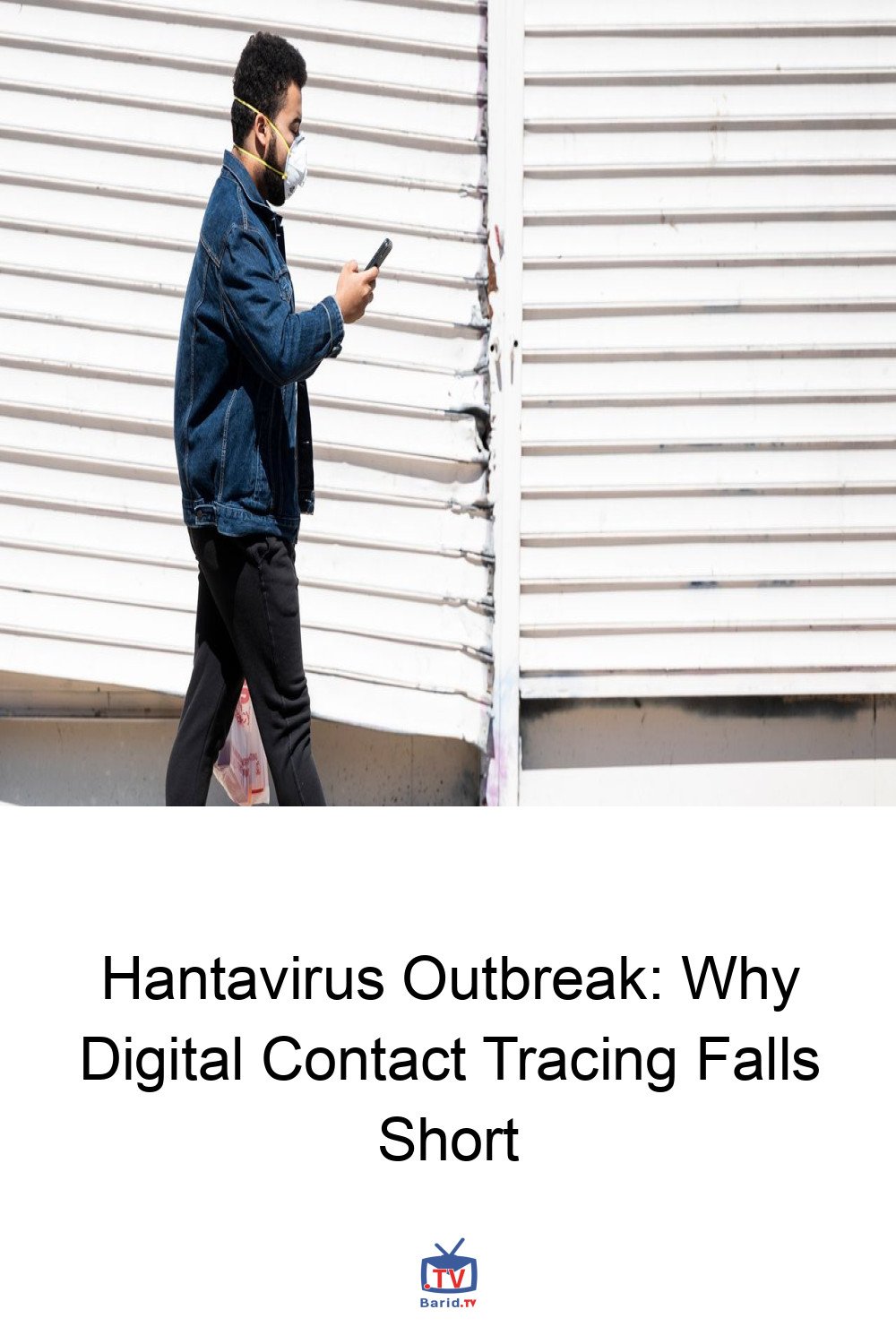
A recent Hantavirus outbreak aboard a cruise ship, tragically claiming three lives, has once again thrust the critical role of contact tracing into the spotlight. As authorities embark on the painstaking global task of tracking down 29 individuals who disembarked, a pertinent question arises: could the contact-tracing apps, once heralded as a solution during the COVID-19 pandemic, offer any assistance?
The short answer, according to experts, is a resounding ‘not really’.
The Legacy of COVID-19 Contact Tracing Apps
The year 2020 saw an unprecedented global push for digital contact tracing. Tech giants like Apple and Google collaborated to develop systems that leveraged Bluetooth technology, aiming to alert individuals who had come into close proximity with someone testing positive for COVID-19. While these apps offered a broad understanding of potential exposure and encouraged self-quarantine, their effectiveness in significantly curbing the pandemic’s spread was varied, often performing better in highly managed European nations than in the United States.
Hantavirus: A Different Tracing Challenge
Unlike the widespread nature of a global pandemic, the Hantavirus outbreak presents a distinct challenge that digital apps are ill-equipped to handle. Emily Gurley, a distinguished epidemiologist at Johns Hopkins University, articulated this clearly in a response to WIRED: “There is no use of apps for this hantavirus outbreak. The number of cases are small, and it’s important to trace all contacts exactly to stop transmission.”
Precision Over Proximity: The Manual Imperative
For an outbreak of this scale and severity, the need for absolute precision is paramount. Officials must meticulously trace the virus’s path, starting from the infected individual and painstakingly mapping out their movements and personal interactions. This person-by-person, confirmed-contact approach is far more rigorous than the broad, proximity-based data collected by apps.
App-generated data, while useful for identifying general population trends during a widespread crisis, lacks the granular accuracy required for a highly fatal, contained outbreak. It simply cannot provide the exact, verifiable contact information necessary to halt transmission effectively.
Privacy Concerns and Accuracy Limitations
Beyond the issue of scale, contact-tracing apps have always grappled with inherent limitations. The requirement for always-on access to proximity data raised significant privacy concerns among users. Furthermore, the technology struggled with accuracy, occasionally yielding false negatives or positives that could hinder, rather than help, genuine epidemiological efforts.
The Enduring Value of Human-Led Tracing
In scenarios like the cruise ship Hantavirus outbreak, where the number of potentially exposed individuals is manageable enough for direct, personal outreach, the traditional, human-led method of contact tracing remains superior. Every person on that ship can theoretically be identified and contacted directly, making the “hard way” the most effective and responsible approach.
As Gurley aptly concludes, “During small but highly fatal outbreaks, more precision is required.” This underscores the irreplaceable role of dedicated public health professionals in meticulously tracking and containing serious, localized disease threats, where technological shortcuts simply won’t suffice.
For more details, visit our website.
Source: Link