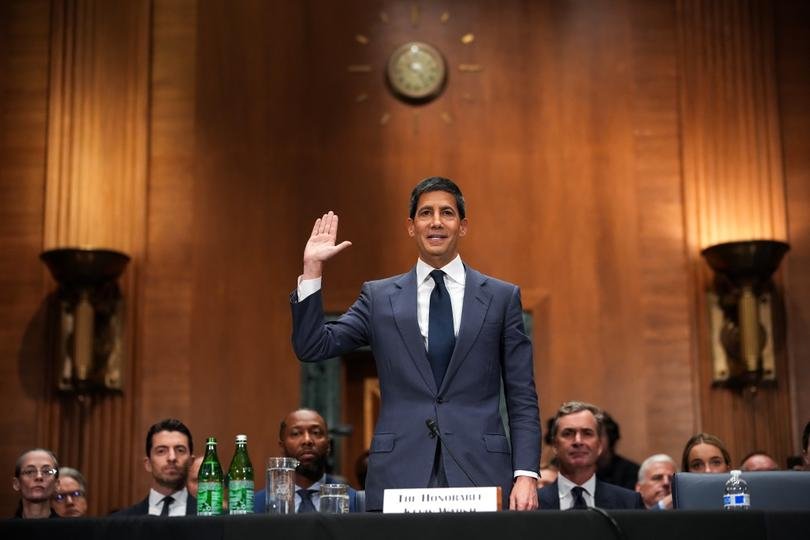

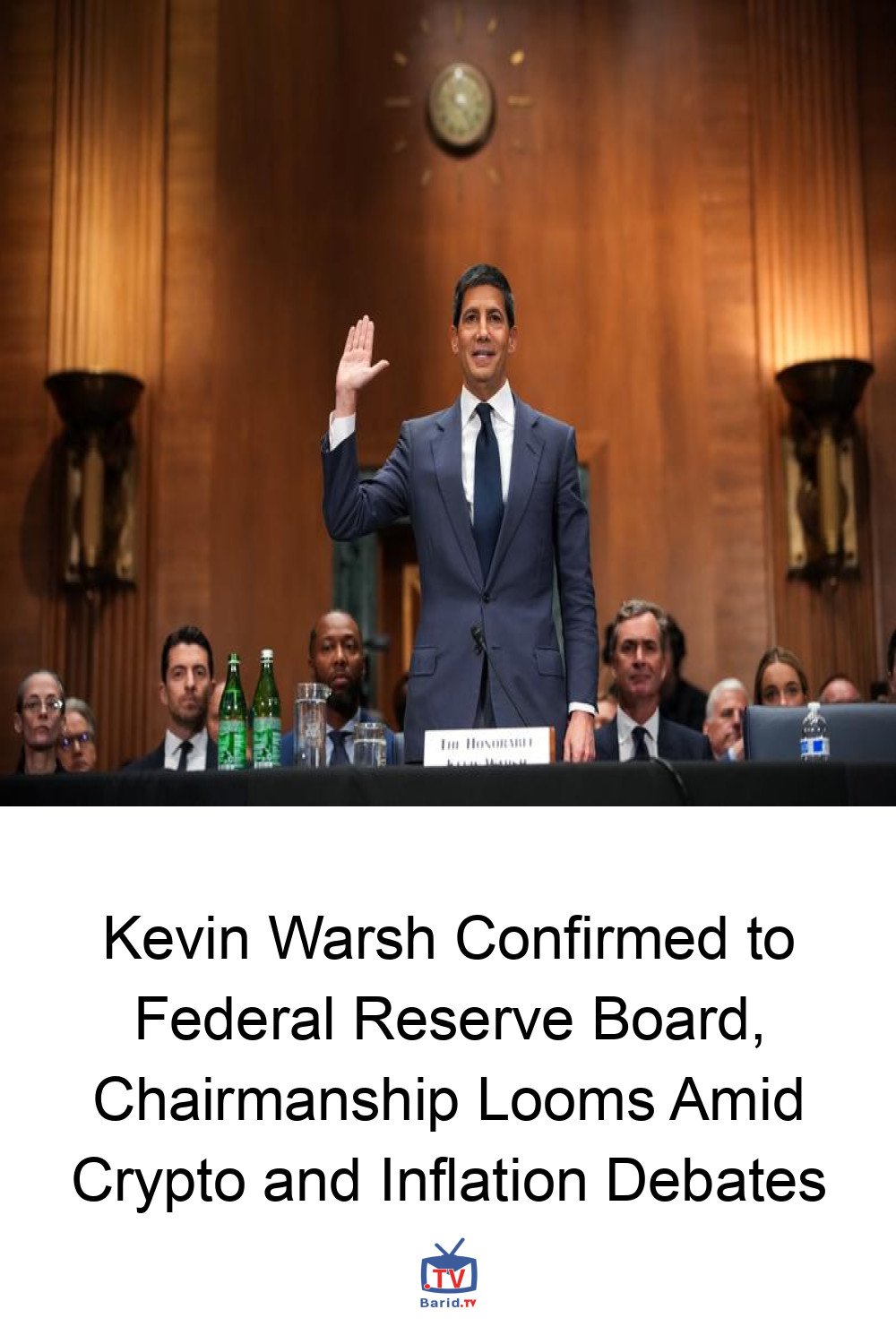
In a pivotal move for the future of U.S. monetary policy, the Senate has officially confirmed Kevin Warsh to the Federal Reserve Board of Governors. This confirmation, secured by a 51-45 vote, positions the former Morgan Stanley banker and notable crypto-linked investor as a leading candidate to potentially succeed Jerome Powell as the central bank’s chair.
A Step Closer to the Helm of the Fed
The confirmation of Warsh, 56, marks a significant moment for President Donald Trump’s administration, moving his pick closer to assuming one of the most influential economic roles globally. The vote saw a rare bipartisan split, with Senator John Fetterman (D-Pa.) being the sole Democrat to back the nomination.
While Warsh now holds a seat on the Board of Governors for a 14-year term, the more critical vote for the four-year chairmanship is still pending, expected as early as Wednesday. Should he be confirmed as chair, Warsh would step into the shoes of Jerome Powell, whose eight-year tenure concludes this Friday. Powell, however, has indicated his intention to remain on the board during an ongoing federal investigation into renovations at the Fed’s headquarters.
Navigating Economic Headwinds and Digital Frontiers
Warsh assumes his new role at a time of considerable economic uncertainty. Policymakers are grappling with renewed inflation concerns, exacerbated by geopolitical tensions such as the war in Iran and a subsequent surge in energy prices. All eyes will be on the Fed’s approach to interest rates and financial market regulation under its new leadership, as investors seek clarity in a volatile global landscape.
Warsh’s Crypto Connections: A New Era for Digital Asset Policy?
Perhaps one of the most intriguing aspects of Warsh’s appointment is his extensive background in the cryptocurrency and blockchain sectors. Financial disclosures filed with the Office of Government Ethics revealed his substantial investments in digital asset companies, spanning decentralized finance, crypto payments, and tokenized networks through various venture funds and private entities.
These holdings included exposure to firms involved in Bitcoin infrastructure, Layer 1 and Layer 2 blockchain networks, and prediction markets. Warsh has publicly pledged to divest most of these investments if confirmed, a move aimed at mitigating potential conflicts of interest.
His deep familiarity with crypto markets positions him uniquely as the Federal Reserve confronts critical policy decisions. The central bank is currently weighing complex issues such as stablecoin regulation, the establishment of clear rules for bank crypto custody, and ongoing research into the development of digital payment systems. Warsh’s insights could prove invaluable in shaping the Fed’s stance on these rapidly evolving financial technologies, potentially ushering in a new era for digital asset integration within the traditional financial system.
For more details, visit our website.
Source: Link