

“Take care of your body. It’s the only place you have to live.” ~Jim Rohn
For years, I wore exhaustion like a badge of honour. It was proof of my dedication, my seriousness, my worth. I was the person who could conquer fourteen-hour shifts on five hours of sleep, only to repeat the cycle. What I was actually proving, however, was my remarkable ability to run my body into the ground.
The Relentless Pursuit: When Exhaustion Becomes Identity
A Healer Undone: The Irony of a Surgeon’s Burnout
My training as a surgeon in London was a crucible of demanding days and sleepless nights. My shifts began before dawn and stretched long past sunset, punctuated by life-altering decisions fuelled by little more than caffeine and sheer willpower. I excelled in my profession, a skilled hand in the operating theatre, yet I was a novice in the art of self-care. The profound irony was not lost on me: I could meticulously diagnose, treat, and repair the intricate workings of another human body, but remained utterly blind to the silent deterioration within my own.
The Whisper in the Corridor: A Silent Alarm
The turning point wasn’t a dramatic collapse, but a quiet Tuesday at 2 a.m. As I walked to check on a patient, my legs felt impossibly heavy, and my vision blurred for a fleeting half-second. I braced myself against the cold corridor wall, waiting for the sensation to pass. It wasn’t an emergency, but something far more insidious: a signal I had been diligently ignoring for years. At thirty-three, my blood tests were pristine, and my colleagues assured me I looked ‘fine.’ Yet, I knew deep down that something was profoundly amiss, even if I couldn’t name it.
Unveiling the Unseen: The Power of Stillness
Beyond the Surface: Listening to the Body’s True Needs
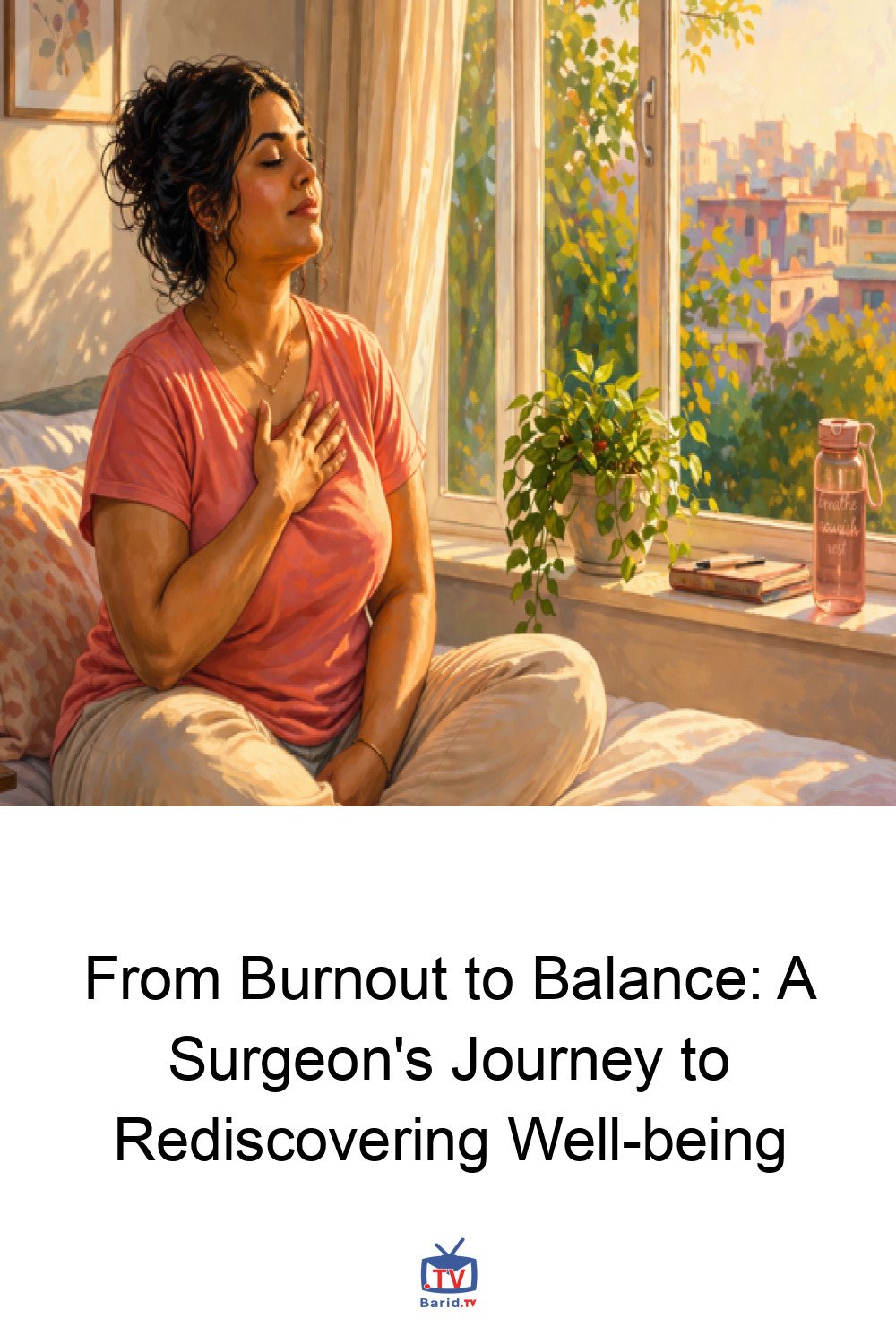
A colleague’s suggestion of meditation initially struck me as absurd. Time to sit still? I barely had time to eat. But one desperate morning, more out of curiosity than conviction, I sat on the edge of my bed for five minutes before my shift. No phone, no agenda, just breathing. It felt utterly pointless. Yet, I repeated the ritual the next day, and the day after. Within two weeks, a subtle shift occurred. I began to notice the things my relentless pace had obscured: the perpetual tension in my jaw, the shallow, hurried breaths that had become my default, the meals I consumed without truly tasting, the way sleep came not from genuine rest, but from sheer depletion.
Slowing down didn’t offer an overnight cure. Instead, it gifted me something far more valuable: the clarity to ask a better question. Not, ‘What’s wrong with me?’ but, ‘What does my body actually need?’
The Microscopic Truth: Understanding Cellular Fatigue
As a surgeon, my training focused on treating damage once it manifested: scarred tissue, worn joints, clogged arteries. I addressed consequences, rarely causes. Delving into the science of cellular health, I had a profound realization: the damage I witnessed in my patients didn’t appear suddenly. It accumulated silently over decades, in tiny increments, in all the moments the body pleaded for rest and received stress in return. I learned that every cell requires specific molecules to generate energy and repair itself, and that these vital components naturally decline with age. The profound fatigue I had dismissed as a character flaw – laziness or weakness – was, in fact, my cells running critically low on what they needed to thrive. For the first time, I approached my own health with the same rigorous curiosity and data-driven perspective I applied to my patients, replacing judgment with understanding.
Rebuilding from Within: Small Shifts, Profound Impact
Pillars of Wellness: Sleep, Movement, Nutrition, and Mindfulness
My transformation wasn’t a sudden overhaul. It was a deliberate, step-by-step process. First, sleep. I committed to eight hours, even if it meant declining social invitations or leaving work earlier. The initial guilt was palpable, but the undeniable results – a clearer mind, sustained energy – quickly outweighed it.
Next, movement. Not punishing gym sessions, but simple walking. Thirty minutes every morning, before I even touched my phone, rain or shine. It became my non-negotiable reset button, a quiet communion with myself before the day’s demands began.
Then, food. I shifted from eating for convenience to eating for my cells. More vibrant berries, a wider array of vegetables, generous drizzles of olive oil. Less sugar, less alcohol. Not perfectly, but consistently.
Finally, stillness. Those initial five minutes of morning breathing gradually expanded to ten, then twenty. Meditation, for me, wasn’t a spiritual quest; it was a practical tool. It sharpened my awareness, allowing me to detect stress at its nascent stage, long before it could manifest as damage.
The Wisdom of Hindsight: Lessons for a Lifetime
Tiredness as Information: Decoding Your Body’s Signals
I often wish someone had told me sooner that tiredness isn’t a character flaw; it’s vital information. I wish I had understood that the body doesn’t wait for a convenient moment to break down. Instead, it meticulously accumulates damage in the background: in the nights of insufficient sleep, the meals skipped, the stress silently swallowed. I wish I had known that prevention isn’t dramatic or heroic; it’s often boring. It’s consistent sleep, daily walks, nourishing vegetables, and a few quiet minutes of mindful presence. And it works.
A New Rhythm: Thriving, Not Just Surviving
Today, I possess more energy than I did at thirty. I awaken naturally, without an alarm. I exercise not from guilt, but because it genuinely feels good. I eat mindfully, breathe deeply, and sleep soundly. I am not a fundamentally different person; I simply stopped ignoring the insistent whispers of my own body. The surgeon who once couldn’t heal herself finally listened. And the prescription, it turned out, was beautifully simple: slow down, pay attention, and diligently care for the one body you have.
Your Body’s Invitation: A Call to Gentle Action
If you find yourself running on empty right now, remember this: you don’t need a complete life overhaul. You need one kind decision today. Grant yourself an extra hour of sleep. Take a walk without your phone, truly noticing your surroundings. Choose something colourful and nourishing to eat. Sit quietly for five minutes and simply observe how your body feels. Your body is perpetually communicating with you. It has a vital message to share.
For more details, visit our website.
Source: Link