

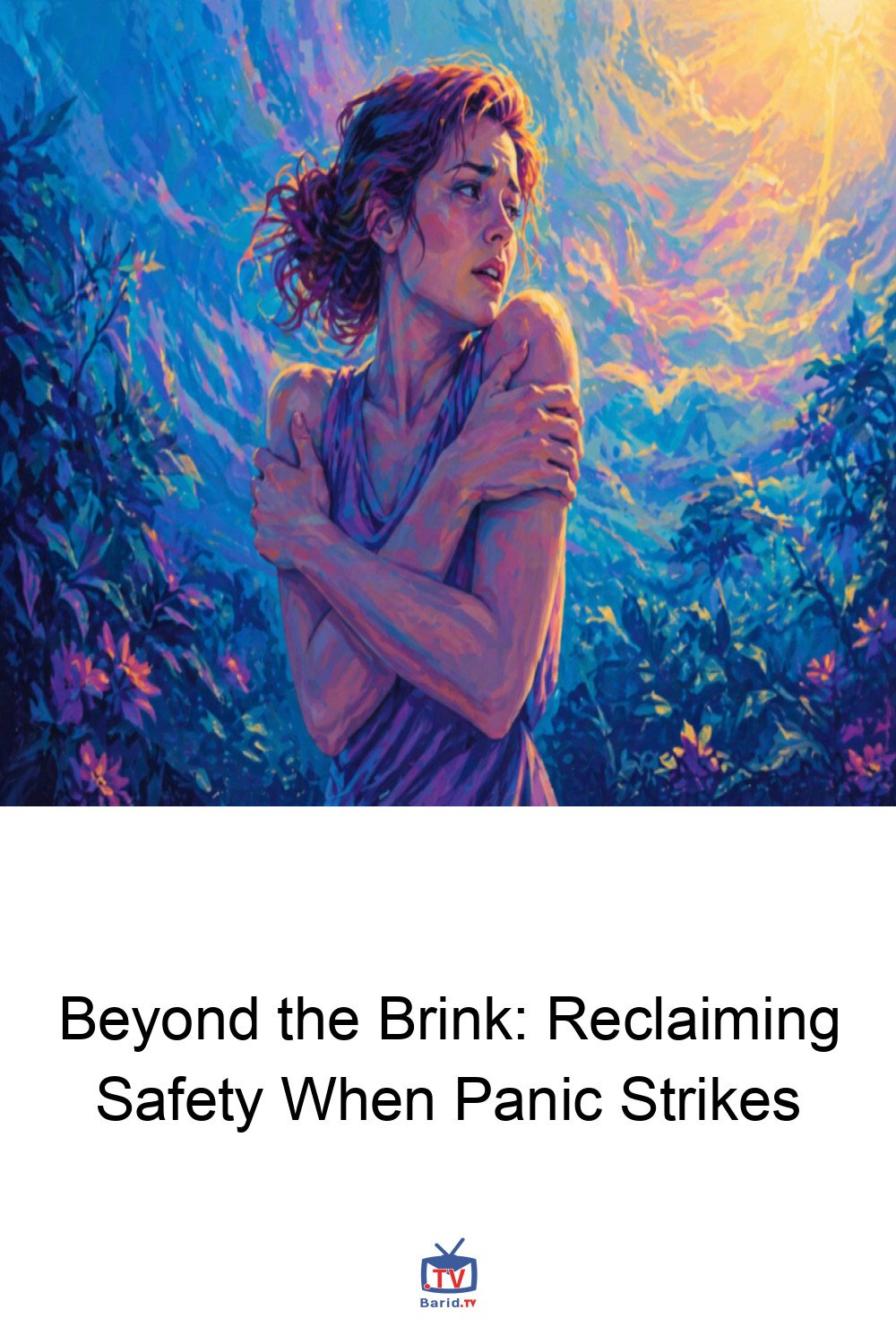
“Anxiety isn’t you. It’s something moving through you. It can leave out of the same door it came in.” ~James Clear
The sudden onset of a panic attack can be one of life’s most terrifying experiences. Imagine driving at highway speeds, miles from an exit, when your heart begins to race, breath shortens, chest tightens, and a wave of dizziness threatens to overwhelm you. This was the author’s reality years ago on a bridge, convinced that something catastrophic was unfolding within her own body. This harrowing experience led to a prolonged fear of driving and a constant, exhausting vigilance for the return of those dreaded sensations.
If you’ve ever felt the grip of panic – the racing heart, the disorienting dizziness, the chilling certainty that disaster is imminent – you understand this profound sense of betrayal by your own physiology. The common, yet mistaken, belief is that these intense physical symptoms signify a serious underlying medical issue. However, a deeper understanding reveals a different truth, one that can fundamentally change how we relate to panic.
The Misunderstood Alarm: Your Body’s Survival Instinct
The pivotal realization that transformed the author’s experience was this: the sensations of panic, while undeniably frightening, are not inherently dangerous. Instead, they are your nervous system sounding an alarm, a primal response designed for survival. When we perceive a threat, real or imagined, our body activates the ancient fight-or-flight mechanism. Adrenaline surges, heart rate accelerates, breathing quickens, and muscles tense – all preparing us to confront or escape danger.
The Fight-or-Flight Overdrive
This intricate system evolved to protect our ancestors from immediate threats, like predators. Once the danger passed, a healthy, regulated nervous system would naturally engage the “rest-and-digest” response, returning the body to a state of calm. However, prolonged stress can throw this delicate balance into disarray. When the nervous system is perpetually under siege, the fight-or-flight response becomes overactive, and the rest-and-digest function falters. The body remains in a state of heightened alert, triggering alarms even when no actual danger is present.
For the author, this was precisely the case. Juggling single parenthood in a demanding city like San Francisco, running a high-stress wedding photography business, and enduring hours of daily traffic meant her nervous system was constantly pushed to its limits. Exhaustion, burnout, and perpetual edginess became her norm, leading to increasingly frequent and terrifying panic attacks. The unexpected release of adrenaline created overwhelming sensations, which were then interpreted as signs of impending catastrophe:
Am I having a heart attack? Am I losing control? These fearful thoughts, in turn, released more adrenaline, creating a vicious cycle: Sensation → Fear → More Adrenaline → Stronger Sensations. It’s a terrifying loop that can feel impossible to escape.
Breaking the Cycle: Understanding is Key
True healing from panic doesn’t begin with an attempt to suppress or control the sensations. It starts with profound understanding. The author’s breakthrough came when she recognized that her body wasn’t failing her; it was merely responding precisely as it was programmed to, albeit in an overzealous manner due to chronic stress. This subtle yet powerful shift in perspective transformed panic sensations from harbingers of doom into mere signals from an overtaxed nervous system.
Relearning Safety: Practical Steps
The journey to recovery involves teaching the nervous system to relearn what safety feels like, rather than battling the sensations, which often intensifies them. One effective technique is conscious breathing. The author recommends “four-six breathing”: inhaling for a count of four and exhaling for a count of six. This extended exhale slows the heart rate, signaling to the nervous system, “We’re okay,” thereby activating the calming rest-and-digest response. It also means allowing sensations to pass through you without judgment, observing them rather than fighting them.
Embracing Calm: A Path Forward
Healing from panic is a process of gentle re-education for your nervous system. By understanding its mechanisms, practicing mindful techniques like controlled breathing, and cultivating a compassionate awareness of your body’s signals, you can gradually dismantle the panic loop. The path to feeling safe again isn’t about eradicating every uncomfortable sensation, but about building resilience and trust in your body’s innate capacity for calm. It’s about recognizing that while panic feels dangerous, it is ultimately a temporary state that you have the power to navigate and overcome.
For more details, visit our website.
Source: Link