
“The world breaks everyone, and afterward, many are strong at the broken places.” —Ernest Hemingway
The silence in the elevator was profound, heavy with unspoken grief. My grandmother had just passed, and my sister and I were leaving the room where her body lay. As the doors slid shut, my sister turned to me, her voice a quiet pronouncement: “Now you’re the last strong one in this family.”
A strange cocktail of emotions washed over me. Initially, a surge of pride — a comforting affirmation of a role I had long inhabited. But almost immediately, a deeper, more visceral reaction took hold. My stomach clenched. An overwhelming urge to halt the elevator, to flee, to disappear, consumed me. Her words weren’t a revelation; they merely articulated a truth I had carried within for decades, a truth from which a nascent part of me desperately yearned to escape. But how? That answer remained elusive.
The Echoes of a Closed Door: A Childhood Forged in Silence
To truly grasp the weight of that elevator moment, one must journey back to a hallway, four decades prior. I was six, perhaps seven, standing outside my mother’s room. She had recently returned from a psychiatric hospital, an event I had eagerly anticipated. I’d envisioned a joyous reunion, a return to a normalcy I could barely recall. Yet, her homecoming was marked by a closed door. Behind it, the rhythmic clatter of her typewriter — she was writing a novel.
I knocked, a polite, tentative gesture born of a childhood already accustomed to deferring my own needs. The response was swift and sharp: “No. Don’t disturb me.” I recognized the tone, a familiar echo of times she’d declared me “too much” for her. I left, not with anger, but with a profound, unsettling sense of understanding. It made sense, I reasoned, that the door would be closed. The correct response, I concluded, was to tend to myself and never ask again. This silent decision, forged in a childhood hallway, became the foundational blueprint for the next forty years of my life.
The Seeds of Self-Sufficiency
My mother’s emotional absence predated her hospitalization. I recall endless waits for her attention, pleas to “stop crying” because it was “too much” for her. I remember being accused of stealing a ring I hadn’t touched, simply because she’d misplaced it. The shouts directed at my father, declaring me “too strong-willed” and beyond her capacity to manage. These were, in hindsight, the nascent cracks in a woman on the precipice of a psychological breakdown. But as a child, I lacked that understanding.
Navigating the Storm: Early Lessons in Solitude
At the tender age of five, my mother was committed to a psychiatric hospital, diagnosed with severe psychosis. My memories of that period are fragmented — my baby sister had just been born, my grandmother suddenly appearing to collect me from school. Overnight, my sister and I were transplanted to a different city, a new school, devoid of friends. In that upheaval, something within me solidified: a deep-seated conviction that, in some fundamental way, I was utterly alone.
When my mother returned, I clung to the hope that things would be different. The closed door, however, delivered a stark message: they were not. So, I became useful. I assumed the role of my younger sister’s protector. I kept a vigilant eye on my father. I monitored the emotional barometer of our home with the precision of a seasoned meteorologist — constantly scanning, perpetually adjusting, always ensuring that no one would ever need to worry about me, for I was already shouldering the weight of every other concern.
The Unseen Architect: Building a Life of Indispensability
Later, after my parents divorced and my mother established a separate life, my caregiving extended to her. Every fortnight, my sister and I would journey by train to visit, never knowing what awaited us. We’d meticulously scan for signs of a manic episode, treading on eggshells to avoid triggering her fragile state. Even when, at fourteen, I made the agonizing decision to cease direct visits, I maintained a watchful distance, monitoring her well-being through phone calls for years. I cannot recall a time when I was her daughter; I was, unequivocally, her mother.
The Illusion of Safety
Being strong for everyone didn’t feel like a choice then; it felt like an intrinsic part of my identity, a necessary vocation. It also offered a peculiar sense of safety. As long as I was the linchpin, the one holding everything together, I had a defined role, a reason to be needed. And being needed, if I am truly honest, felt remarkably akin to being loved.
The Prison Within: Unmasking the Burden of Strength
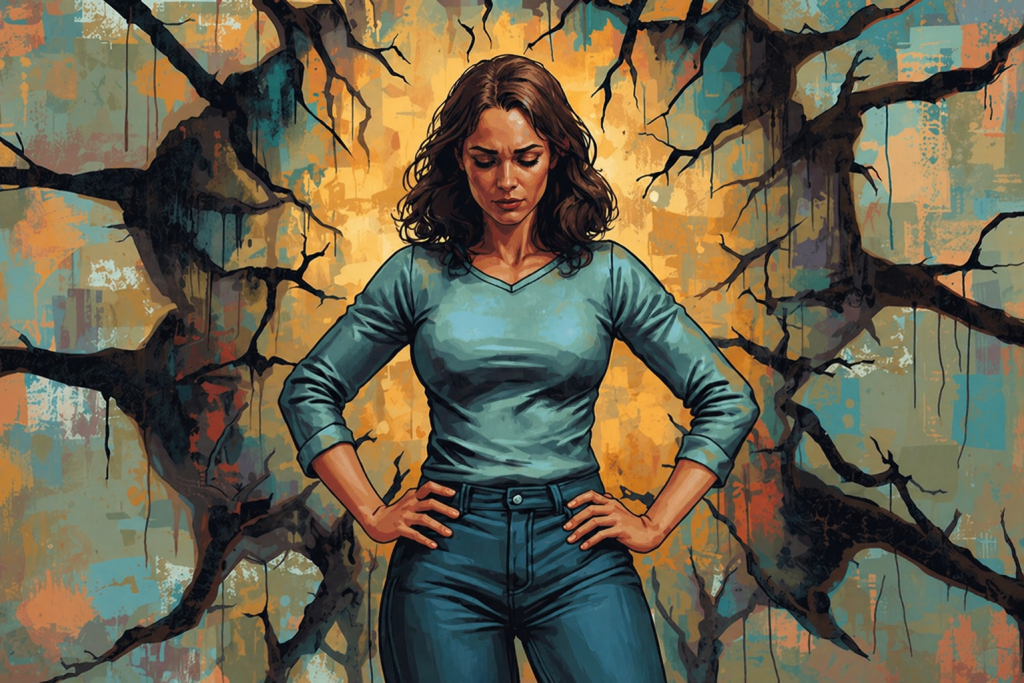
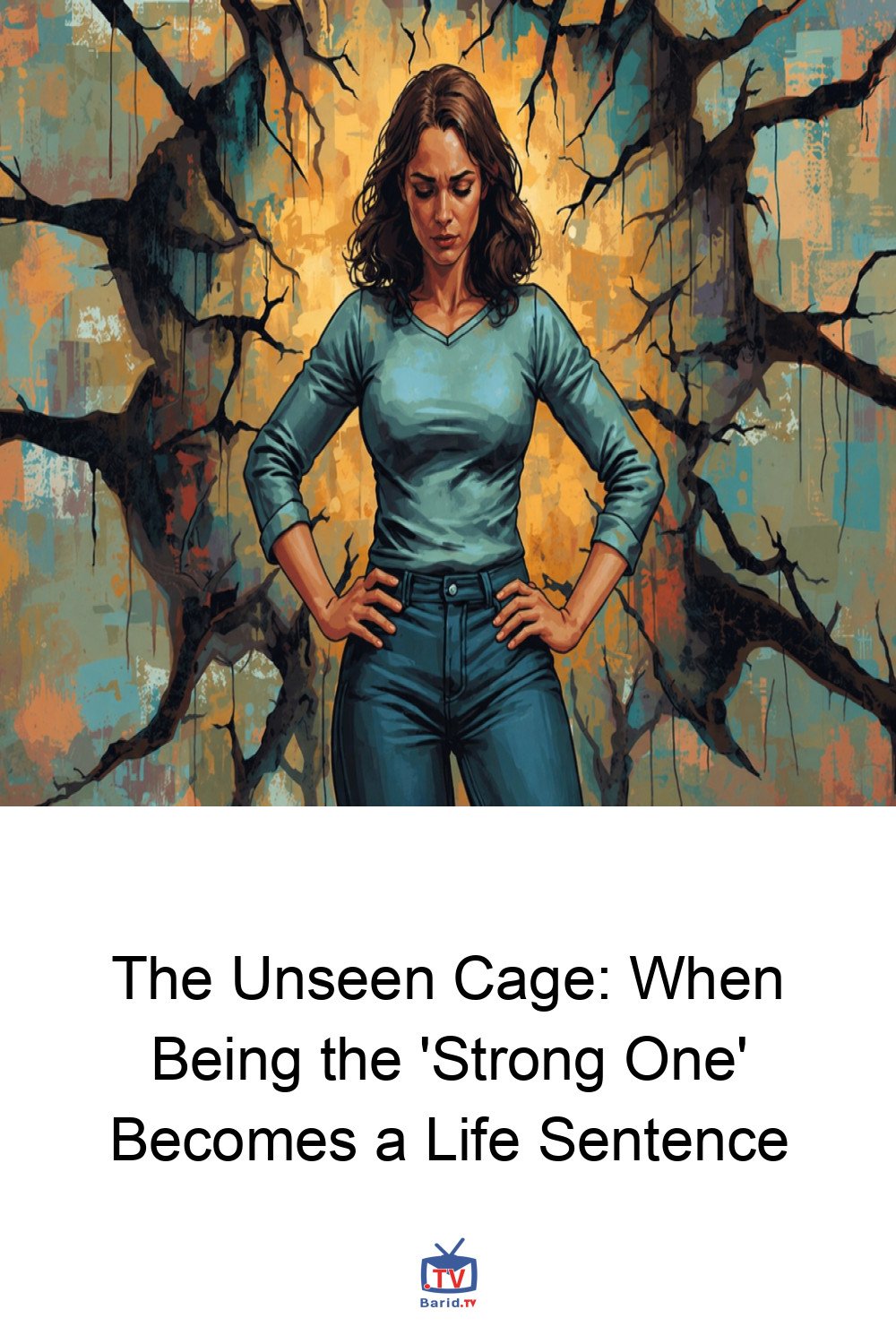
What I failed to comprehend then, and what took decades of painful introspection to fully grasp, was that I had simultaneously constructed a prison around myself. Deep down, I harbored the terrifying conviction that if I ever ceased being strong, everything — not just for those around me, but for myself — would inevitably collapse. Who, after all, would be there to catch me? That six-year-old in the hallway had already answered: no one.
So, I pressed on. The relentless drive to be useful, to be remarkable, propelled me through life. I spent two decades as a professional actor, then returned to academia, earning a PhD at forty-five. I embarked on an entirely new career at a university, married, and raised two children. From the outside, my life appeared to be a testament to someone who had it all together. And in many respects, I did.
Yet, I was also the person who answered every call, who showed up whenever asked, who said ‘yes’ before ever checking if there was anything left to give. This relentless self-sacrifice, born of a childhood decision, ultimately exacted a profound toll. The journey to dismantle this deeply ingrained pattern — to recognize that true strength lies not in carrying every burden, but in the courage to set them down and embrace vulnerability — is a lifelong endeavor. It is the arduous, yet ultimately liberating, path toward genuine self-compassion and freedom.
For more details, visit our website.
Source: Link