
In an increasingly wireless world, the humble Ethernet cable often gets overlooked. Yet, for those who demand uncompromising speed, unwavering reliability, and robust security from their internet connection, Ethernet remains the undisputed champion. Before the widespread adoption of Wi-Fi, wired networks were the backbone of digital communication, and even today, they offer distinct advantages that wireless simply can’t match.
Whether you’re a gamer seeking minimal latency, a professional handling large data transfers, or simply someone who values a consistent online experience, understanding Ethernet is crucial. This comprehensive guide will unravel the intricacies of wired networking, from its pioneering origins to the latest cable innovations, ensuring you’re equipped to make the most of your digital infrastructure.
The Enduring Power of Wired Networks
While Wi-Fi has brought unparalleled convenience, Ethernet continues to be the preferred choice for critical connections in local area networks (LANs) and wide area networks (WANs). The fundamental principle is simple: sending data through physical cables is inherently faster, more stable, and significantly more secure than transmitting it as radio waves. This makes Ethernet an obvious choice for businesses and individuals alike who prioritize performance and data integrity.
A Glimpse into Ethernet’s Rich History
From PARC to Global Standard
The story of Ethernet began in 1973 at the Xerox Palo Alto Research Center (PARC), where visionary engineers Robert Metcalfe and David Boggs laid the groundwork for connecting multiple computers within a local network. Their invention provided a revolutionary set of rules for rapid data exchange between machines, drawing its name, ‘Ethernet,’ from the concept of the ‘luminiferous ether’ – a hypothetical medium for light propagation.
The early days saw Xerox relinquish its trademark, paving the way for the Institute of Electrical and Electronics Engineers (IEEE) to formalize the 802.3 standard in 1983. This standardization was a pivotal moment, as it opened the technology to multiple manufacturers, fostering competition and innovation. Ethernet’s open nature and commitment to backward compatibility quickly propelled it to become the dominant networking standard, outcompeting rival technologies.
Evolution of Speed and Capability
From its initial speeds of 10 Mbps, Ethernet has undergone a remarkable transformation. 1995 brought 100 Mbps Fast Ethernet, followed by Gigabit Ethernet (1 Gbps) in 1999. By 2002, 10-Gigabit Ethernet became a reality. A significant innovation arrived in 2003 with Power over Ethernet (PoE), allowing devices to receive both power and data through a single cable, simplifying installations.
The pursuit of speed continued relentlessly, reaching 40 Gbps in 2010 and an astonishing 100 Gbps later that same year. While research pushes boundaries further, 40 Gbps represents the cutting edge for most home applications today – a speed far exceeding the needs of the average user, ensuring future-proofing for years to come.
Ethernet vs. Wi-Fi: The Wired Advantage
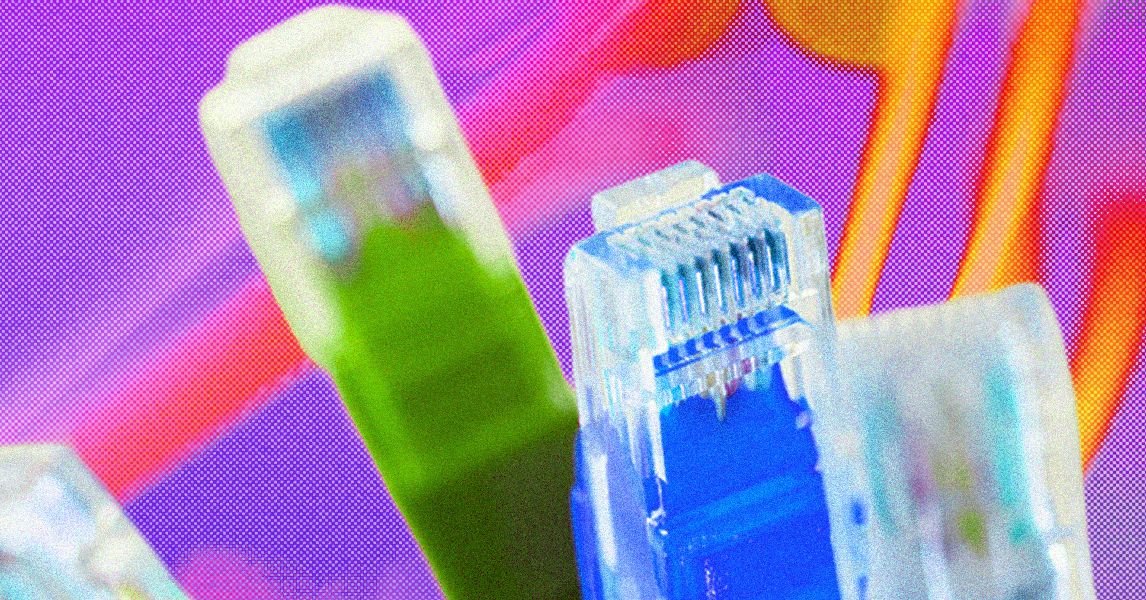
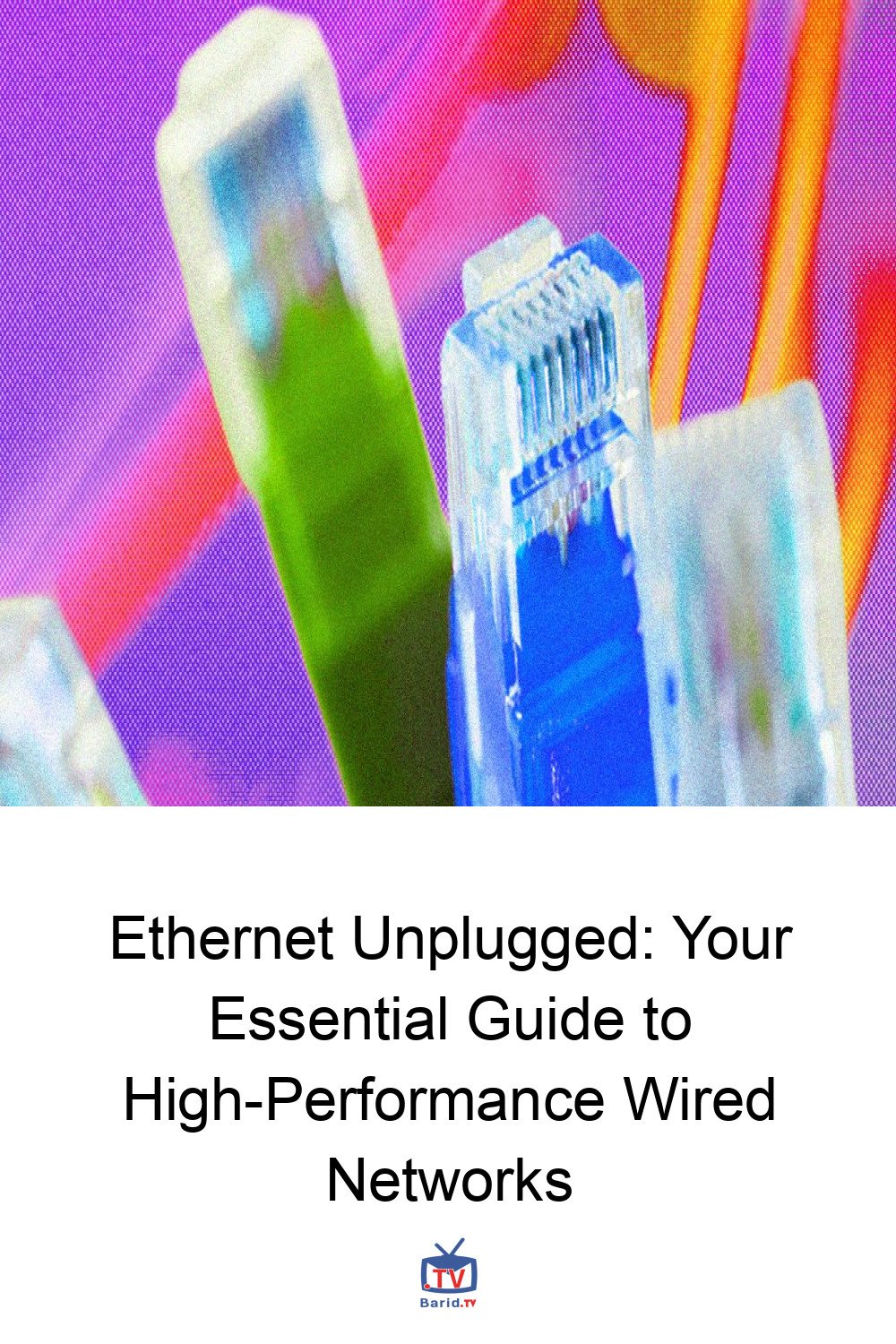
Even if your primary network is Wi-Fi, you’re likely already using Ethernet. The cable connecting your modem to your Wi-Fi router or main mesh unit is typically an Ethernet cable with an RJ45 connector. Ethernet offers three critical advantages over its wireless counterpart: superior speed, enhanced stability, and robust security. However, these benefits come with the practical requirement of running physical cables between devices, and each connected device must feature an Ethernet port. The initial setup of a wired network can also be more complex and costly than a purely wireless one.
Speed, Stability, and Security
While cutting-edge Wi-Fi 7 can technically rival Ethernet speeds, wireless connections are inherently susceptible to interference and unpredictable speed fluctuations. Ethernet, by contrast, delivers consistently low latency and stable throughput. Issues like “bufferbloat,” where multiple devices compete for wireless airtime, leading to frustrating lag, are virtually eliminated with Ethernet. Each wired device enjoys its own dedicated channel, meaning a large download from one user won’t impact another’s seamless Netflix streaming experience.
The Practicalities: Cables and Ports
Ultimately, the performance of your wired network is only as strong as its weakest link. This means paying attention to the quality and specifications of your cables, ports, and switches. Let’s delve deeper into the world of Ethernet cables.
Navigating the World of Ethernet Cables
Ethernet cables are not all created equal. They are categorized based on their maximum bandwidth and data rates, with seven main categories commonly in use today:
- Cat 5: Up to 350 MHz and 100 Mbps
- Cat 5e (enhanced): Up to 350 MHz and 1 Gbps
- Cat 6: Up to 550 MHz and 1 Gbps
- Cat 6a (augmented): Up to 550 MHz and 10 Gbps
- Cat 7: Up to 600 MHz and 10 Gbps
- Cat 7a: Up to 1 GHz and 40 Gbps
- Cat 8: Up to 2 GHz and 25 or 40 Gbps
Choosing the Right Cable for Your Needs
For most home users, Cat 5e or Cat 6 cables provide ample speed for connections up to 1 Gbps. However, for future-proofing your primary network runs – such as from your router to a switch or between mesh nodes – opting for Cat 6a cables, capable of 10 Gbps, is a wise investment. The price difference is often minimal, and the benefit of increased capacity will be appreciated as your networking demands grow.
Cables like Cat 7a or Cat 8, offering 40 Gbps, are generally overkill and considerably more expensive for the average household. It’s also worth noting that Cat 7, originally designed for TERA or GG45 connectors rather than the ubiquitous RJ45, is now largely considered a deprecated standard. Be wary of cables marketed as Cat 9 or higher, as no official standard or certification currently exists for these, and they should typically be avoided. The evolution of Ethernet continues, with standards like Ultra Ethernet emerging for demanding data center applications driven by AI and machine learning.
At the basic level, cables are just one part of the equation, working in conjunction with ports and switches to create a seamless wired network. While this guide has focused on the foundational aspects and cable choices, remember that a well-optimized Ethernet setup involves considering all these components for peak performance.
For more details, visit our website.
Source: Link