
The landscape of pharmaceutical development is on the cusp of a monumental shift. Google DeepMind’s groundbreaking AlphaFold platform has already redefined our understanding of proteins, and now, its potent offspring, Isomorphic Labs, is poised to test the ultimate promise: AI-designed drugs entering human trials.
A New Frontier in Medicine: AI-Designed Drugs Head to Clinic
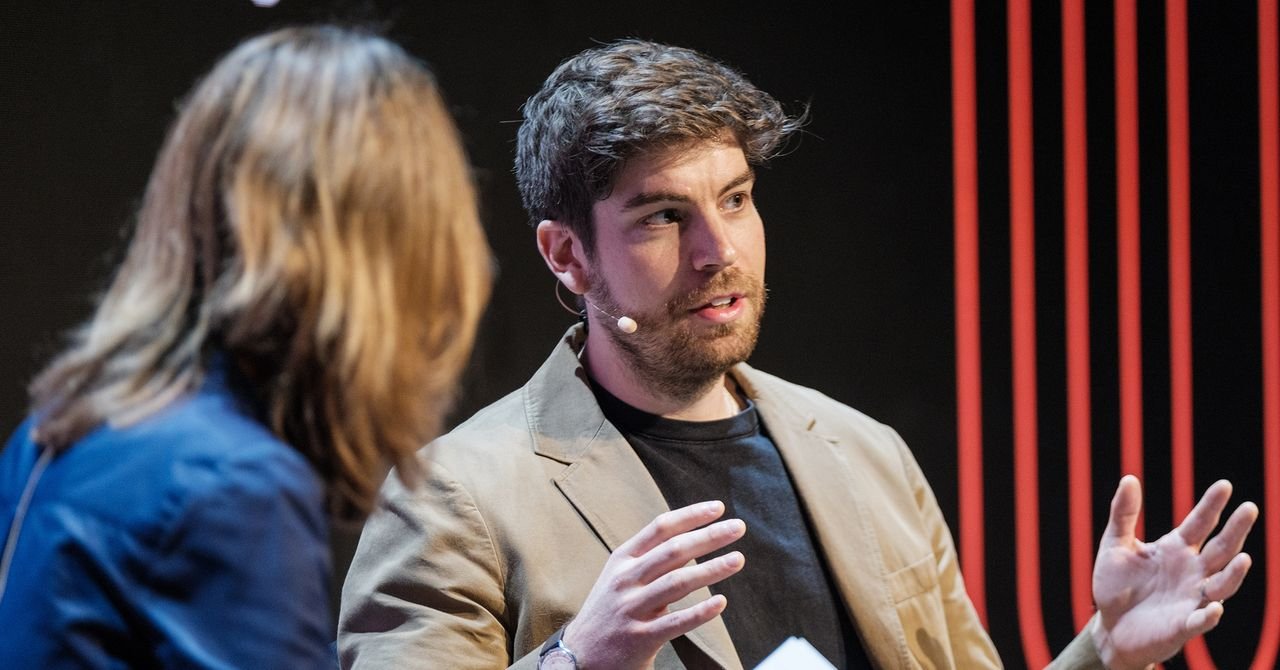
Isomorphic Labs, the UK-based biotech firm spun out of Google DeepMind, is preparing to initiate human trials for drugs meticulously crafted by its Nobel Prize-winning AI technology. “We’re gearing up to go into the clinic,” announced Max Jaderberg, President of Isomorphic Labs, at WIRED Health in London on April 16. He described it as “a very exciting moment as we go into clinical trials and start seeing the efficacy of these molecules.” While a precise timeline remains undisclosed, this move marks a significant step, albeit slightly later than the company’s initial projection of having AI-designed drugs in trials by late 2025.
AlphaFold: The Foundation of a Revolution
Founded in 2021, Isomorphic Labs leverages DeepMind’s AlphaFold, an AI platform that has fundamentally transformed the field of protein structure prediction. Proteins, the essential building blocks of all living organisms, derive their function from their intricate three-dimensional shapes. For decades, predicting these structures was a monumental challenge, a painstaking process due to the astronomical number of possible configurations a protein chain could adopt.
This paradigm shifted dramatically in 2020 with the unveiling of AlphaFold 2 by DeepMind’s Demis Hassabis and John Jumper, utilizing advanced deep-learning techniques. Its open-source release a year later democratized this powerful tool for researchers worldwide. Further advancing the frontier, DeepMind and Isomorphic Labs launched AlphaFold 3 in 2024, extending its capabilities beyond isolated proteins to model crucial interactions with other molecules like DNA and RNA. As Hassabis noted, “This is exactly what you need for drug discovery: You need to see how a small molecule is going to bind to a drug, how strongly, and also what else it might bind to.”
The impact of AlphaFold has been immense, predicting the structures of virtually all 200 million known proteins and being utilized by over 2 million individuals across 190 countries. This monumental achievement earned Hassabis and Jumper the Nobel Prize for Chemistry in 2024, with the Nobel committee recognizing its role in advancing areas from antibiotic resistance to plastic-decomposing enzymes.
Precision Engineering: The Power of IsoDDE
Building on the AlphaFold legacy, Isomorphic Labs recently introduced IsoDDE, its proprietary drug-design engine. This advanced tool, detailed in a recent technical paper, reportedly more than doubles the accuracy of AlphaFold 3, offering unparalleled precision in designing novel therapeutic molecules.
The startup is not working in isolation. It has forged strategic partnerships with pharmaceutical giants Eli Lilly and Novartis, collaborating on AI-driven drug discovery. Concurrently, Isomorphic Labs is aggressively developing its own “broad and exciting pipeline of new medicines” targeting critical areas like oncology and immunology.
The Promise of Potency and Reduced Side Effects
The true potential of AI-designed drugs lies in their inherent precision. Jaderberg emphasized this at WIRED Health, stating, “The exciting thing about the molecules that we’re designing is because we have so much more of an understanding about how these molecules work, we’ve engineered them to be very, very potent. You can take them at a much lower dose, and they’ll have lower side effects, off target effects.” This promise of highly effective treatments with fewer adverse reactions could revolutionize patient care.
An Audacious Mission: “Solve All Disease”
To support its ambitious goals, Isomorphic Labs appointed a chief medical officer last year and secured a substantial $600 million in its initial funding round, specifically to accelerate clinical trial preparations. The company is actively building a robust clinical development team, all in pursuit of its audacious mission: “to solve all disease.”
“It’s a crazy mission,” Jaderberg conceded, “But we really mean it. We say it with a straight face, because we believe this should be possible.” As these AI-engineered molecules embark on their journey through human trials, the world watches, hopeful that this blend of cutting-edge artificial intelligence and biological insight will indeed unlock a future free from the scourges of illness.
For more details, visit our website.
Source: Link