
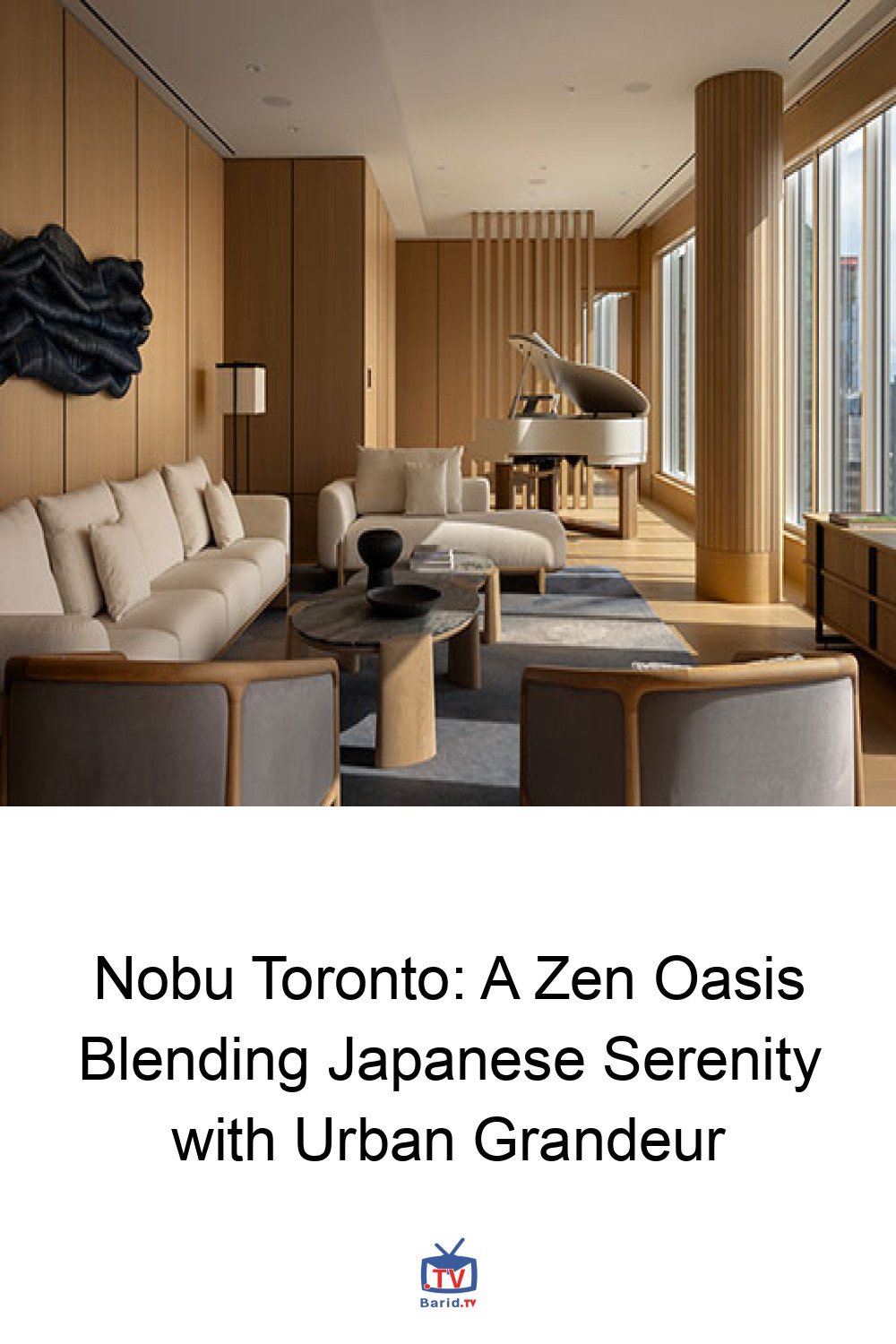
Toronto, a city once defined by its sprawling lakeside plains, has rapidly transformed into a vertical metropolis, its skyline a testament to an unprecedented urban boom. Now the fourth-largest city in North America, its explosive growth has led to a downtown core often characterized by a cacophony of ambitious, attention-grabbing architectural statements. Yet, amidst this architectural arms race, a new paradigm of development is emerging: one that respects and integrates the past rather than erasing it. The newly unveiled Nobu Residences and Hotel stands as a shining example of this thoughtful approach, offering a serene, ryokan-inspired sky oasis.
A Harmonious Blend of Old and New
Designed by the visionary Teeple Architects, the Nobu complex masterfully incorporates the iconic façade of the former Pilkington Glass building. Its distinctive glass bricks, a hallmark of the original structure, are not merely preserved but celebrated, reappearing throughout this multi-faceted destination. From this historic foundation, two elegant 45-story towers ascend, featuring angled window bays and subtly sculpted façade fins that catch the light and the eye.
The Architectural Vision
More than just a hotel, Nobu Toronto is a city within a city. The lower levels host a sprawling 15,000-square-foot Nobu restaurant and vibrant retail spaces, seamlessly transitioning into 660 sophisticated residential units. Above these, 36 exclusive “villas in the sky” guestrooms offer unparalleled luxury. A truly captivating architectural feature is the two-story amenities podium, dramatically carved through by a temple-like circular void between the 9th and 10th floors.
Alessandro Munge, founding principal of Miami- and Toronto-based Studio Munge, responsible for the comprehensive interior outfitting, highlights the genius of this design. “The dramatic opening allows daylight to cascade deep into the interior spaces below,” he explains. “From the gym that encircles it, guests can observe natural light, rainfall, and snowfall descending, while upper-level rooms look down into this illuminated core.” This innovative design creates a tranquil, unified counterpoint to the city’s bustling streets below, fostering a sense of calm and connection to the elements.
Interiors: A Sanctuary in the Sky
Studio Munge’s design philosophy for Nobu Toronto transcends conventional luxury, drawing profound inspiration from Nobu Hospitality’s Japanese origins. The goal was to craft an immersive experience, a restorative escape from the urban energy.
Ryokan-Inspired Serenity
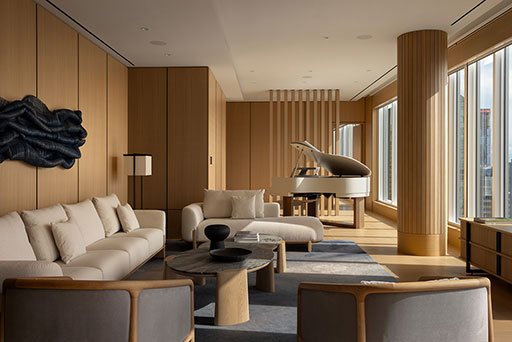
The calming, restorative qualities of traditional Japanese ryokans—known for their tatami-matted rooms and serene ambiance—serve as the thoughtful point of departure for the hotel’s finishes and furnishings. This cultural cue is subtly woven throughout, creating an atmosphere of understated elegance and peace.
“Rather than interpreting the hotel through a conventional luxury lens, this cue was complemented by subtle Canadian influences,” Munge notes. In the lobby, abstract nods to the local landscape are artfully rendered through traditional Japanese metalwork, creating a dialogue between cultures. Guestrooms embrace soft blue spectrums, evoking the serenity of the sky and the nearby waters of Lake Ontario, visible through the urban tapestry, while simultaneously suggesting a sense of escape.
A Curated Palette and Bespoke Furnishings
Munge and his team employed a restrained yet rich material palette to frame this serene environment: Tundra Grey stone with a leathery finish, rift-cut white oak, hand-dyed indigo textiles, and handcrafted Kawara tiles. The meticulous attention to detail extends to the furnishings, a carefully curated suite from an impressive roster of leading international brands and designers, including B&B Italia, Gallotti & Radice, Henge, Piet Boon, Christophe Delcourt, The Rug Company, Apparatus, Giopato & Coombes, Holly Hunt, Karimoku Case Study, and Carl Hansen & Søn.
Each accommodation, though varied in size, maintains a consistent commitment to guest comfort and experience. Strategic spatial planning ensures bed orientations that frame breathtaking views, spacious walk-in closets, generous living areas, and window-side soaking tubs—traditional wooden elements that further enhance the Japanese aesthetic.
Experience the Nobu Difference
Nobu Hotel Toronto is more than just a place to stay; it’s a destination that redefines urban luxury. It’s a testament to architectural ingenuity and interior design prowess, offering a unique blend of Japanese tranquility and Canadian sensibility high above the vibrant pulse of Toronto. For those seeking an unparalleled retreat where heritage meets contemporary elegance, the Nobu Hotel Toronto awaits.
Location: Toronto, Canada
Starting Rate: Approximately $2,700 per night
Key Design Elements: Japanese ryokan-style interiors, integrated historic façade, circular void amenity complex, muted tones, natural materials.
For more details, visit our website.
Source: Link