
The Digital Messiah? Trump’s AI-Generated Imagery Sparks Outcry
In a move that has once again ignited fervent debate across political and religious spectrums, former President Donald Trump has continued to post AI-generated images of himself depicted as Jesus Christ on his Truth Social platform. These controversial visuals, often portraying him healing the sick or embracing the divine, have drawn sharp criticism, particularly from segments of the religious right, and highlight the increasingly blurred lines between political messaging and digital fabrication.
From ‘Doctor’ to Divine: The Evolving Narrative
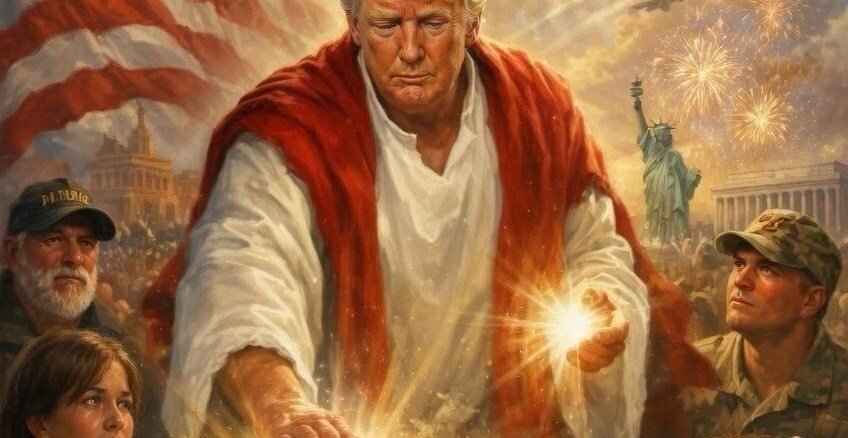
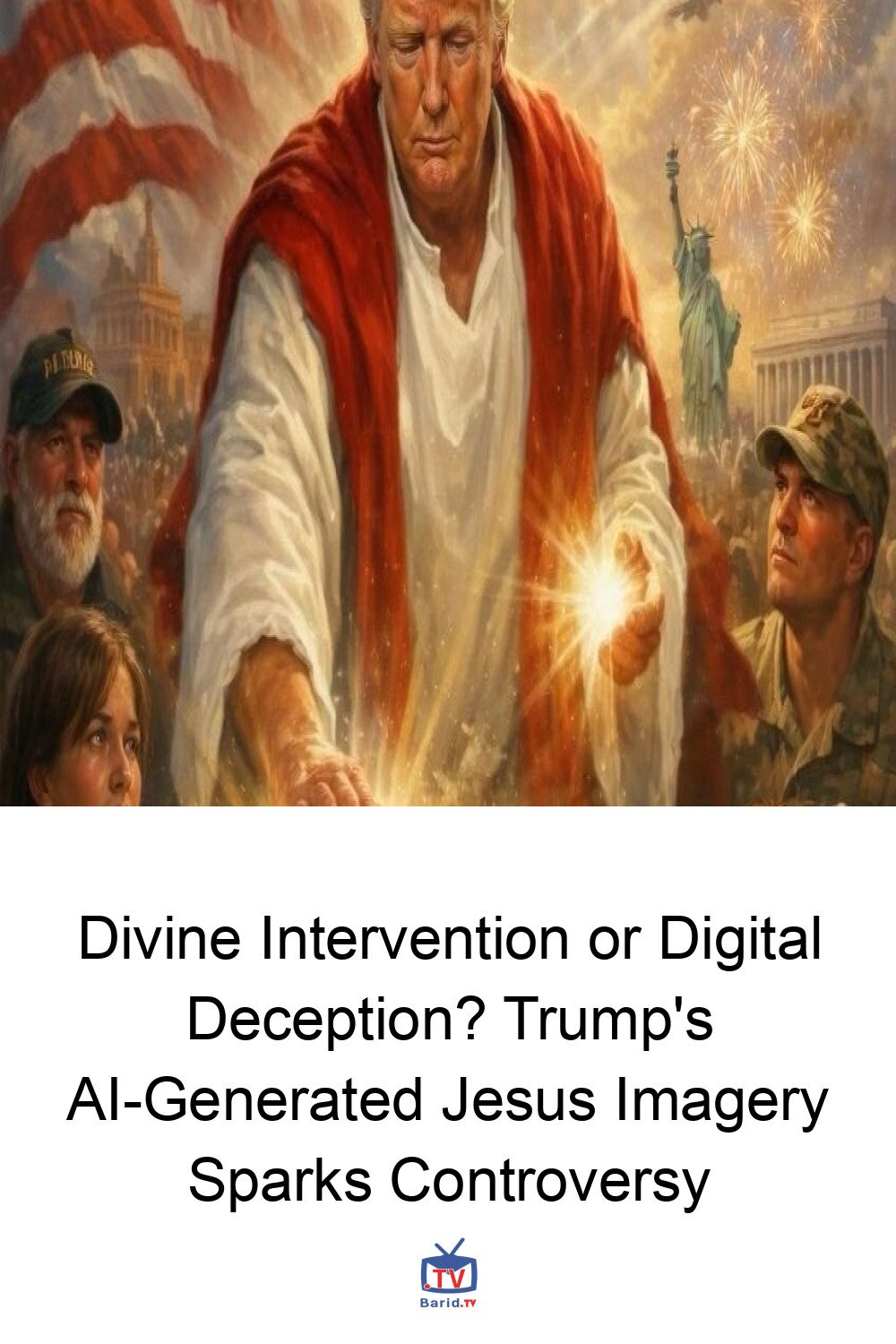
The latest wave of imagery began with a particularly striking AI-generated picture showing Trump in a Christ-like pose, surrounded by heavenly angels and healing figures. This post, made just hours after a reported attack on Pope Leo XIV, immediately drew the ire of conservative commentators. Rod Dreher, a prominent voice on the religious right, remarked to The Wall Street Journal, “Not saying Trump is the Antichrist. But he’s radiating the spirit of Antichrist, no question.”
Initially, Trump claimed to reporters, while accepting a DoorDash delivery, that he believed the image portrayed him “as a doctor.” However, investigations by X user S2_Underground revealed that the image wasn’t original to Trump’s feed. It was a modified version of an AI-generated picture first shared by MAGA influencer Nick Adams in February.
The Unsettling Transformations: A Demon in the Details?
The journey from Adams’ original post to Trump’s version saw several notable and unsettling transformations. The most viral change involved a soldier floating in the clouds, which, in Trump’s rendition, had morphed into a faceless, spiky-headed winged being that many social media users immediately interpreted as demonic. Further subtle alterations were observed: Trump’s flag gained more stars, fighter jets appeared distorted, background buildings blurred, and the faces of all individuals, including Trump’s, seemed more fearful and less benevolent. One man’s “VETERAN” hat even inexplicably transformed into an unreadable script, described by a reporter as a “‘የቹ፪ጮጎል’ hat.”
The exact process behind these changes remains shrouded in mystery, with the ‘memelords’ responsible for such content remaining tight-lipped. However, it’s widely understood that Trump maintains ultimate control over his social media presence, with a history of advisors struggling to prevent him from posting or reposting content he personally encounters.
A Pattern of Blasphemy? Continued AI Posts
Despite the initial post being a rare deletion from his feed, efforts to curb such controversial content appear to be failing. Just days later, Trump posted another AI-generated image from a follower, this time depicting him and Jesus embracing in front of an American flag. His accompanying caption, “The Radical Left Lunatics might not like this, but I think it is quite nice!!!”, underscored a continued willingness to leverage religiously charged AI imagery for political ends, regardless of the backlash.
Beyond the Digital Pulpit: Washington’s Media-Tech Tango
Away from the digital controversies, the annual White House Correspondents’ Dinner (WHCD) week offers a different lens into the health and evolving dynamics of Washington’s media landscape. An unspoken rule among D.C. political journalists suggests that the scale and nature of a media company’s WHCD-week event can serve as a barometer of its financial well-being and influence.
The WHCD: A Barometer of Media Health and Influence
A downgrade from an Ambassadors’ residence to a “private reception” can signal trouble, while partnerships often indicate pooled resources. Increasingly, co-hosting with a tech company points to a quiet agreement where the tech giant shoulders the financial burden, reflecting the growing intertwining of Big Tech and traditional media.
Unlikely Alliances: Tech Giants and Struggling Newsrooms
This cycle has seen several intriguing collaborations:
- YouTube & CSPAN:
The affluent Google subsidiary, YouTube, is co-hosting a reception with CSPAN, a public television station grappling with financial challenges due to the rise of streaming. Their chosen venue, the Meridian House, is a neoclassical mansion coveted by D.C. social climbers.
- Washingtonian Magazine & Embassy of Qatar:
The Washingtonian, a society publication facing local media budget woes, is holding its annual Four Seasons gala with the Embassy of Qatar, a wealthy petrostate. This partnership suggests external funding for the event’s luxurious offerings.
- Beehiiv & Shinola: Upstart newsletter company Beehiiv, a competitor to Substack, is hosting a reception at the Shinola store on 14th Street, indicating a more niche, brand-aligned collaboration.
These partnerships underscore the shifting economic realities for media outlets and the increasing role of tech companies and international entities in supporting — and influencing — the Washington social and journalistic calendar.
For more details, visit our website.
Source: Link