




For three decades, cinematographer John Brown has been a master of the unseen, bringing the intricate lives of the world’s smallest creatures to the big screen. His latest endeavor, the highly anticipated James Cameron-produced National Geographic series “The Secrets of Bees,” promises an unprecedented deep dive into the fascinating universe of these vital pollinators. We recently had the privilege of sitting down with Brown to discuss his groundbreaking macro work, the unique challenges of filming tiny subjects, and how cutting-edge technology is revolutionizing natural history filmmaking.
Unlocking the Microscopic World: The Secrets of Bees
Set to captivate audiences, “The Secrets of Bees” is more than just a documentary; it’s a three-year odyssey led by National Geographic Explorer Bertie Gregory, immersing viewers in the remarkable lives of over 20,000 bee species. These tiny architects are responsible for pollinating a third of the world’s food supply, and Brown’s work, utilizing specialized cameras, offers an intimate, never-before-seen look inside a single hive, revealing its hidden dynamics, stunning architectural abilities, and surprising intelligence.
Pioneering Scientific Firsts
The series boasts several world-firsts, a testament to the dedication and innovative techniques employed:
- The world’s first shot of broomstick bees in flight.
- The world’s first footage of a vulture bee nest.
- The world’s first footage of varroa mites invading a hive of honeybees defending themselves.
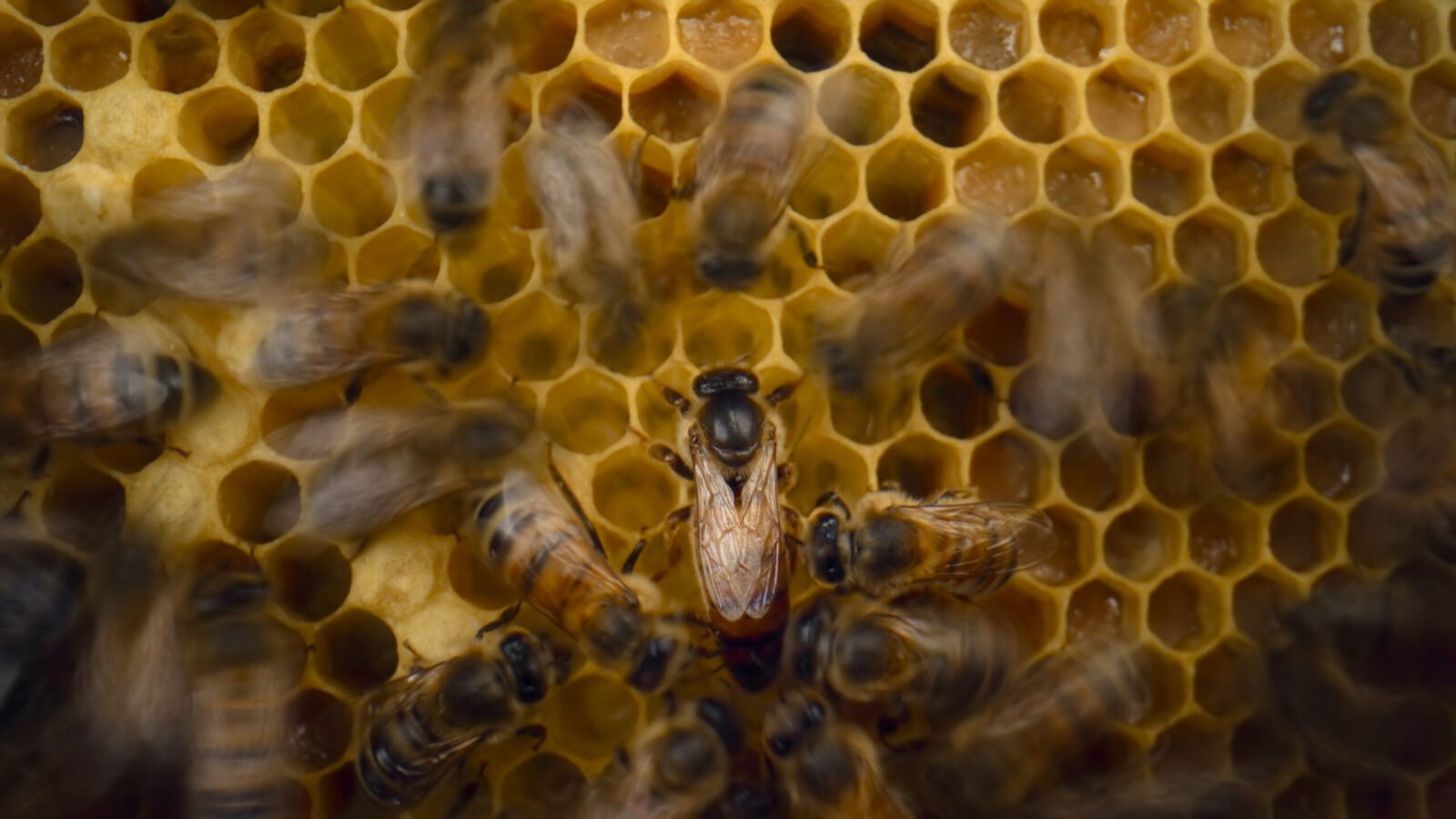
Achieving such feats required not only immense patience but also bespoke builds, including custom hives and sets, alongside ingeniously hacked and DIY camera lenses and mounts. These innovations allowed Brown and his team to capture stunning close-ups, from a fluffy honeybee collecting nectar to a queen surrounded by her busy workers, and the intricate dance of Japanese honey bees.
Mastering Macro: The Cinematographer’s Toolkit
Brown’s expertise in macro photography is evident in every frame. When asked about the secret to capturing such detailed shots, he revealed a key piece of equipment.
“This kind of filming is something I’ve done for years,” Brown explained. “I’ve been making films for about 30 years, and a lot of it has been this very detailed macro photography. We use a variety of different tools. The main lens we used to film this program was a thing called a probe lens, or a scope lens, which is very long, thin. Almost like a medical endoscope, but a bit thicker. It just means you can get the viewer right in between, you know, the frames within a beehive, or right down at ground level, so it gives you a very sort of intimate perspective on the insect world.”
Working with the Tiny Stars: Minimizing Disturbance
A natural concern when filming such delicate subjects is disturbance. Brown assured us that the bees’ well-being is paramount.
“No, no, not at all,” he affirmed when asked about equipment vibrations. “The bees are very tolerant of disturbance, though I should caveat that it depends on the species. Honeybees, for instance, prefer very tight, dark spaces, squished together, which isn’t ideal for filming. So, if you’re filming honeybees, you need to make the spaces within the colony a bit bigger and introduce some light. It can take them a while to get used to such changes. However, if you’re filming something outdoors, where they’re accustomed to natural light, the camera’s presence generally doesn’t disturb them. The camera itself doesn’t vibrate, and movements are slow and precise.”
An Unexpected Encounter and the Amazonian Challenge
Brown shared a delightful anecdote about the docile nature of honeybee swarms, echoing a recent experience of our interviewer.
“I love honeybee swarms,” he chuckled. “I’ve kept bees for half my life, so I’m very familiar. They’re just delightful when they’re swarming because they’re not grumpy; they’ve got nothing to defend. They’re completely focused on keeping the queen safe. So you can, you know, you can pick up a swarm.”
However, not all shoots are so serene. When pressed about unforeseen challenges, Brown pointed to a particularly demanding expedition.
“I think probably the hardest shoot, I spent 5 weeks in the Amazon in Ecuador, doing two different sequences for the first [episode],” he revealed, hinting at the extreme conditions and logistical complexities involved in capturing wildlife in one of the world’s most biodiverse, yet challenging, environments.
The Future of Natural History Filmmaking
John Brown’s career is a testament to the evolving art and science of natural history filmmaking. Through innovative technology, deep understanding of his subjects, and unwavering patience, he continues to push the boundaries, offering audiences an unparalleled window into the hidden wonders of our natural world. “The Secrets of Bees” is poised to be a landmark series, not only for its stunning visuals but for its profound message about the delicate balance of our ecosystem and the incredible lives of its smallest, yet most significant, inhabitants.
For more details, visit our website.
Source: Link








Leave a comment