

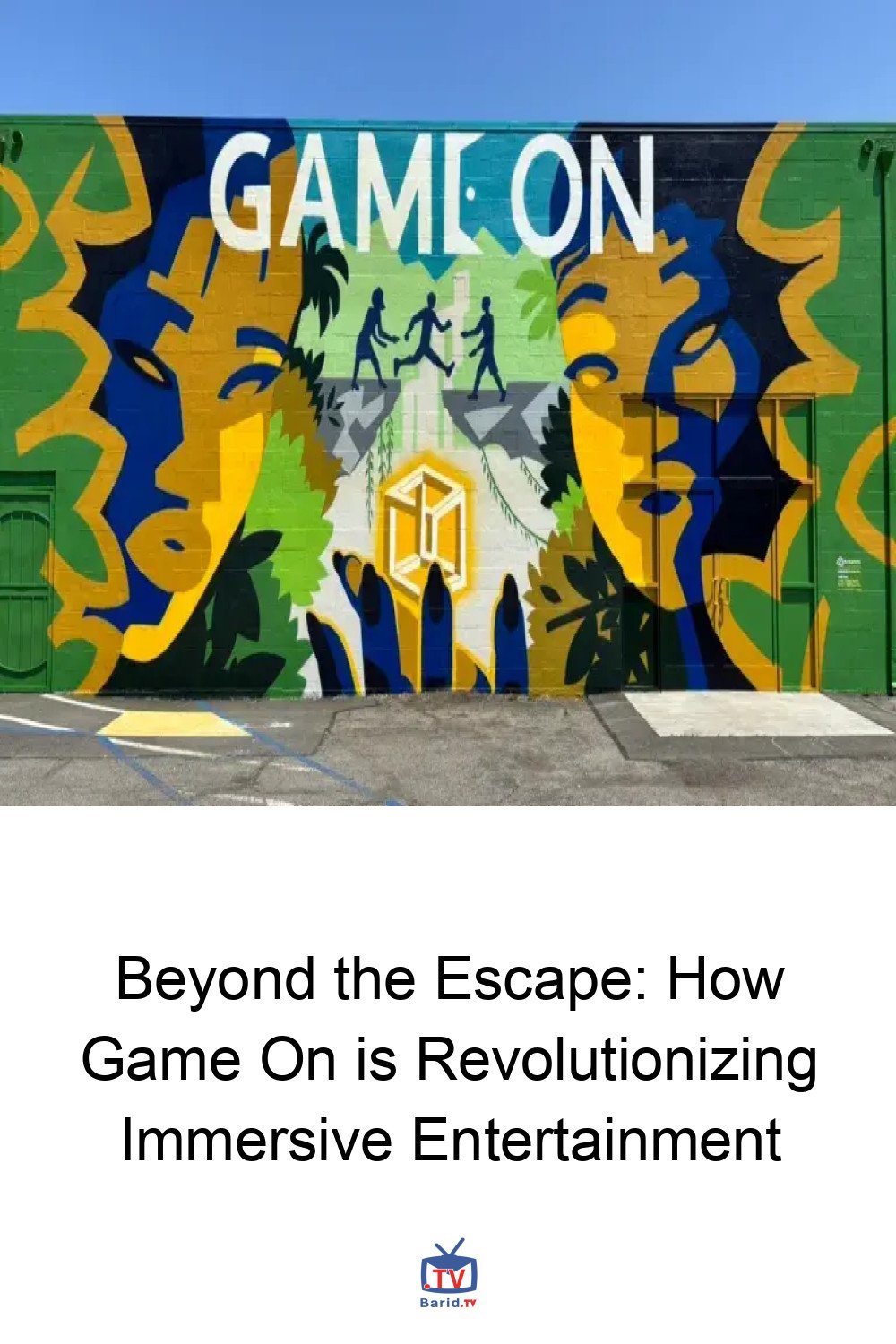
Beyond the Escape: How Game On is Revolutionizing Immersive Entertainment
In the vibrant world of experiential entertainment, escape rooms have long captivated imaginations. Yet, in Berkeley, California, James Hopkin and Eric Mittler, the visionary duo behind Game On, are not just participating in this trend—they’re redefining it. Moving far beyond static, one-time puzzles, Game On presents a dynamic cooperative challenge center built on the principles of evolution, relentless iteration, and the surprising power of embracing failure.
The Philosophy of Perpetual Play
At the core of Game On’s groundbreaking design philosophy lies a deceptively simple yet profoundly impactful idea: a puzzle is never truly finished. Hopkin and Mittler draw their eclectic inspiration from a diverse palette, including the interactive exhibits of museums, ingenious engineering hacks, and the timeless appeal of classic games. Their goal is to construct interactive, modular environments that don’t just exist, but actively grow smarter and more engaging with every passing day.
These aren’t your typical linear challenges. Game On’s rooms are meticulously crafted for fast-paced trial and error, fostering an environment where teams are encouraged to communicate openly, collaborate intensely under pressure, and view failure not as a roadblock, but as an indispensable stepping stone towards ultimate success.
Engineering Engagement: Modularity and Iteration
What truly distinguishes Game On from conventional escape room models is its unwavering commitment to rapid prototyping. Unlike designers who might finalize a concept and move on, Hopkin and Mittler ingeniously transform every guest visit into a live, real-world testing session. Every player’s behavior, every unforeseen solution, and even moments of genuine confusion are meticulously observed and fed directly back into the design process. This continuous, iterative feedback loop empowers them to refine mechanics, recalibrate difficulty, and introduce fresh, compelling challenges with astonishing speed and precision.
Their modular approach to puzzle construction is equally pivotal. By engineering systems with interchangeable components, the creative pair can effortlessly swap out elements, reconfigure interactions, and inject new variables without the monumental task of overhauling an entire room. This inherent flexibility ensures that returning players are greeted with a genuinely evolving experience, while newcomers benefit from designs that have been sharpened and perfected by hundreds of hours of invaluable real-world feedback.
Embracing the ‘F-Word’: Failure as a Feature
Hopkin and Mittler are remarkably candid about the profound lessons gleaned from moments of failure. Early designs, which might have appeared brilliant on paper, often crumbled under the unpredictable weight of actual player interaction. Rather than perceiving these instances as defeats, they meticulously analyze them as critical data points. A puzzle that frustrates players in an unproductive way isn’t a flaw in the players; it’s a clear signal of a communication breakdown within the design itself. And it’s precisely these breakdowns that become fertile ground for rebuilding something inherently better and more intuitive.
Their insights underscore a vital truth in great game design: it’s less about flashes of genius inspiration and far more about humble, diligent observation. By closely watching how people navigate a space, where they encounter friction, what elicits genuine laughter, and what truly ignites teamwork, designers uncover truths that no amount of theoretical planning could ever reveal. The ultimate outcome is a design culture that champions curiosity, adaptability, and an unyielding commitment to continuous improvement above all else.
For those eager to delve deeper into this innovative approach, the full video from Maker Faire Bay Area offers further insights into Game On’s journey to redefine interactive entertainment.
For more details, visit our website.
Source: Link