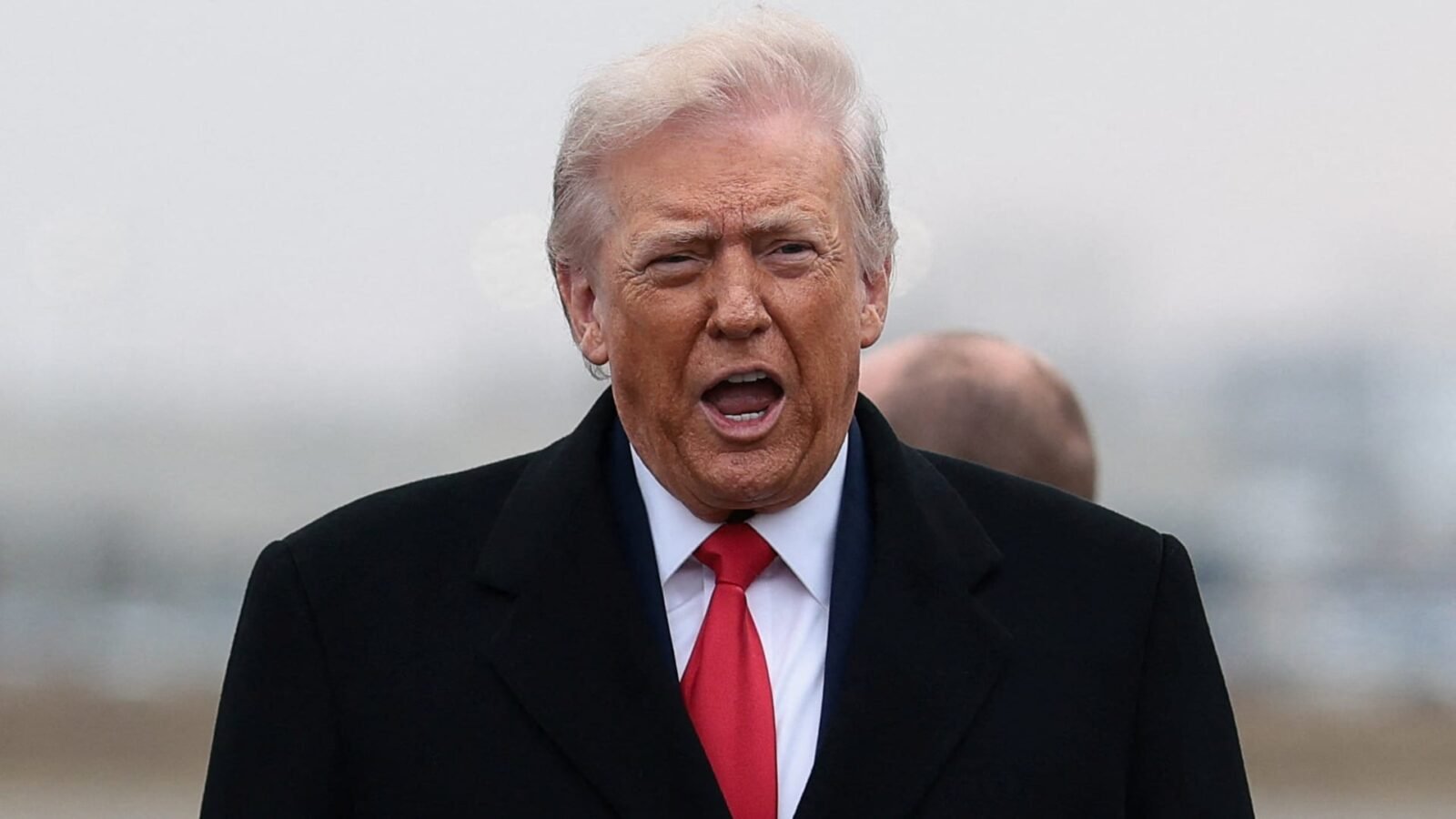

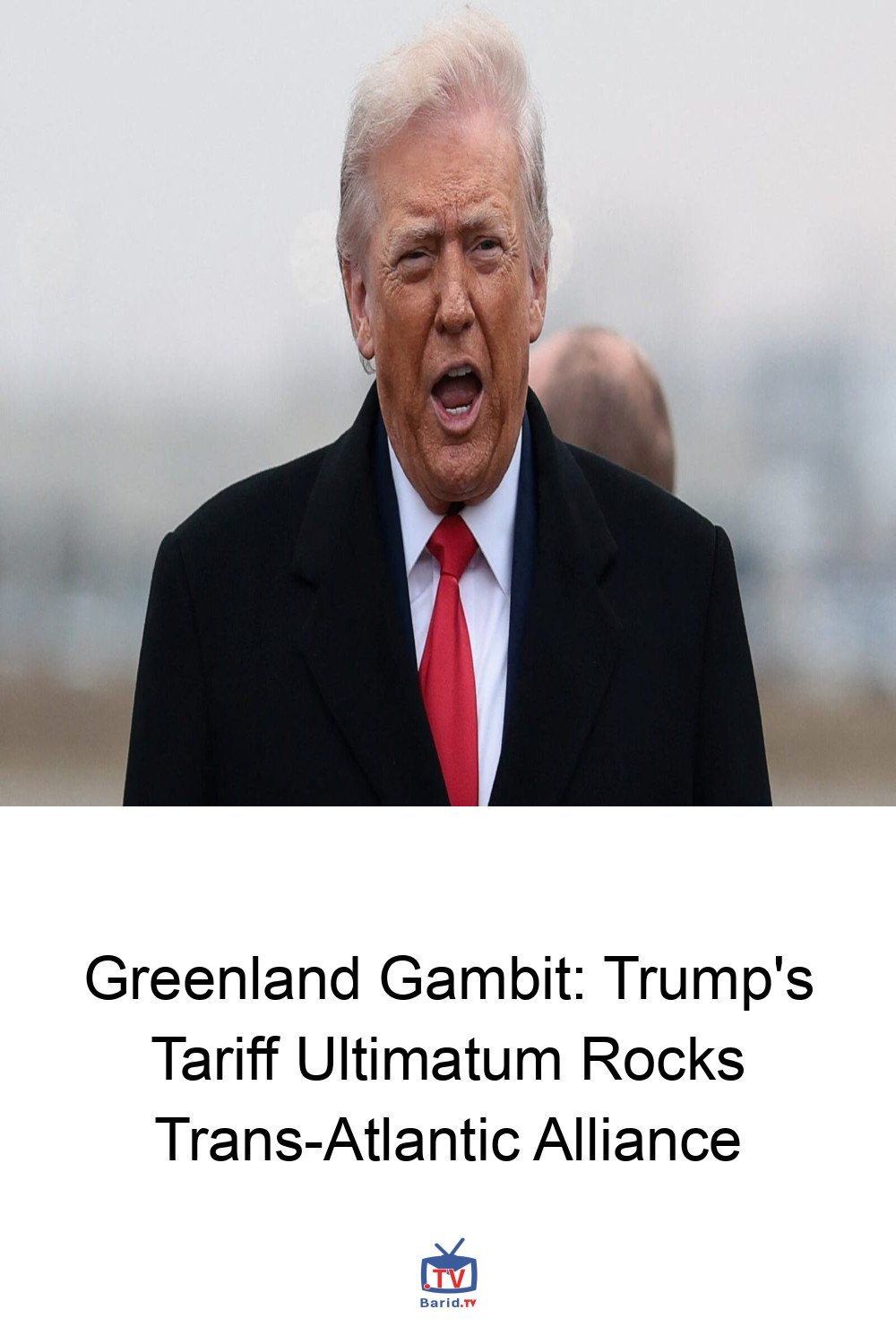
In a move that has sent shockwaves across the trans-Atlantic alliance, former U.S. President Donald Trump has issued a bold ultimatum: eight key European nations face steep tariffs, escalating to 25%, unless Greenland is sold to the United States. The unprecedented demand, announced via Truth Social, has ignited a fresh diplomatic firestorm and prompted an emergency meeting of European Union ambassadors.
An Unprecedented Ultimatum: Greenland for Tariffs
President Trump declared on Saturday that imports from Denmark, Norway, Sweden, France, Germany, the United Kingdom, the Netherlands, and Finland would be subjected to escalating tariffs. These penalties are set to commence at 10% on February 1st, rapidly climbing to a formidable 25% by June 1st. The explicit condition for their removal? “A Deal is reached for the Complete and Total purchase of Greenland.”
This latest tariff threat builds upon existing U.S. duties already imposed on goods from these European allies, which currently average between 10% and 15%. In sectors like metals and automotive, combined measures have already pushed effective tariffs into the mid-teens to mid-20% range, meaning the new levies would stack on top, potentially crippling industries.
The Rationale: A ‘Dangerous Situation’ in Greenland
Trump’s justification for this drastic measure remains shrouded in ambiguity. His Truth Social post vaguely cited the eight countries for having “journeyed to Greenland, for purposes unknown,” labeling it “a very dangerous situation for the Safety, Security, and Survival of our Planet.” This follows earlier hints from Trump about using tariffs to acquire Greenland, drawing parallels to his past strategies for lowering drug prices.
The Trump administration has openly expressed its desire to acquire the Danish territory, reportedly exploring the use of the U.S. military in its efforts. This latest tariff strategy appears to be an aggressive escalation of that ambition, framing the acquisition of Greenland as a matter of U.S. national security.
Europe’s Unified Condemnation and Emergency Response
The announcement triggered immediate and widespread condemnation across Europe. Leaders from the targeted nations characterized the tariffs as a hostile act against close military allies, threatening the very foundation of the trans-Atlantic partnership. European Commission President Ursula von der Leyen, a key figure in the bloc’s trade policy, sharply rebuked the White House’s ultimatum, framing it as more than just a trade dispute but a fundamental test of Western values.
Manfred Weber, a senior member of the European Parliament, swiftly declared that an existing EU-U.S. trade agreement, struck in August, was now “not possible at this stage” given Trump’s threats. He called for “0% tariffs on U.S. products must be put on hold.” In response to the escalating crisis, ambassadors from the 27-nation EU bloc are set to convene an emergency meeting on Sunday, called by Cyprus, which currently holds the rotating EU presidency.
Legal Battlegrounds and Geopolitical Fragility
The legal basis for Trump’s latest tariff move appears to hinge on the controversial International Emergency Economic Powers Act (IEEPA), a law granting the president broad authority during “unusual and extraordinary threats.” This mirrors his previous contentious use of the act, which is currently under scrutiny by the Supreme Court. A ruling next week could potentially invalidate tariffs imposed under IEEPA, directly imperiling this new tranche and challenging executive power in trade policy.
Trade policy scholar Scott Lincicome of the Cato Institute warned that this new threat exposes the inherent fragility of relying on unilateral deals over binding treaties. “Trump’s tariff announcement confirms… that his trade deals can be changed on a whim and are unlikely to constrain his daily tariff impulses,” Lincicome stated, highlighting the “economic and geopolitical problems that unbounded executive power creates.”
The Stakes: A Fractured Alliance?
As military personnel from Germany and Denmark are reportedly arriving in Nuuk, Greenland, the situation underscores the profound geopolitical tensions at play. Trump’s audacious demand for Greenland, backed by the threat of punitive tariffs, risks not only fracturing vital trade relationships but also undermining decades of strategic alliance between the U.S. and its European partners. The world watches as this high-stakes gambit unfolds, with the future of international cooperation hanging in the balance.
For more details, visit our website.
Source: Link