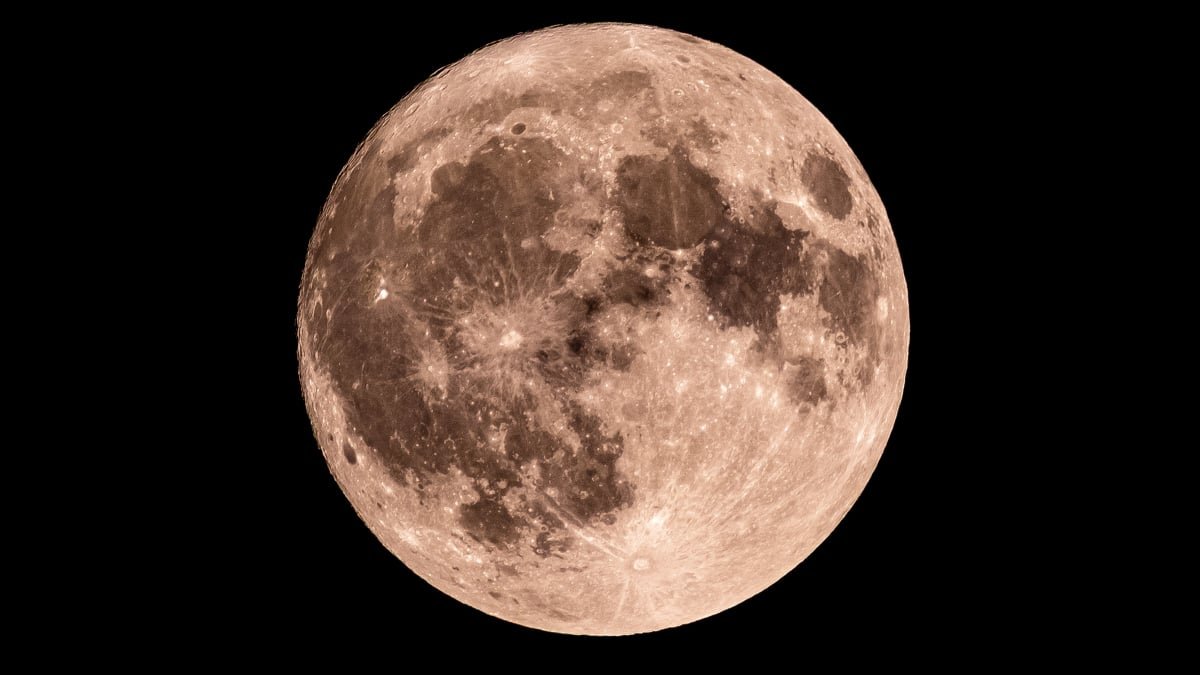

As the new year dawns, our celestial companion, the Moon, continues its mesmerizing dance across the night sky. January 1st presents a magnificent spectacle, with the Moon just days away from its full illumination. If clear skies grace your location, prepare for a brilliant display.
January’s Lunar Glimpse: The Waxing Gibbous
On this first day of January, the Moon proudly showcases its Waxing Gibbous phase. According to astronomical observations, a remarkable 94% of the lunar surface will be illuminated tonight, offering a stunning visual treat for stargazers and casual observers alike. This phase, characterized by more than half of the Moon being lit but not yet fully round, signals the approach of its complete brilliance.
Anticipating the Full Moon
Mark your calendars: the next Full Moon is set to grace our skies on January 3rd. This eagerly awaited event will see the entire face of the Moon bathed in sunlight, appearing as a luminous disc. For those keeping track, the last Full Moon occurred on December 4th, making this upcoming event a fresh opportunity to witness the Moon in its full glory.
Understanding the Moon’s Ever-Changing Faces: The Lunar Cycle
The Moon’s appearance is a dynamic phenomenon, constantly shifting through a series of phases. NASA explains that the Moon completes a full cycle, known as the lunar cycle, approximately every 29.5 days. During this period, as the Moon orbits Earth, the amount of sunlight reflecting off its surface changes, creating the illusion of different shapes. While the same side of the Moon always faces us, its illumination varies, leading to its progression from fully lit to partially visible, or even entirely unseen.
The Eight Principal Phases of the Moon
The lunar cycle is traditionally divided into eight distinct phases, each offering a unique perspective on our natural satellite:
- New Moon: Positioned between the Earth and the Sun, the side of the Moon facing us is completely dark and invisible to the naked eye.
- Waxing Crescent: Following the New Moon, a slender sliver of light emerges on the right side of the Moon (for observers in the Northern Hemisphere), gradually growing larger.
- First Quarter: At this stage, exactly half of the Moon’s face is illuminated on the right side, resembling a perfect half-moon.
- Waxing Gibbous: More than half of the Moon is now lit, continuing to expand towards full illumination, though not yet entirely round.
- Full Moon: The zenith of the lunar cycle, where the entire face of the Moon is fully illuminated and strikingly visible from Earth.
- Waning Gibbous: After the Full Moon, the illumination begins to recede from the right side (in the Northern Hemisphere), with more than half still lit but gradually diminishing.
- Third Quarter (or Last Quarter): Another half-moon appearance, but this time the left side is illuminated, marking the halfway point of the waning phase.
- Waning Crescent: A delicate, thin sliver of light remains visible on the left side before the Moon once again becomes a New Moon, completing its cycle.
Observing these phases offers a profound connection to the cosmos and a deeper appreciation for the intricate mechanics of our solar system. Take a moment tonight to look up and enjoy the Moon’s captivating presence.
For more details, visit our website.
Source: Link