




For generations, the threat of an asteroid collision with Earth has been relegated to the realm of science fiction. Yet, history offers stark reminders of our planet’s vulnerability. The 1908 “Tunguska Event,” where a space rock detonated over Siberia, scarred the landscape for decades, serving as a chilling precursor to what could befall us. Looking ahead, the 450-meter-wide asteroid Apophis is set to make an uncomfortably close flyby in April 2029, passing within a mere 19,000 miles – closer than many satellites and visible to the naked eye.
The Imperative of Planetary Defense
While our ability to predict potentially hazardous asteroids has advanced dramatically, thanks to dedicated space probes and increasingly sophisticated astronomical data, the crucial next step — our capacity to respond — has remained largely theoretical. The challenge isn’t to obliterate an incoming threat, a scenario often depicted in Hollywood with nuclear bombs, but rather to subtly alter its trajectory. In the vast vacuum of space, even a slight change in an object’s velocity can ensure it misses Earth entirely, a concept at the heart of planetary defense.
NASA’s DART Mission: A Historic First
A Celestial Target: Didymos and Dimorphos
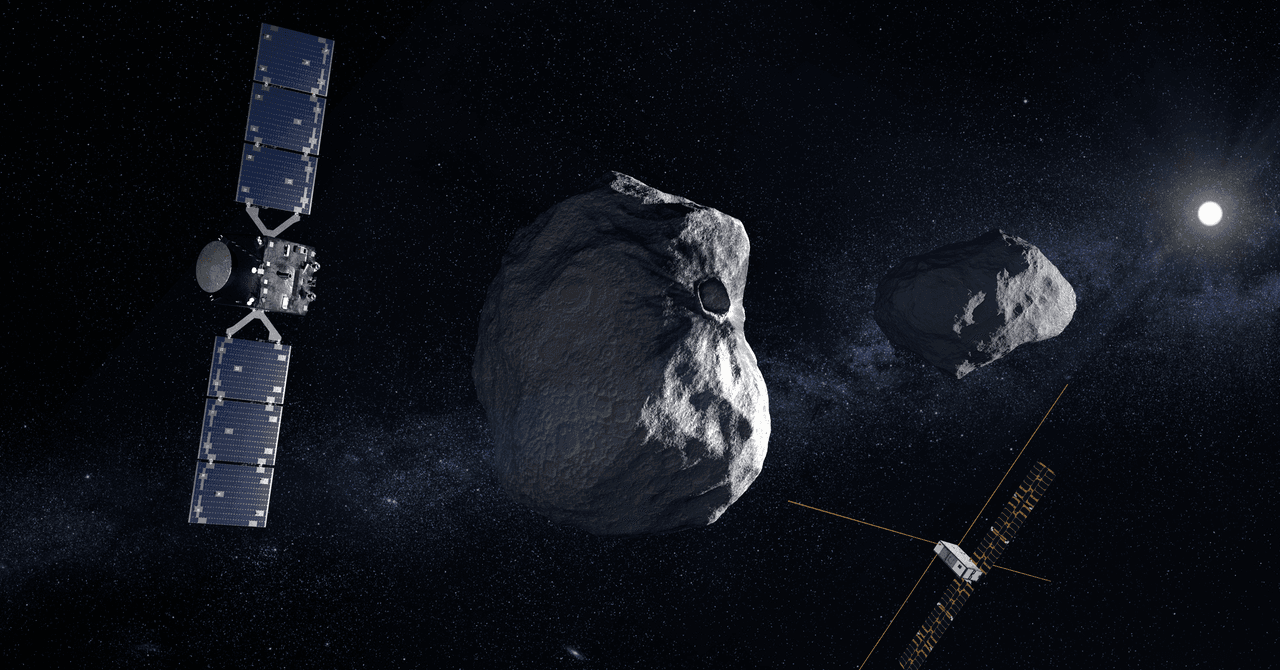
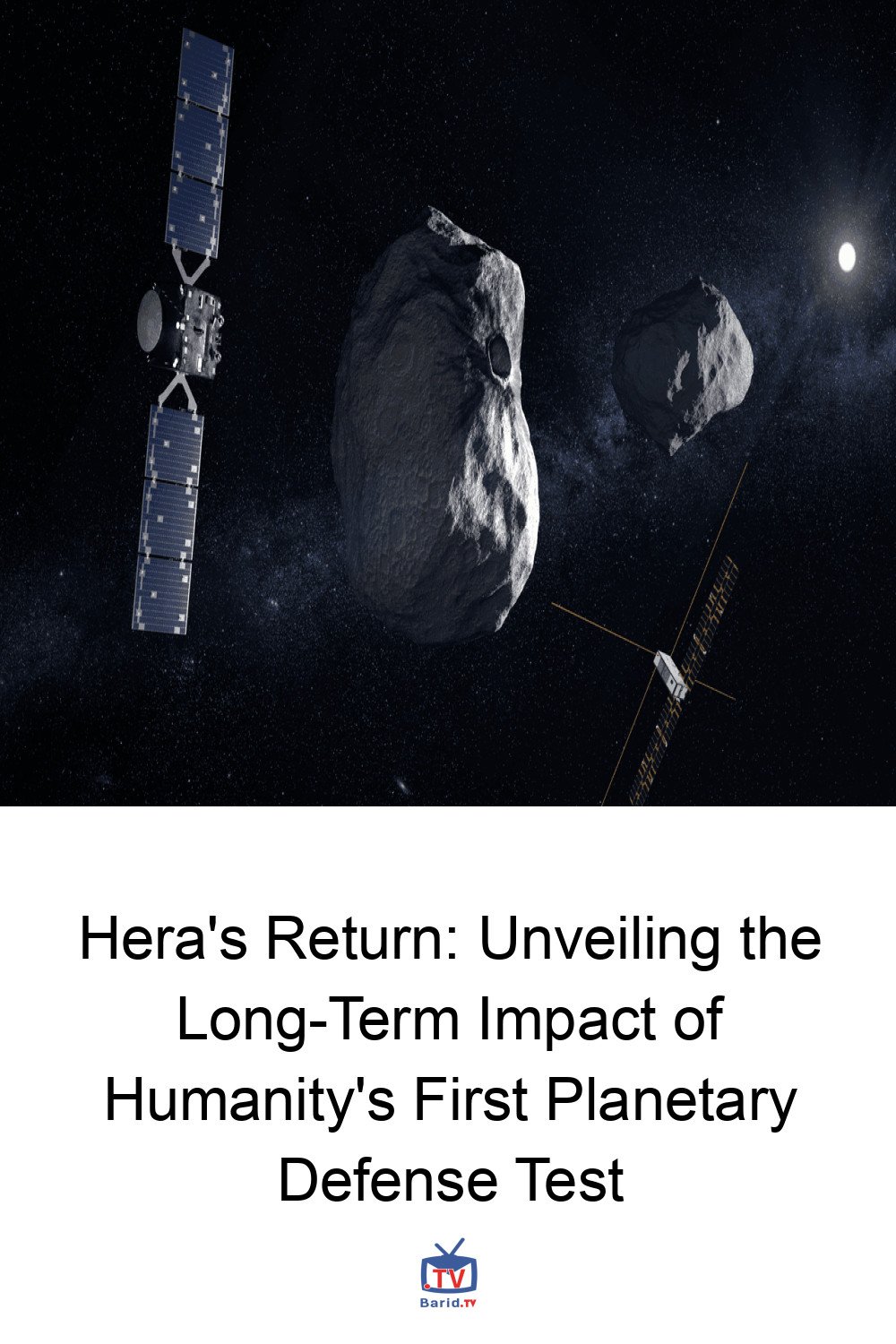
Four years ago, NASA embarked on a groundbreaking experiment to test this very principle. Their target: the binary asteroid system of Didymos and its smaller companion, Dimorphos. Discovered 30 years prior, the 780-meter Didymos was found to host a 151-meter “moonlet,” Dimorphos, orbiting it every 12 hours. This cosmic duo presented a perfect natural laboratory for a deflection test.
The Impact and Its Astonishing Results
In late 2021, NASA launched the Double Asteroid Redirection Test (DART) probe. Nearly a year later, traveling at over 13,000 miles per hour, DART intentionally slammed into Dimorphos. Scientists had conservatively hoped to shorten Dimorphos’s orbital period around Didymos by at least a minute. The actual result was far more dramatic: a staggering 33-minute reduction. This significant deviation was largely amplified by the ejection of debris, which created a greater recoil than the impact itself. Intriguingly, Dimorphos briefly transformed into a comet-like object, trailing a long plume of ejected material.
ESA’s Hera: The Post-Impact Investigation
Returning to the Scene of the Crime
Despite DART’s resounding success, critical questions about the long-term effects of the impact lingered. Enter the European Space Agency’s (ESA) Hera probe. Launched in October 2024, Hera began its arrival phase at the Didymos-Dimorphos system this past October, capturing its first images from 800 miles away and publishing detailed views of Didymos in early November.
Unraveling Asteroid Secrets and DART’s Legacy
Now in close proximity, Hera is poised to conduct an unprecedented in-depth study of both asteroids. While ground-based observations offer valuable insights, nothing compares to close-up exploration. This mission marks the first detailed investigation of a binary asteroid system, aiming to uncover how such pairs form and to study Didymos’s rapid 2.3-hour rotation, which places it on the very edge of stability.
Crucially, Hera’s primary objective extends beyond traditional astronomy. It will meticulously investigate the consequences of the DART mission, including a detailed examination of the impact site. With extensive data on the impact itself, scientists can leverage this unique opportunity to understand crater formation more broadly, exploring the roles of material strength and gravity. Hera will also precisely determine Dimorphos’s mass, a vital piece of data for accurately assessing DART’s effectiveness as a planetary defense technology. Equipped with a lidar instrument for topographical mapping and tools for chemical composition analysis, Hera promises high-resolution images of the asteroids, down to 1 meter per pixel.
The Future is Small: CubeSats in Deep Space
Adding another layer of innovation, Hera carries two miniature CubeSats, set for deployment in January 2027. These compact, cube-shaped satellites, often used for simpler experiments and student projects in Earth orbit, will now extend their utility to deep space. Their mission will further enhance Hera’s data collection, demonstrating the growing capabilities of small satellite technology in complex interplanetary missions.
Safeguarding Our Future
The combined efforts of NASA’s DART and ESA’s Hera missions represent a monumental leap in humanity’s quest for planetary defense. By understanding the mechanics of asteroid deflection and the long-term behavior of these celestial bodies, we move closer to a future where the threat of cosmic impacts is not just a cinematic plotline, but a manageable challenge for a vigilant Earth.
For more details, visit our website.
Source: Link







Leave a comment