




A Phone-Free Forum: Democrats Confront Their Identity and Future
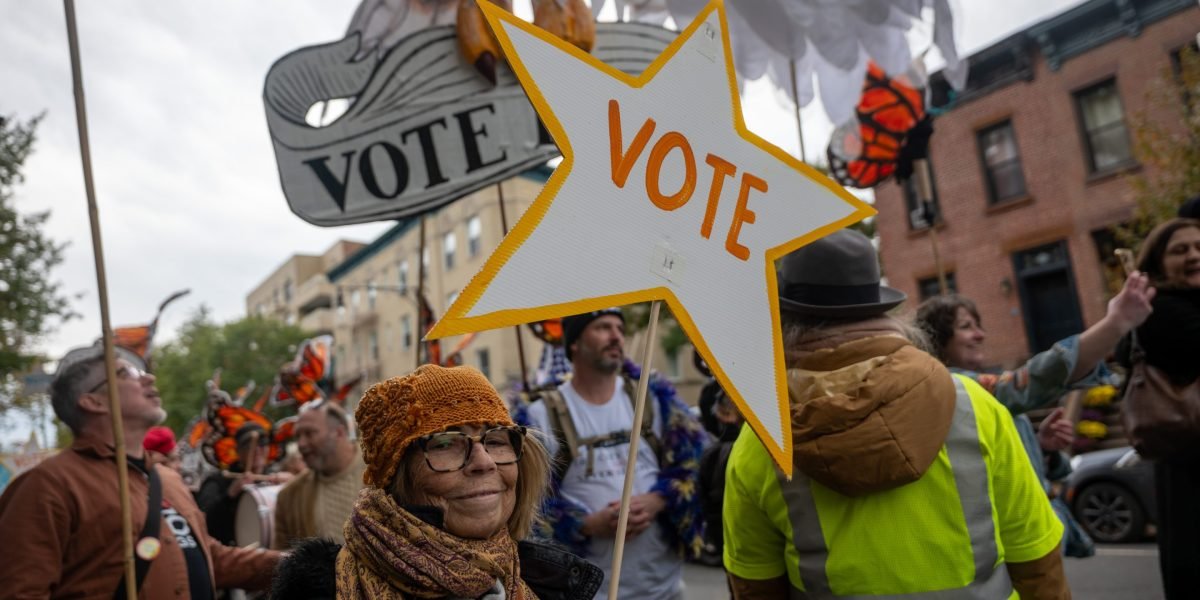
In a rare, phone-free gathering in Greenpoint, Brooklyn, approximately 300 Democratic strategists, organizers, and journalists convened for Newsreel’s “Midterm Mania” panel. Just five days before the crucial midterms, the atmosphere was thick with optimism for a potential “blue wave,” yet also charged with a palpable tension over the party’s core identity, its stance on emerging technologies, and the contentious environmental impact of data centers.
The Shifting Sands of Democratic Identity
Chi Ossé, the youngest member of the New York City Council and a self-identified democratic socialist, immediately commanded attention. His call for Democrats to oppose the war in Iran met with a divided room, prompting his swift retort: “Everyone who’s not clapping is supportive of war.” More broadly, Ossé articulated a pragmatic view on party unity, emphasizing the overarching goal of defeating the right. “The number one thing that I care about within our party is taking back this country back from the right,” he stated, adding, “Whatever you need to do in order to do that at this point in time, you know, I do support that.”
This sentiment resonated with the trajectory of figures like Michigan Democrat Abdul El-Sayed, who, despite progressive backing, has distanced himself from the socialist label. Ossé endorsed such flexibility, saying El-Sayed’s approach “is one that I support in order to beat this fascist, far-right government.” Yet, Ossé also firmly believes “the direction of this party will go towards democratic socialism,” underscoring the ongoing ideological tug-of-war within the party.
Navigating the AI Frontier: A Call for Congressional Reckoning
When the discussion turned to Artificial Intelligence, Ossé, despite admitting he doesn’t “really understand it that much” and barely uses it, proposed a remarkably bold strategy. He advocated for summoning big tech and AI CEOs to testify before Congress, suggesting they “maybe be put behind bars for a little bit.” Furthermore, he enthusiastically endorsed Bernie Sanders’ proposed one-time 50% stock tax on the largest AI companies, declaring: “Cosign and tax some more.” His stance reflects a growing progressive desire for aggressive regulation and accountability in the rapidly expanding tech sector.
The Data Center Dilemma: An Unlikely Unifier?
Perhaps the most surprising point of consensus emerged during the data center panel. Dominic-Madori Davis of TechCrunch noted a private-equity executive’s observation that public anger is often misdirected at AI rather than the physical infrastructure of data centers themselves. Hilary Flint, an organizer against data centers in Pennsylvania, highlighted a rare bipartisan alignment on the issue. While the right often worries about eminent domain and the left about environmental impact, Flint observed, “I’ve never seen people of all beliefs be on the same page about an environmental issue the way they are on this one.” The Pennsylvania Data Center Resistance group on Facebook, with over 44,000 members from across the political spectrum, stands as a testament to this broad opposition.
Maia Woluchem, who tracks data center buildouts for Data & Society, contextualized their proliferation within a “long legacy of industrial obfuscation,” often targeting communities already burdened by fracking wells and coal mines. While data centers account for a relatively small national environmental footprint (1.5% of global electricity demand, 0.5% of global CO2 emissions), their load is highly concentrated. In Virginia, for instance, data centers already consume 26% of the state’s electricity, a figure that raises significant alarms.
Pennsylvania’s Political Pivot
The political tightrope walk around data centers was vividly illustrated by Pennsylvania’s Democratic Governor, Josh Shapiro. Initially, Shapiro welcomed Amazon’s $20 billion data center investment in the state. However, after “incredible pushback” from activists and communities, Woluchem noted, Shapiro “tried to reverse that decision” and has since been pushed to advocate for the “strictest” regulations.
A Blue Wave with Internal Ripples
The Brooklyn gathering revealed a Democratic party brimming with confidence for the upcoming midterms, yet grappling with fundamental questions of identity and policy in a rapidly evolving technological and environmental landscape. The “blue wave” may indeed be coming, but it will undoubtedly carry a diverse, and at times discordant, chorus of voices, reflecting the complex internal debates shaping the party’s future.
For more details, visit our website.
Source: Link






Leave a comment