




The Voice of God vs. The Machine: Morgan Freeman’s Vision for AI in Hollywood
Morgan Freeman possesses arguably the most distinctive and revered voice in Hollywood, a vocal signature that has, ironically, made him a prime target for the burgeoning world of AI copycats. While the technology promises revolutionary advancements, it has also thrust the legendary actor into a battle for control over his own identity.
A Vision for AI: Dreams vs. Deepfakes
“You can create artists and make them say things they never said, which has happened to me,” Freeman candidly shared with Fortune, highlighting the unsettling reality of unauthorized AI replication. Despite these personal infringements, Freeman is not an adversary of technology itself. Instead, his perspective is nuanced, rooted in a belief that AI should serve humanity’s loftiest aspirations, provided privacy remains paramount.
“What we should be doing with technology is what we actually are dreaming of doing,” he stated. “But we have to somehow protect privacy, and that’s the first thing that loses its grip.” This sentiment echoes a growing concern across industries, particularly in creative fields where personal likeness and voice are invaluable assets.
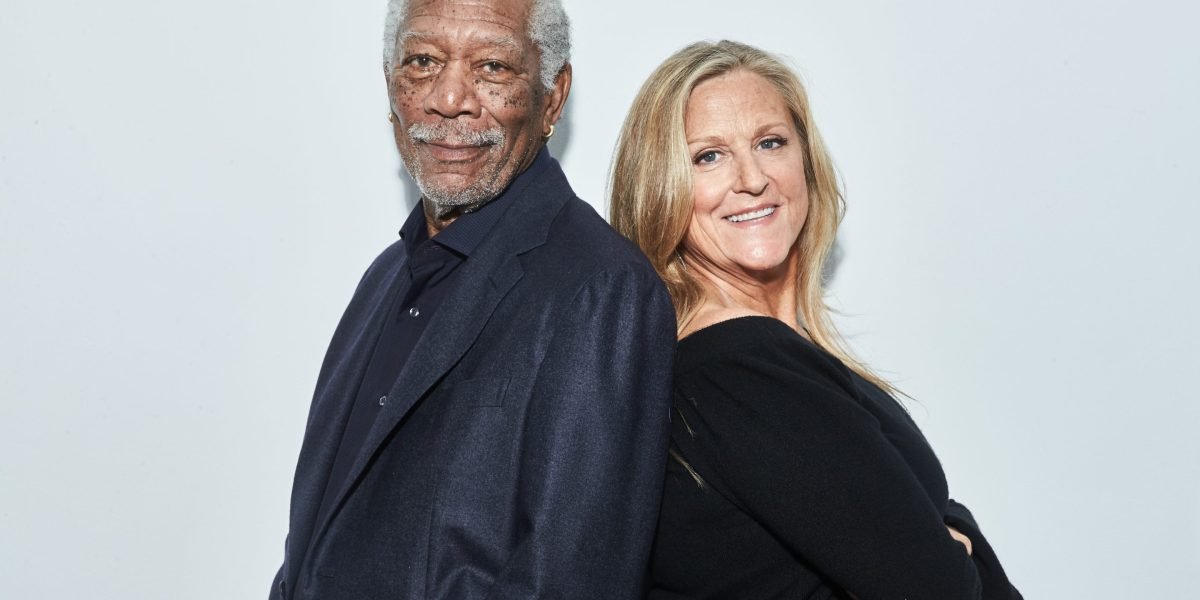
Lori McCreary, Freeman’s longtime producing partner and co-founder of Revelations Entertainment, experienced the chilling reality of deepfakes firsthand. Two and a half years ago, she stumbled upon an online clip featuring Freeman that she couldn’t recall him ever filming. Her call to the actor confirmed her suspicions: he didn’t remember it either. “That was the first time when I thought, ‘Okay, we’ve got to get ahead of this,’” McCreary recounted to Fortune.
Freeman has been proactive in his pushback. Last November, he informed The Guardian that his legal team had been “very, very busy” addressing numerous instances of his voice being illegally replicated. More recently, in June 2024, he publicly thanked fans on X for their vigilance in identifying and reporting unauthorized AI imitations.
McCreary reveals that their company now receives daily inquiries about products being sold online using Freeman’s voice, all without his consent or involvement. While AI can convincingly reproduce his voice and performance, she emphasizes, “it’s not the same as having the right to do it.”
Revelations Entertainment: A Legacy of Tech Innovation
For Freeman and McCreary, navigating the complexities of AI is a natural extension of their company’s ethos. “That’s our mantra always: stay ahead of technology, so we can help mold it and become better storytellers with it,” McCreary affirmed.
Revelations Entertainment, founded in 1996, emerged from Freeman’s 1993 directorial debut, Bopha!, a film exploring apartheid in South Africa. The partnership blossomed from a shared vision to be productive together, leading to a company dedicated to “revealing truth and telling stories that made sense for people,” as Freeman described it, rather than a biblical reference.
Pioneering Digital Editing
McCreary, armed with a computer science degree from UCLA, brought a crucial technological foresight to Hollywood. “I came to Hollywood because I could see technology was going to change storytelling,” she explained. Bopha! itself was a testament to this vision, edited on Montage, one of the earliest digital editing systems. When the system proved less than frame-accurate, McCreary took matters into her own hands, writing a program to rectify the cutting lists. Freeman, acknowledging her expertise, proudly called her “a computer geek,” recognizing her technical prowess as a cornerstone of their successful partnership. He noted that McCreary’s ability to grasp complex technical concepts and translate them into their impact on storytelling is what makes their team so effective.
The ClickStar Experiment: Ahead of Its Time
One of Revelations’ most ambitious early ventures was ClickStar, a broadband movie service conceived in the early 2000s. Inspired by the music industry’s struggle with piracy (think Napster), Freeman and McCreary sought to make films “easier to buy than pirate.” Backed by Intel, ClickStar launched in December 2006, offering first-run films for online access, payment, and download just weeks after their theatrical release. Its debut film, 10 Items or Less, starring Freeman, was a bold statement.
While Freeman conceded that ClickStar was “a great idea at the time” but “just ahead of its time,” McCreary maintained that their prediction of consumer behavior was accurate, albeit premature. “I think the adoption of it took a little longer than we anticipated,” she reflected. “We were a little too soon.”
Navigating the AI Frontier: A Call for Standards
Two decades after ClickStar, AI represents the latest technological frontier for McCreary and Revelations. She is actively involved in shaping industry standards for its use, while Freeman points out that AI isn’t as novel as it appears. “I think AI has been around a long time,” he mused. “We’ve been using it without identifying it for a long time, but now that it’s hit the forefront of the imagination, we worry about it being misused—and it is.”
Concerns about AI’s impact have reverberated throughout Hollywood. The 2023 SAG-AFTRA strike resulted in a contract mandating explicit consent for studios to repurpose a performer’s work with AI. Actor Nicolas Cage has also voiced his apprehension, fearing that studios might “just going to steal my body and do whatever they want with it” – a sentiment echoing the broader anxiety about creative control and exploitation in the age of artificial intelligence.
For Revelations Entertainment, the journey continues, driven by a commitment to harness technology for storytelling while fiercely protecting the human element at its core.
For more details, visit our website.
Source: Link






Leave a comment