



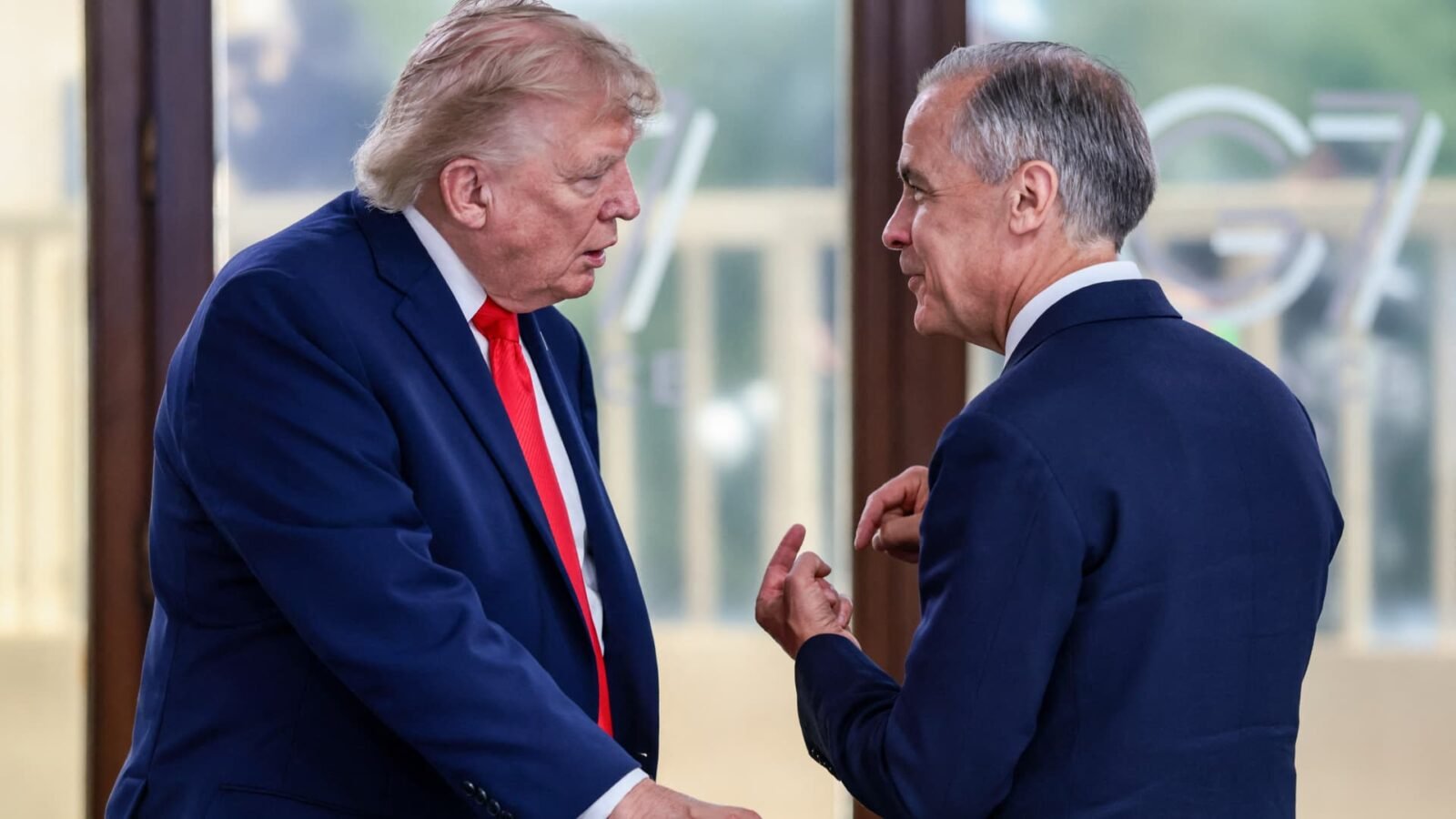

Trump’s Tariff Shuffle: Political Maneuvering Amidst US-Canada Trade Tensions
In a move that underscores the complex interplay of trade policy and domestic politics, the White House recently announced a significant recalibration of tariffs on Canadian goods. While President Donald Trump’s administration declared the removal of duties on certain products, it simultaneously introduced new tariffs on others, effectively engaging in a ‘tariff shuffle’ that has sparked immediate political debate, particularly in the battleground state of Maine.
A Shifting Landscape of Duties
The announcement from the White House confirmed President Trump’s decision to drop existing tariffs on a selection of Canadian imports. However, this relief was swiftly accompanied by a caveat: new duties would be imposed on different categories of products, including “certain valves, carpets, and waste products.” This strategic adjustment, framed as an effort to “further refine the scope of the tariffs,” was set to take effect just days before the crucial Nov. 3 U.S. election, adding a layer of political urgency to an already contentious issue.
Senator Collins’ Contested Credit Claim
The timing of the White House’s revelation coincided with Senator Susan Collins, a Republican from Maine, taking credit for successfully lobbying the Trump administration for tariff exemptions. Her office issued a press release touting her efforts to secure relief on “nine categories of products crucial for Maine’s agricultural industries.” Collins emphasized her direct engagement with U.S. Trade Representative Jamieson Greer and Commerce Secretary Howard Lutnick, stressing the “burdens additional costs impose on Maine businesses and families” and pledging to continue advocating for broader trade agreements.
However, the full scope of the White House’s announcement, which included the imposition of new tariffs, was not initially highlighted in Collins’ public statements. This omission quickly drew criticism, particularly as the tariffs remain a highly unpopular issue in Maine, where Collins was fighting a tight re-election bid.
The Opposition’s Sharp Rebuke
Collins’ Democratic opponent, Troy Jackson, a fifth-generation Maine logger, wasted no time in challenging her narrative. Jackson lambasted the senator, arguing that she deserved blame for enabling Trump’s broader tariff policies rather than credit for minor concessions. “Trump’s trade wars have made life harder and more expensive for Mainers. Susan Collins enabled this chaos, voted to confirm the people behind it, and now wants credit for bringing a cup of water to put out the fire,” Jackson stated, encapsulating the sentiment of many critics who view the tariff adjustments as insufficient to address the wider economic strain.
This political sparring echoed a previous debate exchange where Collins highlighted her success in removing items like road salt from the tariff list, only for Jackson to retort, “What about everything else? We can’t eat road salt.”
The Broader US-Canada Trade War
These specific tariff changes are part of a larger, ongoing trade dispute between the U.S. and Canada, initiated by President Trump. White House spokesman Matthew Middleton affirmed that the latest proclamation was a response to “Canada’s discriminatory treatment of U.S. commerce,” aiming to “protect American farmers, manufacturers, and workers.” He reiterated the administration’s commitment to “restore reciprocity in our bilateral trade relationships.”
For Maine, a state heavily reliant on trade with its northern neighbor, these tariffs have posed significant challenges. Importing more from Canada than any other country, Maine businesses and consumers are particularly sensitive to fluctuations in cross-border trade policy, making the tariff debate a pivotal issue in the upcoming election.
For more details, visit our website.
Source: Link








Leave a comment