



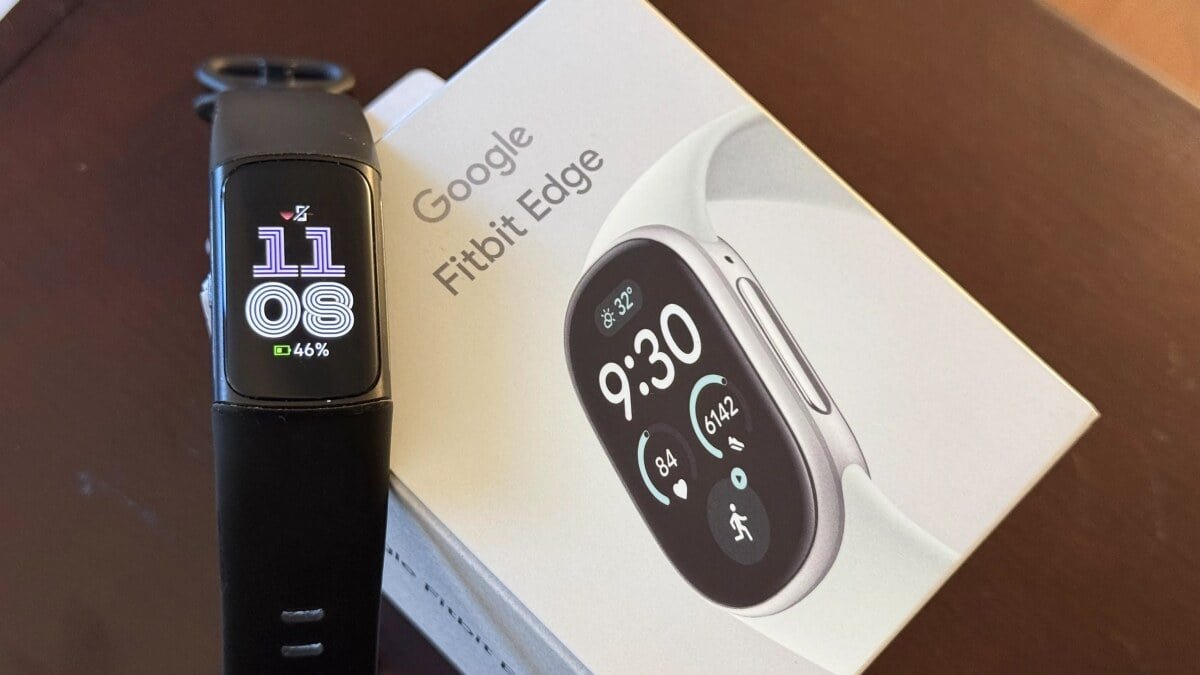

For years, the Fitbit brand has been synonymous with compact fitness trackers, yet it’s been a surprising three-year hiatus since the last screen-equipped model graced the market. Now, with the official announcement and pre-orders open for the new Fitbit Edge, a burning question is on the minds of loyal users: How does this latest iteration stack up against its predecessor, the Charge 6?
A New Era for Fitbit Trackers: The Edge Arrives
The Fitbit Edge marks a distinct design evolution, neatly bridging the gap between the minimalist, screenless Fitbit Air and the sophisticated, curved display of the Pixel Watch. Running on the same operating system as the Fitbit Air, which offers a slightly different experience from the Pixel Watch OS, the Edge maintains Fitbit’s hallmark cross-compatibility, pairing seamlessly with both iPhones and Android devices. Google‘s latest offering introduces several significant enhancements, but not without some notable omissions. Priced at $179.99, the Fitbit Edge is now available for those eager to experience the next generation of activity tracking.
Edge Ahead: Where the Fitbit Edge Outperforms the Charge 6
The Return of the Physical Button: A Tactile Triumph
One of the most welcome changes on the Fitbit Edge is the reintroduction of a genuine, physical side button. Having personally unboxed a review unit, I can confirm the satisfying, audible click it produces, even when the device is powered off. This stands in stark contrast to the Charge 6’s much-maligned ‘haptic nub’ – a pressure-sensitive area that often failed to register input, leading to frustrating interactions. The Edge’s tactile button offers a level of reliability and responsiveness that users have long missed.
Climbing New Heights: Altimeter and Enhanced GPS
The Fitbit Edge brings back a crucial piece of hardware: the altimeter. Absent since the Charge 4, this sensor is vital for tracking altitude changes, allowing for accurate measurement of ‘floors climbed’ throughout your day and providing more precise data for hilly hikes and runs. Both the Charge 6 and the Edge boast built-in GPS, freeing you from carrying your phone to map your workouts. However, the Charge 6’s GPS was notoriously finicky; over-tightening the wristband could strain the antenna, resulting in comically inaccurate maps. Google assures us the Edge features superior GPS hardware, a claim that, given its predecessor’s performance, is easy to believe.
Music Freedom: Beyond YouTube Music’s Grip
The Charge 6’s music controls were a significant point of contention, exclusively supporting YouTube Music – a premium, subscription-based service. This left Spotify, Apple Music, and other streaming service users out in the cold. Fortunately, the Fitbit Edge rectifies this glaring oversight. Google confirms that the Edge will offer universal music control, allowing you to manage playback from any app on your connected phone, aligning it with virtually every other modern smartwatch on the market.
Stepping Back: Where the Charge 6 Still Holds an Edge
The Missing Link: Google Pay and NFC Capabilities
Perhaps the most significant downgrade in the Fitbit Edge is the absence of Google Pay and NFC capabilities. The Charge 6 allowed users to set up Google Wallet for tap-to-pay convenience, a highly valued feature for those who prefer to run or walk without their phone but still want the option to make purchases. This omission was likely a trade-off to accommodate other internal components. For users accustomed to this seamless payment option, its removal from the Edge will be keenly felt.
Navigational Nuances: Google Maps’ Delayed Arrival
At launch, the Fitbit Edge does not support Google Maps directions. While Google’s specifications indicate this feature is ‘coming soon,’ it’s a present limitation. To be fair, Google Maps on previous Fitbits offered a somewhat limited experience, providing only turn-by-turn directions without a full map view. While its eventual arrival will likely negate this difference in the long run, Charge 6 users who relied on this feature should be aware it won’t be immediately available on the Edge.
Ultimately, the Fitbit Edge represents a fascinating evolution for Google’s fitness tracker line. It brings back beloved physical controls and enhances core fitness tracking capabilities, particularly for outdoor enthusiasts. However, these advancements come at the cost of convenient features like tap-to-pay. The choice between the Edge and the Charge 6 will depend heavily on individual priorities: do you value robust fitness tracking and user interface improvements, or is the convenience of mobile payments a deal-breaker?
For more details, visit our website.
Source: Link





Leave a comment