





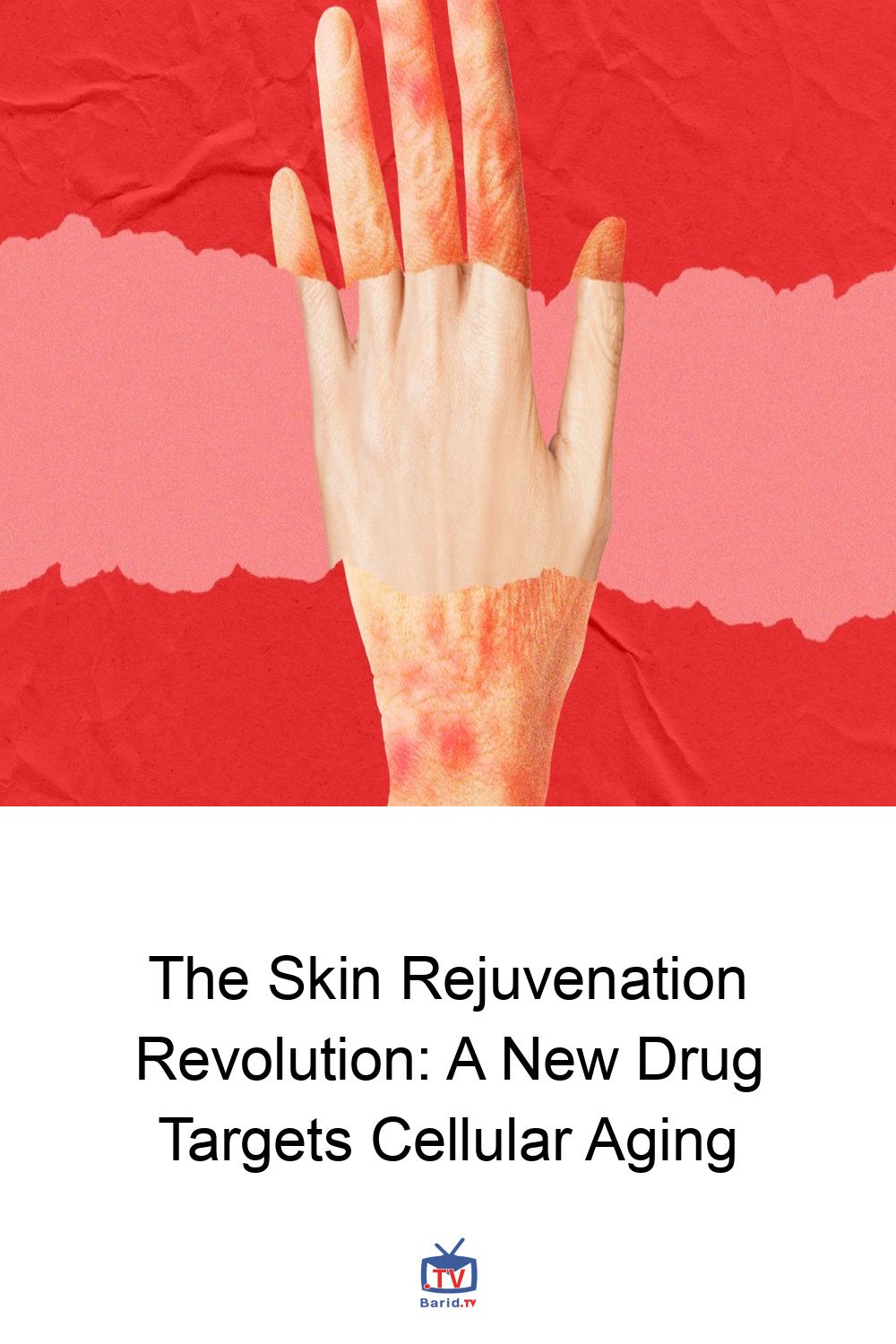
In the relentless quest to defy time, a new wave of biotechnology firms is pushing the boundaries of what’s possible in slowing the aging process. Leading this charge is Mountain View, California-based Rubedo Life Sciences, which has set its sights on the most visible canvas of aging: our skin.
Early findings from Rubedo’s experimental topical treatment are generating significant buzz, hinting at its potential to visibly diminish the signs of aging. These promising results were unveiled at the recent Aging Research and Drug Discovery meeting in Boston, offering a glimpse into a future where youthful skin might be more than just a dream.
Unlocking the Secrets of ‘Zombie Cells’
At the heart of Rubedo’s innovation lies a targeted approach to cellular senescence. This biological state, often dubbed the ‘zombie cell’ phenomenon, occurs when damaged or stressed cells cease dividing but refuse to die. As we age, these senescent cells accumulate, releasing inflammatory substances that contribute to tissue damage and various age-related conditions.
In a preliminary clinical trial, Rubedo applied its topical cream to 11 individuals suffering from atopic dermatitis, a common inflammatory skin condition. The results were remarkable: after just four weeks, participants experienced an average reduction of approximately two years in their skin’s biological age. One individual even saw an astounding reduction of over 11 years.
This ‘biological age’ assessment was conducted independently by Mitra Bio, using their proprietary aging ‘clock’ which analyzes DNA methylation patterns—chemical modifications that influence gene function and shift over time. Beyond the age reversal, Rubedo’s treatment also demonstrated a decrease in inflammation markers and a 10% boost in a specific type of collagen crucial for skin elasticity and structure.
The Science Behind the Reversal
While biological age metrics offer a fascinating perspective, Rubedo’s cofounder and chief scientific officer, Marco Quarta, emphasizes the broader vision. “Our idea is to find ways to change the trajectory of how we age,” Quarta states. “Aging is complex. There are many mechanisms, but cellular senescence is one of them.”
Rubedo’s strategy involves clearing out these problematic senescent cells by targeting GPX4, a protein vital for cell survival. By temporarily deactivating GPX4, the drug renders senescent cells vulnerable to ferroptosis—a controlled form of cell death—while simultaneously revitalizing healthy, non-senescent cells in the vicinity. This nuanced approach differentiates it from cruder methods of cell elimination.
Beyond Aesthetics: Addressing Skin Conditions
The potential of Rubedo’s drug extends beyond cosmetic anti-aging. A separate study investigated its impact on actinic keratosis, a sun-damage-induced skin condition characterized by rough, scaly patches that can sometimes precede skin cancer. In a trial involving 18 participants, the cream achieved a significant 46% reduction in total lesions after a month of use.
The company is actively exploring the drug’s efficacy for other conditions like psoriasis and general sun-damaged skin. Looking ahead, Rubedo plans to investigate its application for androgenetic alopecia, a common form of hereditary hair loss. Frederick Beddingfield, Rubedo’s CEO and former chief medical officer at Allergan (where he famously launched Botox), envisions an over-the-counter, lower-potency version of the cream to compete with popular anti-aging ingredients like retinol. Furthermore, the drug is being formulated into a pill for potential systemic use in treating metabolic conditions linked to aging.
Expert Perspectives and Future Outlook
While the initial data is compelling, experts urge cautious optimism. Eric Verdin, president and CEO of the Buck Institute for Research on Aging, acknowledges Rubedo’s work but advises circumspection regarding the proliferation of ‘aging clocks.’ “I would probably be a little circumspect about what these clocks really measure, because right now, there are a proliferation of them,” he notes, highlighting that patient satisfaction will ultimately hinge on visible improvements in skin appearance and feel, not just biological metrics.
Anthony Rossi, a dermatologist at Memorial Sloan Kettering Cancer Center, adds that cellular senescence is but one piece of the complex aging puzzle. He points out that some senescent cells play beneficial roles, such as suppressing cancer progression. Rossi praises the novelty of the science but stresses its early stage, expressing interest in how it will impact biological aging in healthy skin, beyond specific conditions.
For now, Rossi reminds us of the foundational anti-aging regimen: “The best anti-aging routine right now is sleep, a good diet, and exercise.” While Rubedo Life Sciences offers a tantalizing glimpse into a future of advanced anti-aging solutions, the journey from promising early trials to widespread clinical application is long and complex. Yet, the prospect of truly turning back the clock on skin age remains a powerful motivator for both scientists and consumers alike.
For more details, visit our website.
Source: Link







Leave a comment