





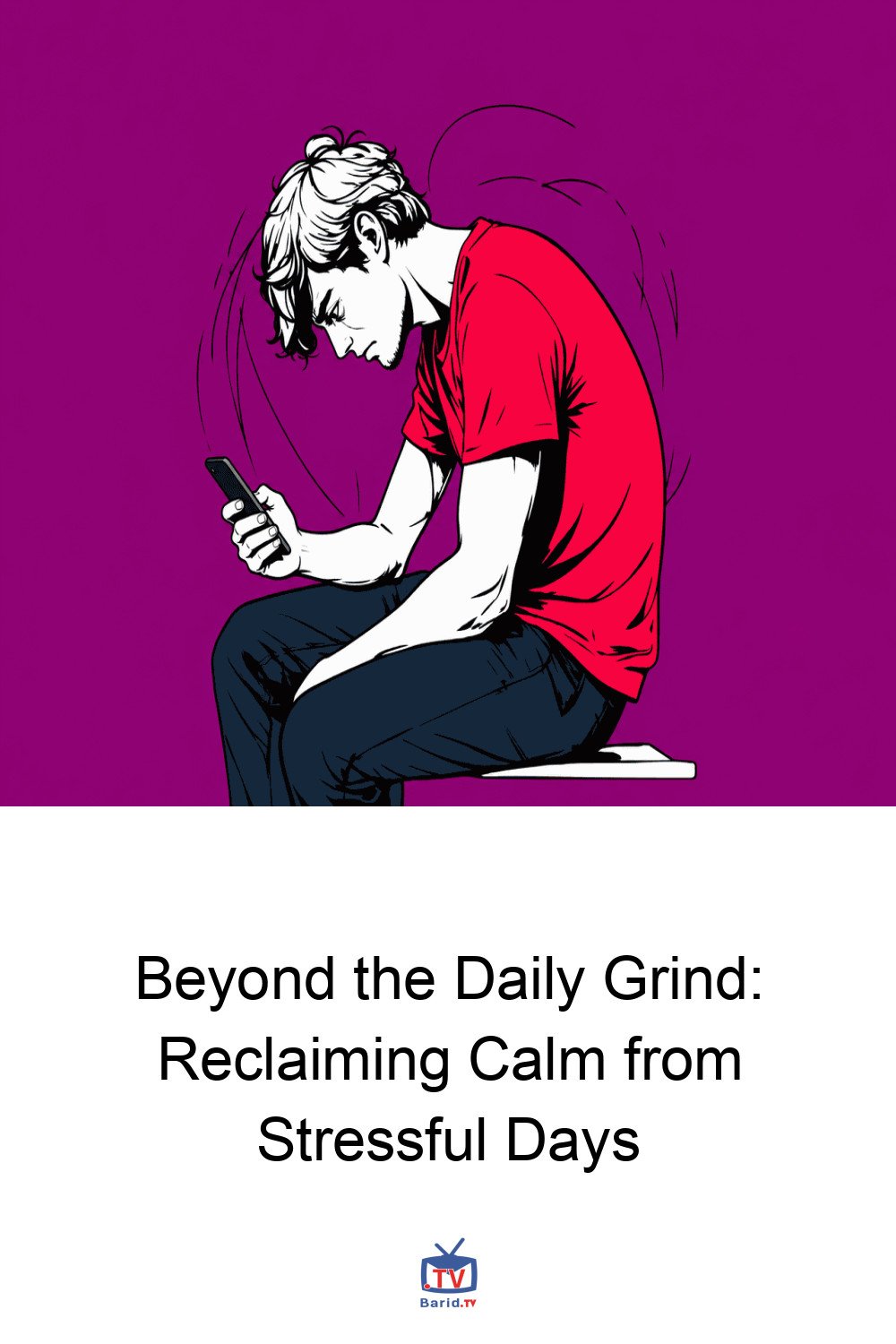
Life often feels like a relentless current, pulling us through demanding days that leave us utterly depleted. We’ve all experienced those moments when the weight of the world settles on our shoulders, our minds race, and all we crave is an escape from the relentless grip of stress. Yet, in our desperate search for relief, we often fall prey to habits that, rather than offering solace, subtly deepen our exhaustion and make tomorrow even harder.
I recall a stark contrast from my childhood: the rigid, duty-bound atmosphere of my parents’ home versus the warm, creatively chaotic haven of my grandmother’s. My mother preached endurance, a life of obligation, leaving me often frustrated and tearful. My grandmother, however, lived by a different creed: balance. Her home, filled with baking, sewing, and gardening, taught me that some things flourish with inspiration, not just obligation. She showed me that when a day has been exhausting, home doesn’t have to perpetuate the race. A warm bath, a cherished meal, a soft blanket, an early night – sometimes, healing is far simpler than we imagine.
The Illusion of Escape: Habits That Worsen Stress
When the emotional tank is empty, our brains instinctively seek distraction. Unfortunately, many of the quick fixes we reach for merely postpone the inevitable, creating a deeper deficit for our nervous system. Let’s explore two common pitfalls and their truly restorative alternatives.
1. The Digital Drain: Scrolling into Overwhelm
It begins innocently enough: “just a few minutes” on social media to unwind. Before you know it, thirty minutes morph into two hours, and instead of feeling rested, you’re inexplicably more overwhelmed. Our screens, designed to capture attention, rarely deliver the genuine calm we seek. Instead, algorithms flood our minds with an endless stream of recommendations, unsolicited opinions, and content we never asked for, leaving us more stimulated than soothed.
A Healthier Alternative: Mindful Moments & Digital Detox Rituals
True rest often lies in subtraction, not addition. Instead of filling your mind, try quieting it:
- Embrace Stillness: Dedicate ten minutes to doing absolutely nothing. Just be.
- Sip & Savor: Prepare a comforting cup of tea and truly enjoy it, focusing on the warmth and aroma.
- Nature’s Canvas: Watch the sunset, observing the sky’s slow, beautiful transformation. Share it with a loved one if possible.
- Connect with Elements: Sit by an open window, or spend a few minutes near water – a bath, a shower, or even a small green space. Your nervous system often craves silence and natural connection over more stimulation.
As I’ve found, choosing not to scroll offers far more genuine inspiration than hours spent passively consuming content. It’s about returning attention to your inner world, not the endless outer one.
2. The Emotional Echo Chamber: Suppressing Your Feelings
Many of us were conditioned from a young age to wear emotional masks. “I’m fine,” we’d say, even when our world felt anything but. “It wasn’t that bad,” often a veiled admission that we don’t believe we deserve better. While postponing emotional processing can sometimes be a healthy choice, when “tomorrow” stretches into weeks and months, our unaddressed emotions don’t vanish. They simply wait, often resurfacing as anxiety, irritability, exhaustion, or a profound emotional numbness.
A Healthier Alternative: Embracing Authentic Emotion
Healing truly begins the moment we grant ourselves permission to utter one simple, yet powerful sentence: “Today was hard.” Acknowledging your emotions isn’t a sign of weakness; it’s an act of profound strength. My own childhood, marked by a mother who prioritized the appearance of “everything is fine,” taught me the cost of this pretense. As an adult, I no longer force smiles or stifle tears. I allow myself to feel, and I encourage my daughter to do the same, teaching her that every emotion has a place, and that true weakness lies in denying their existence.
Cultivating a Sanctuary for Your Soul
The journey to a less stressful life isn’t about eliminating challenges, but about transforming our response to them. By replacing draining habits with intentional acts of self-care and emotional honesty, we begin to cultivate an inner sanctuary, a place where our nervous system can truly reset and find balance, just as my grandmother taught me. It’s a gentle revolution, one mindful moment and honest feeling at a time, paving the way for a calmer, more resilient tomorrow.
For more details, visit our website.
Source: Link







Leave a comment