
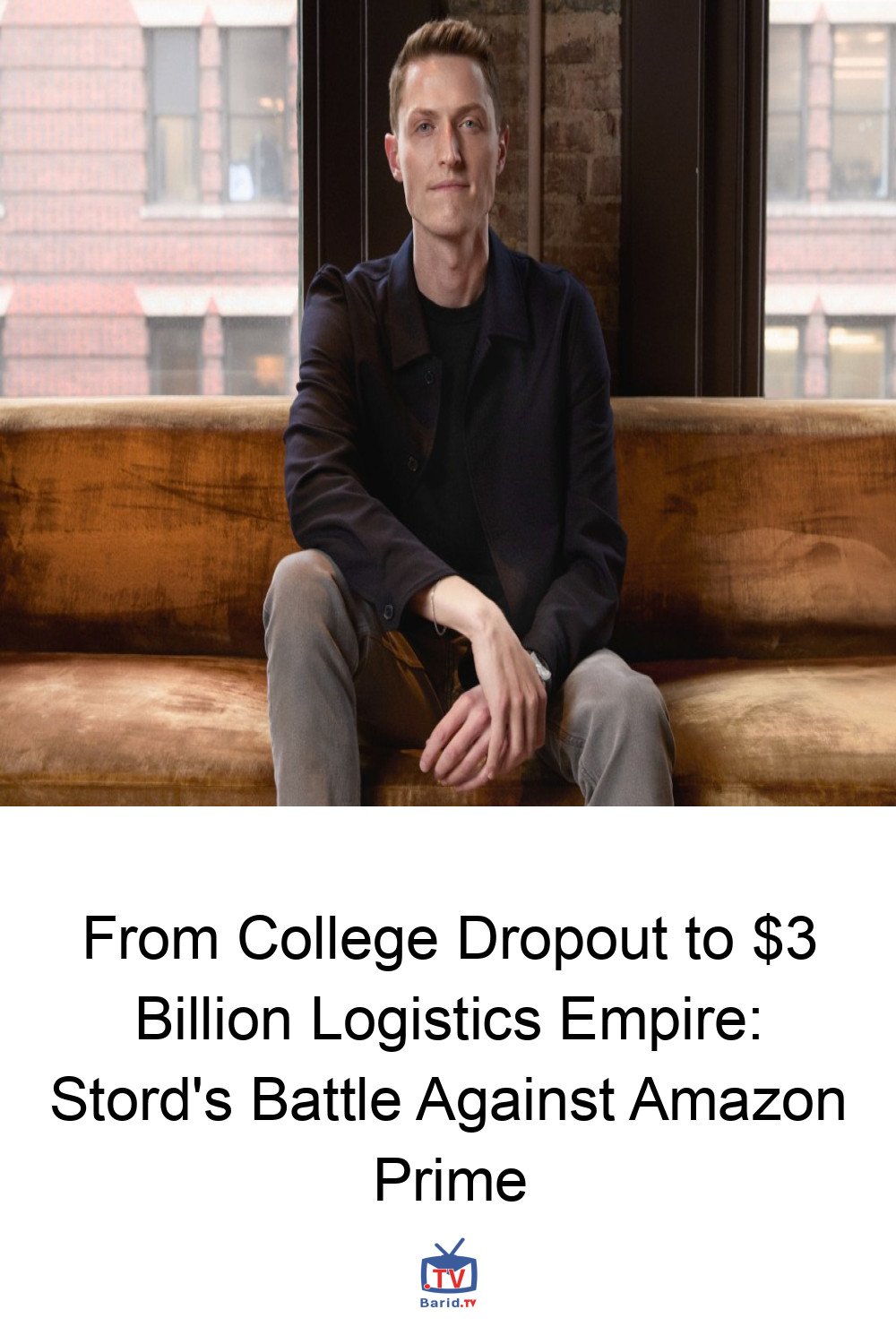
In the fiercely competitive world of e-commerce, one young entrepreneur dared to challenge the behemoth that is Amazon Prime. At just 19, Sean Henry made the audacious decision to drop out of Georgia Tech, a move that would eventually lead to the co-founding of Stord, a company now valued at an astounding $3 billion. Stord isn’t just another tech startup; it’s a commerce enablement platform empowering independent brands to offer the kind of seamless, rapid fulfillment once exclusive to industry giants. This is the story of how a childhood fascination with selling online blossomed into a logistics revolution.
The Genesis of an Entrepreneur: From eBay to E-commerce Visionary
Sean Henry’s entrepreneurial journey began long before college. At the tender age of eight, he was already navigating the digital marketplaces of eBay, selling everything from old toys to Christmas presents. His early experiences, marked by the logistical challenges of getting packages to UPS and managing payments, instilled a deep understanding of the friction points in online commerce. This hands-on learning continued as he expanded to Amazon and even created a local business buying and reselling electronics.
These formative years coincided with a seismic shift in consumer expectations. What began as a novelty – buying products online – rapidly evolved into an expectation for instant gratification, largely driven by the advent of Amazon Prime. Consumers no longer just wanted to buy online; they demanded speed, efficiency, and a flawless delivery experience, often leaving reviews based solely on shipping performance.
Identifying the Amazon Prime Problem: A Market Ripe for Disruption
While working at an automotive manufacturer before college, Henry’s entrepreneurial drive was further solidified. He chose Georgia Tech for its full-ride scholarship and its proximity to Atlanta’s vibrant business ecosystem, including the invaluable resources of the Atlanta Tech Development Center (ATDC). It was here, amidst a lifetime of online selling experiences, that a profound realization struck him: “Everyone is going to want stuff faster, cheaper and online forever.”
The problem was clear, yet daunting: how could independent brands possibly compete with Amazon’s vast network of hundreds of fulfillment centers, offering near-instantaneous delivery? A typical brand might operate one or two warehouses, leading to significant delays and a fragmented customer experience. Henry saw an opportunity in this disparity, a “big audacious problem” that, despite its complexity, was too obvious to ignore.
Stord’s Innovative Wedge: Building a Network, Not Just Warehouses
The challenge wasn’t just identifying the problem, but finding the right “wedge” into the value chain – a strategic entry point that could deliver immediate value while laying the groundwork for long-term growth. Henry and co-founder Jacob Boudreau understood that Amazon’s strength lay in its distributed network of warehouses. But for a startup with limited capital (Henry started Stord LLC at 18 with $5,000-$10,000 of savings), building hundreds of new facilities was impossible.
Their ingenious solution? Instead of building new warehouses, Stord would partner with existing ones. By aggregating demand from numerous independent brands, Stord could bring significant volume to regional warehouses across the U.S. In return, these warehouses would gain access to new revenue streams and Stord’s proprietary technology, which could optimize inventory placement and shipping decisions in real-time – a critical advantage over the traditional, often 12-hour delayed, fulfillment processes.
A Billion-Dollar Vision: Empowering the Future of E-commerce
This innovative approach quickly gained traction. Stord, which recently secured a $250 million Series F round, now manages nearly $15 billion in annual Gross Merchandise Volume (GMV) for prominent brands like AG1, True Classic, Native, and Seed Health. In the past year alone, Stord delivered to almost 20% of U.S. households and is projected to reach $1 billion in annual revenue. Sean Henry’s decision to leave college at 19 wasn’t just a gamble; it was a calculated leap of faith that has reshaped the e-commerce logistics landscape, proving that with vision and innovation, even the smallest players can stand tall against the giants.
For more details, visit our website.
Source: Link