
In September 2024, an alarming cluster of cases emerged in Fano, a picturesque coastal city in Italy. Patients arrived at emergency rooms exhibiting a perplexing array of symptoms: fever, nausea, diarrhea, and a distinctive rash on their hands and feet. Initial tests were inconclusive, but a breakthrough came with a positive diagnosis for dengue, a viral infection typically confined to the world’s tropical zones and spread by mosquitoes. What made this outbreak particularly unsettling was that none of the affected individuals had recently travelled to dengue-endemic regions; their only common link was a specific neighbourhood within Fano.
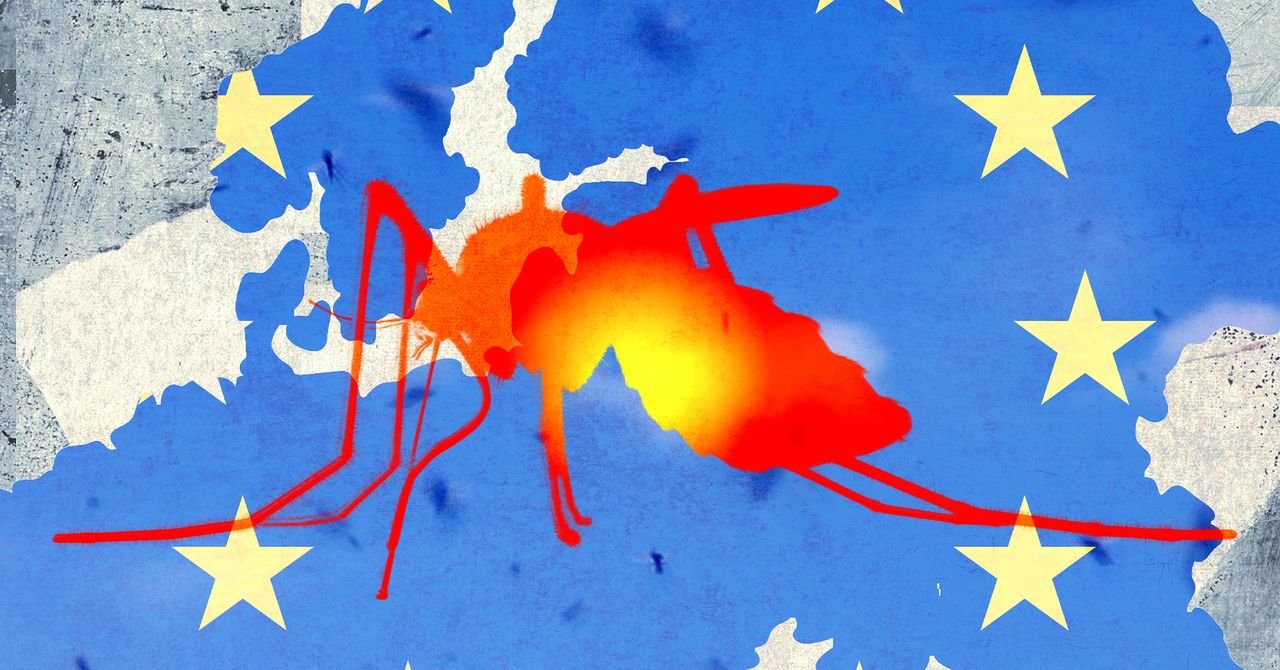
This incident was not isolated. While not the first instance of local dengue transmission in mainland Europe, the Fano outbreak was significantly larger, with 199 cases identified between mid-August and mid-October 2024. It underscores a growing, continent-wide concern: as global temperatures rise, Europe is becoming an increasingly hospitable environment for invasive mosquitoes and the tropical diseases they carry, such as chikungunya, a debilitating illness causing severe joint pain, and West Nile virus. The era of ‘tropical diseases’ being geographically restricted is rapidly drawing to a close, and experts predict this trend will only intensify.
The Silent Invader: Understanding the Asian Tiger Mosquito
At the heart of this escalating public health challenge is
Aedes albopictus, more commonly known as the Asian tiger mosquito. This adaptable species, now found across all continents, possesses a unique characteristic: unlike many of its counterparts, it bites both during the day and at night. The tiger mosquito has already established robust populations across Europe, particularly in the warmer southern regions. Riccardo Moretti, a senior researcher at Italy’s ENEA and a veteran in tiger mosquito research, warns that its northward expansion is inevitable.
A Longer, More Dangerous Mosquito Season
The tiger mosquito thrives in temperatures between 20 and 30 degrees Celsius (68 to 86 Fahrenheit) but can survive at temperatures as low as 10 Celsius (50 Fahrenheit). “This means that conditions already exist for the spread of the Asian tiger mosquito, even in England,” Moretti explains. While northern European countries currently experience these conditions only during the warmest parts of the year, southern nations like Greece are witnessing a significant elongation of the mosquito season. Researchers have observed adult mosquitoes active until December and reappearing as early as March, overwintering as resilient eggs. Moretti cautions, “There is a concrete risk that in the next few years, we could have a population capable of surviving throughout the year.”
From Imported Cases to Endemic Threat
Presently, most mosquito-borne disease cases in Europe typically manifest towards the end of summer. This period coincides with peak tiger mosquito activity and increased travel, creating a perfect storm: an infected traveller unwittingly brings a virus like dengue into Europe, gets bitten by a local tiger mosquito, which then transmits the disease to others, initiating local spread. As temperatures drop, mosquito activity wanes, and cases subside. However, a prolonged mosquito season means more opportunities for infection and transmission. The ultimate concern, as Moretti highlights, is the potential for tropical diseases like dengue to become endemic in parts of Europe, transforming occasional outbreaks into a permanent public health fixture. “It is completely different dealing with occasional cases of virus transmission, and instead dealing with a permanent status of possibility of transmission,” he stresses.
Climate’s Complex Role: Beyond Just Heat
The relationship between climate and mosquito-borne diseases is more nuanced than simply “warmer equals worse.” A recent study led by Sandeep Tegar, an epidemiological modeler at the UK Centre for Ecology and Hydrology, revealed that tiger mosquitoes can transmit chikungunya at a cooler 14 degrees Celsius (57 degrees Fahrenheit), two degrees lower than previously thought. This critical difference significantly broadens the potential geographical and temporal windows for outbreaks across most European countries. “That difference of two degrees matters a lot when we are talking about global warming,” Tegar notes.
However, excessive heat can also be detrimental. Temperatures exceeding 35 degrees Celsius (95 degrees Fahrenheit) can hinder the tiger mosquito’s survival. Frederic Bartumeus, an ecologist at Spain’s CEAB, observes that regions like Southern France and Spain, recently ravaged by heatwaves and wildfires, have experienced fewer mosquitoes this year due to extreme heat and dryness. Rain, too, plays a crucial role; mosquitoes require standing water for breeding, where they lay eggs and larvae develop. As Felipe Colón González, a technology lead and expert, explains, “If it rains too little, then there’s not sufficient breeding sites.”
Understanding these complex environmental factors is paramount as Europe grapples with the escalating threat of diseases once considered distant. Proactive surveillance, public awareness, and integrated vector control strategies will be essential in mitigating this evolving public health challenge.
For more details, visit our website.
Source: Link