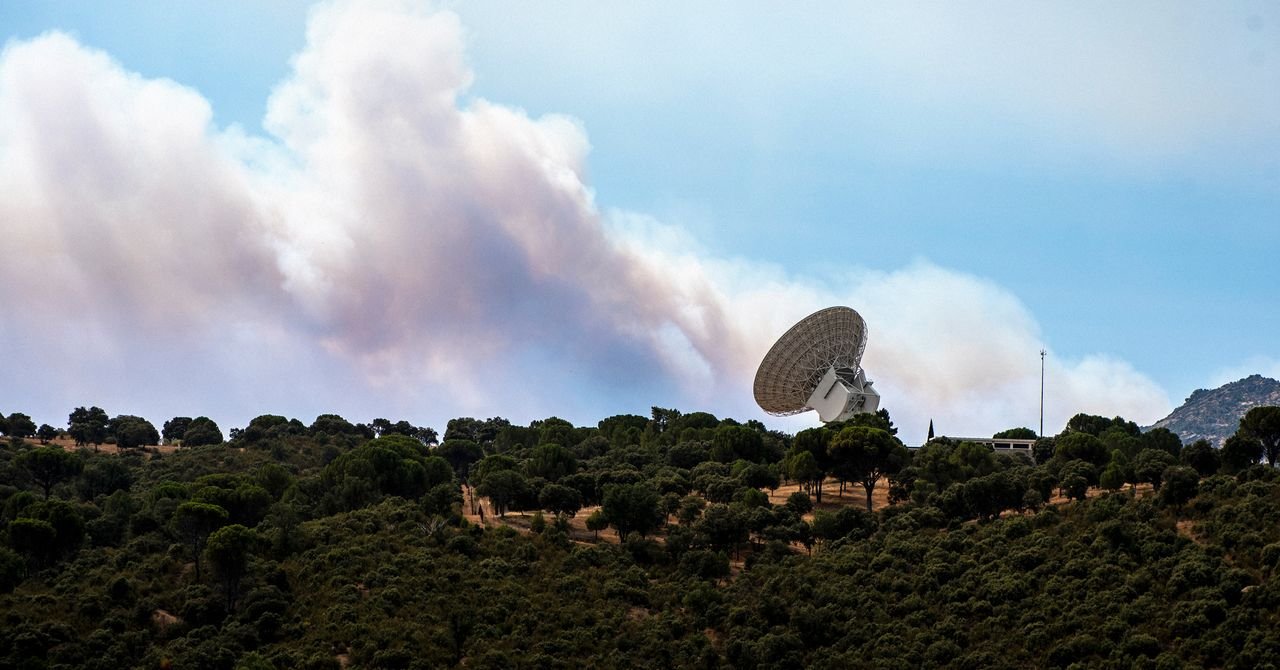

The relentless march of climate change has taken an alarming turn, reaching beyond terrestrial concerns to threaten humanity’s most ambitious ventures into the cosmos. On Friday, devastating wildfires sweeping across Spain directly impacted one of NASA’s three indispensable Deep Space Communications Complexes, a critical lifeline to missions like the venerable Voyager 1, the groundbreaking James Webb Space Telescope, and the recently concluded Artemis lunar orbit.
A Fiery Assault on Deep Space Communications
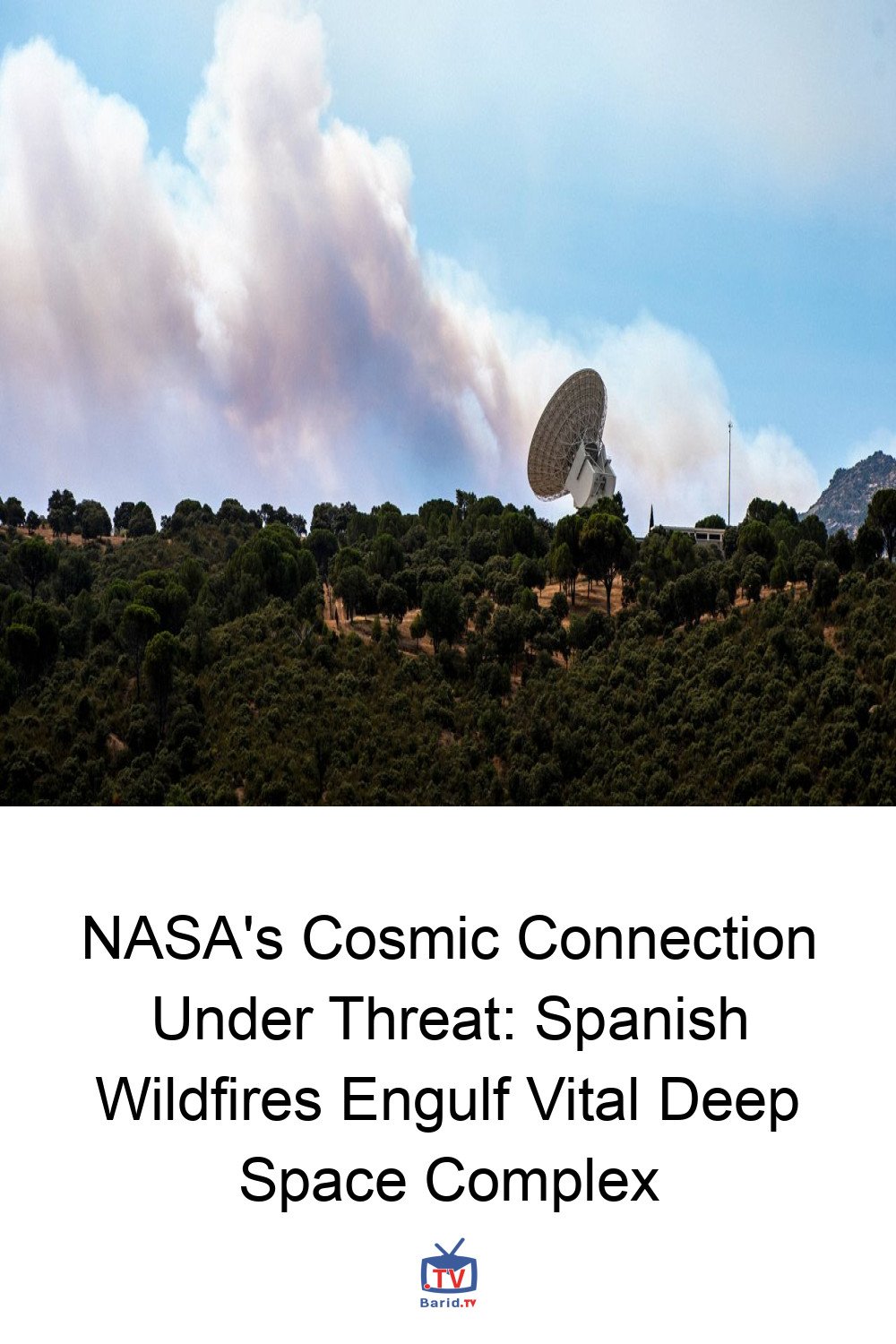
As Spain grappled with a declared wildfire emergency, with multiple blazes raging uncontrollably near Madrid and forcing the evacuation of 60,000 residents, the inferno encroached upon Robledo de Chavela. This municipality is home to a vital NASA facility, part of a global network essential for interplanetary communication. Dramatic photographs captured the surreal scene: colossal radio telescopes, usually gazing silently at distant galaxies, now shrouded in thick smoke and surrounded by advancing flames.
In a statement to WIRED, a NASA spokesperson confirmed the successful evacuation of all personnel from the site. While the immediate danger of the fire passing through the complex has subsided, the full extent of the damage to the highly sensitive equipment remains unknown. “Any potential damage will be assessed when it is safe to do so,” the spokesperson stated, adding that an initial site assessment could commence as early as Saturday, conditions permitting.
Ensuring Uninterrupted Cosmic Conversations
Recognizing the paramount importance of continuous communication with its spacecraft, NASA swiftly activated contingency plans. “Seamlessly transitioned support for mission operations to the Goldstone Deep Space Communications Complex in California, ensuring continuity of service and uninterrupted support for spacecraft communications,” the agency announced. This rapid response underscores the interconnectedness and resilience built into NASA’s global infrastructure.
The Spanish facility, alongside its counterparts in Canberra, Australia, and Goldstone, California, forms what NASA proudly calls “the largest and most sensitive scientific telecommunications system in the world.” This extraordinary network is the conduit for transmitting vital information from Earth to the furthest reaches of our solar system, enabling commands to be sent to distant probes like Voyager 1, and receiving invaluable data from instruments such as the James Webb Space Telescope. Beyond mission control, these sites also play a crucial role in radio astronomy, contributing to our fundamental understanding of the universe.
Europe Ablaze: A Broader Climate Reckoning
The crisis in Spain is not an isolated incident but a stark symptom of a wider environmental catastrophe engulfing Europe. Simultaneously, France battles its own infernos, with scenes of orange skies and ash-laden waves shocking beachgoers as firefighters valiantly protect the renowned Bordeaux wine region. French interior minister Laurent Nunez described one blaze as “a large, self-sustaining fire that is extremely difficult to bring under control,” now threatening the Bordeaux metropolitan area.
Across both nations, an estimated 200,000 people have been forced to flee their homes, a testament to the scale and ferocity of these blazes. Europe has endured a summer of unprecedented heat, driven by persistent heat domes and the overarching influence of climate change. These extreme conditions desiccate vegetation, transforming forests into tinderboxes ripe for ignition by even a stray spark. This pattern of escalating wildfires is mirrored globally, from Ontario, Canada, to the US Pacific Northwest.
A Fleeting Reprieve, A Looming Threat
A brief period of cooler weather is anticipated in the Mediterranean over the weekend, offering a glimmer of hope for exhausted firefighters. However, this respite is expected to be short-lived. Temperatures are projected to surge again from Monday, climbing throughout the week to reach as much as 10 degrees Celsius (18 degrees Fahrenheit) above normal. Such conditions threaten to reignite or exacerbate existing wildfires in Spain and France, or spark new ones, ensuring the climate crisis remains a formidable challenge for the foreseeable future, impacting everything from our homes to our windows on the universe.
For more details, visit our website.
Source: Link