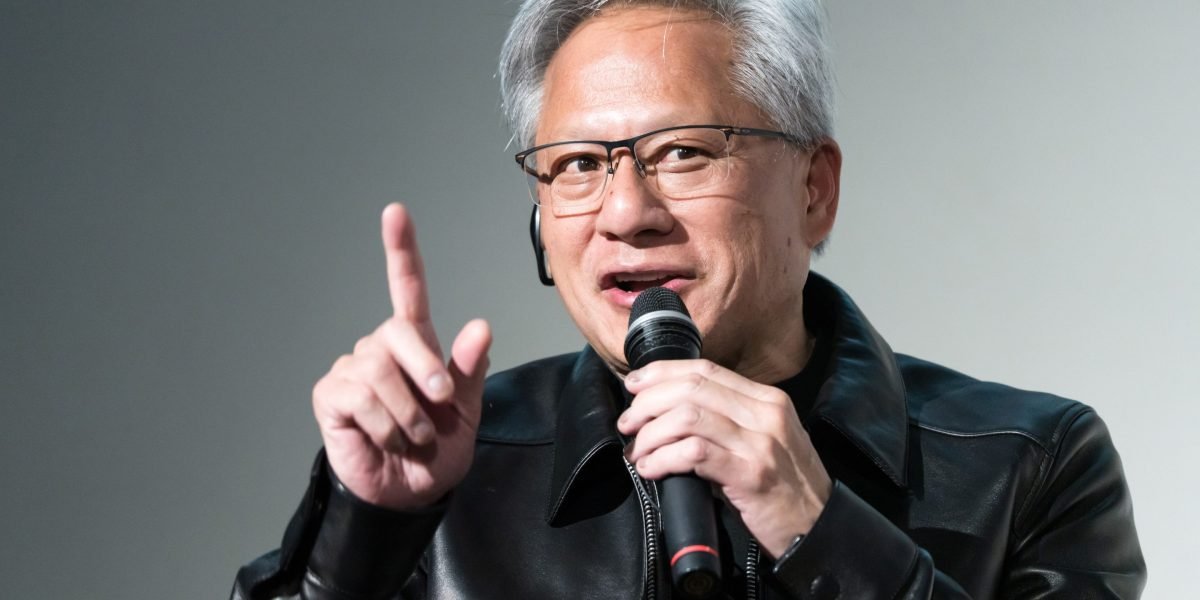

In a rare and impactful move, Nvidia CEO Jensen Huang broke his silence on X (formerly Twitter) with his inaugural post, delivering a stark warning to the artificial intelligence industry. His message, an open letter co-signed by 25 tech giants including Microsoft and Palantir, cautioned Washington against repeating a historical misstep: the over-restriction of nascent technology, a pitfall narrowly avoided by open-source software in the 1980s.
The Echo of the 1980s: A Plea for Open AI
Huang’s debut on the social platform wasn’t for casual banter; it was a direct appeal to preserve open-weight AI models as a cornerstone of American technological leadership. He articulated a genuine concern that without such preservation, the U.S. risks stifling innovation. “Open models strengthen safety and cybersecurity, accelerate innovation and diffusion, and enable sovereignty,” Huang asserted, emphasizing the critical need for both “frontier closed models and frontier open models.”
The parallel drawn to the 1980s open-source software movement is striking. Huang argues that just as open-source code became indispensable to the modern internet despite initial skepticism and calls for restriction, open AI models must be allowed to flourish unhindered by “premature restrictions.”
Why Open Models Matter: A Unified Stance
The letter, backed by a formidable coalition including Meta, Hugging Face, Andreessen Horowitz, Perplexity, and IBM, champions three core tenets:
- Economic Access:
Open models democratize access, fostering innovation among startups and universities.
- Enhanced Competition: They prevent a monopolistic control of AI technology by a select few firms.
- Improved Security: By allowing a broader community of researchers to audit code and patch vulnerabilities, open models inherently become more secure than closed “single points of failure.”
The signatories also staunchly defended “distillation”—the practice of training one model using another’s outputs—as a legitimate and long-standing research technique, arguing it should not be misconstrued as theft, despite ongoing controversy.
The letter powerfully reminds us of open source’s legacy: “Software developed by the open-source community now supports most of the internet,” underpinning critical systems for global tech giants, the U.S. military, and federal agencies. This foundation, it argues, didn’t just lower costs; it forged a “shared foundation of knowledge on which generations of American engineers and entrepreneurs built their institutional sovereignty.”
Geopolitical Currents: China’s AI Offensive
Huang’s timely intervention arrives amidst a heated debate in Washington regarding potential restrictions on Chinese open-weight models, such as Moonshot AI’s Kimi K3. White House adviser Michael Kratsios has fueled the fire by accusing Moonshot of using distillation to replicate a U.S. model, intensifying the debate around this training method.
Adding another layer of complexity, Chinese President Xi Jinping made his own significant debut at the World AI Conference in Shanghai, just a week before Huang’s post. Xi’s keynote pointedly claimed the mantle of “openness” for China, advocating for “a symphony of global cooperation” over “a solo performance by any single country.” He explicitly urged the world to “jointly oppose overstretching the national security concept in the field of AI,” a clear rebuttal to U.S. export controls.
Xi further solidified China’s commitment to a “people-centered” approach, promising cooperation with developing nations across Africa, Latin America, Asia, and BRICS countries to prevent “new historical injustices” in AI access, backed by concrete offers like 5,000 AI training slots.
A Shifting Global Landscape
The geopolitical stakes were further underscored by the formation of the World Artificial Intelligence Cooperation Organization (WAICO) in Shanghai, a day prior to Xi’s speech. Signed by 29 nations, including Russia, Pakistan, and Brazil, WAICO is positioned as a rival to U.S.-led AI governance, with UN Secretary-General António Guterres in attendance. This development has led some analysts to question whether the tech world is fragmenting into competing blocs.
This confluence of events presents a significant challenge for the U.S. coalition’s messaging. Xi Jinping has effectively co-opted the “pro-openness, anti-restriction” narrative that Huang’s letter champions for American industry. This is further complicated by Huang’s own history of praising Chinese AI models, having previously stated “China will win the AI race” and more recently called Chinese open models “excellent.” This positions the Nvidia CEO closer to Beijing’s framing than to the more hawkish stance of U.S. counterparts like OpenAI and Anthropic, notably absent from the open-weights letter, who have warned Washington about the risks posed by strong Chinese open models.
The Future of AI: Openness or Restriction?
Jensen Huang’s inaugural X post serves as a powerful reminder of the delicate balance between innovation and regulation. As the world grapples with the transformative power of AI, the debate over open-weight models is not merely technical; it is a battle for economic leadership, national security, and global influence. The lessons from the 1980s software era loom large, urging policymakers to consider the long-term implications of their decisions on the future trajectory of artificial intelligence.
For more details, visit our website.
Source: Link