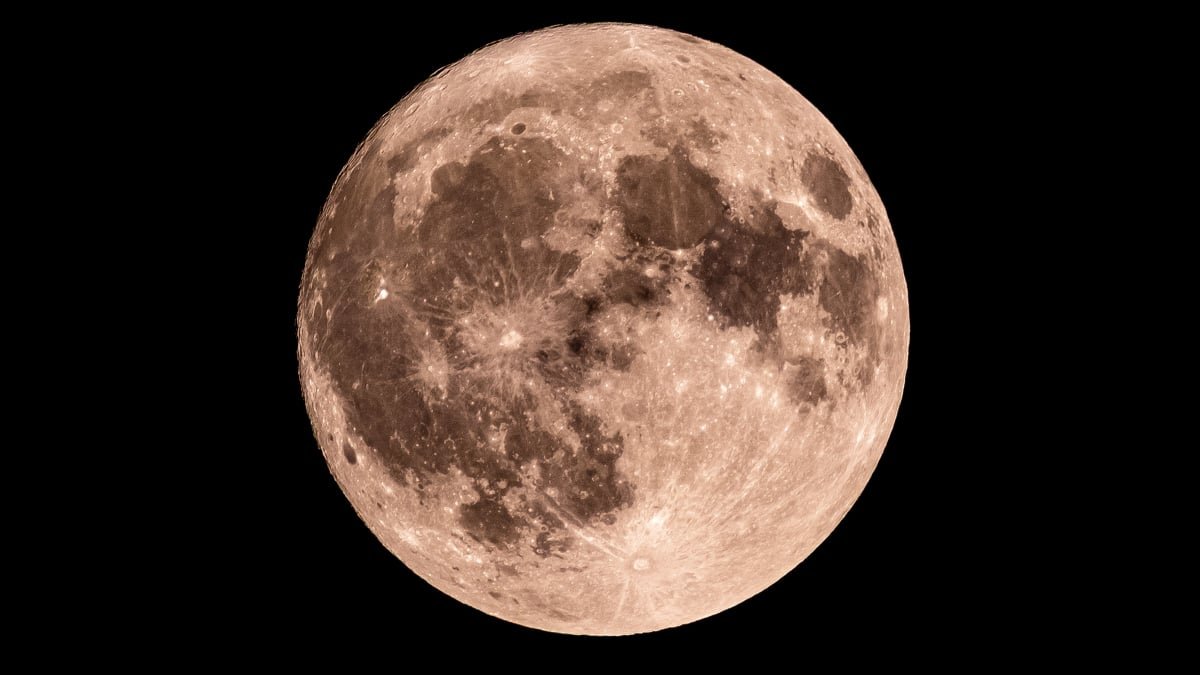

As twilight descends on July 23, sky-gazers are treated to a captivating lunar display. Our celestial neighbor is currently in its Waxing Gibbous phase, a period of increasing illumination that heralds the arrival of the much-anticipated Full Moon, now less than a week away.
The Current Lunar Landscape: A Waxing Gibbous Moon
According to NASA’s Daily Moon Guide tracker, as of Thursday, July 23, the Moon’s surface is 58% visible. This means more than half of its face is bathed in sunlight, presenting a stunning view for observers on Earth. The Waxing Gibbous phase is a transitional period, building towards the complete brilliance of the Full Moon.
Unveiling Lunar Features: What You Can See Tonight
Even without specialized equipment, the Moon offers a wealth of detail. With the naked eye, you can easily distinguish the prominent dark plains known as Mares Crisium, Fecunditatis, and Tranquillitatis. These vast, ancient lava flows tell tales of the Moon’s volcanic past.
For those with a pair of binoculars, the lunar landscape opens up further. You’ll be able to discern the Mare Nectaris, the distinct Alphonsus Crater, and the rugged peaks of the Alps Mountains, adding depth and texture to your observation.
A telescope, however, truly transforms the viewing experience. It brings into sharp focus more intricate details, including the historic Apollo 17 landing spot, the majestic Caucasus Mountains, and the intriguing Descartes Highlands, allowing for a truly immersive journey across the lunar surface.
Anticipating the Full Moon
The lunar journey continues, culminating in the next Full Moon, which is scheduled to grace our skies on July 29. This event promises a fully illuminated spectacle, a beacon in the night sky that has captivated humanity for millennia.
Understanding the Moon’s Ever-Changing Face
The Moon’s appearance from Earth is a dynamic ballet of light and shadow, governed by its orbit around our planet. Taking approximately 29.5 days to complete one full revolution, the Moon cycles through eight distinct phases, as detailed by NASA. While the same side of the Moon consistently faces Earth, the portion of its surface illuminated by the Sun varies, creating the familiar progression of lunar phases we observe throughout the month.
The Eight Phases of the Moon Explained
- New Moon: Positioned between Earth and the Sun, the side facing us is completely dark, rendering the Moon invisible to the naked eye.
- Waxing Crescent: A delicate sliver of light emerges on the right side (for observers in the Northern Hemisphere).
- First Quarter: Half of the Moon’s face is illuminated on the right side, appearing as a perfect half-Moon.
- Waxing Gibbous: More than half of the Moon is lit, though it has not yet reached full illumination.
- Full Moon: The entire face of the Moon is illuminated by the Sun, presenting a brilliant, fully visible disc.
- Waning Gibbous: The illumination begins to recede from the right side (Northern Hemisphere), gradually decreasing.
- Third Quarter (or Last Quarter): Another half-Moon appears, but this time the left side is illuminated.
- Waning Crescent: A thin sliver of light remains on the left side before the Moon once again becomes dark, completing the cycle.
For more details, visit our website.
Source: Link