
The artificial intelligence revolution, often hailed as the next frontier of technological advancement, appears to be built on a foundation more precarious than many realize. While market exuberance has fueled a significant stock rally, a closer look reveals that the AI boom is increasingly reliant on a massive influx of borrowed money, and Wall Street’s once-insatiable appetite for this debt is now showing signs of significant fatigue.
The Billions Behind the Boom: Hyperscalers’ Debt Deluge
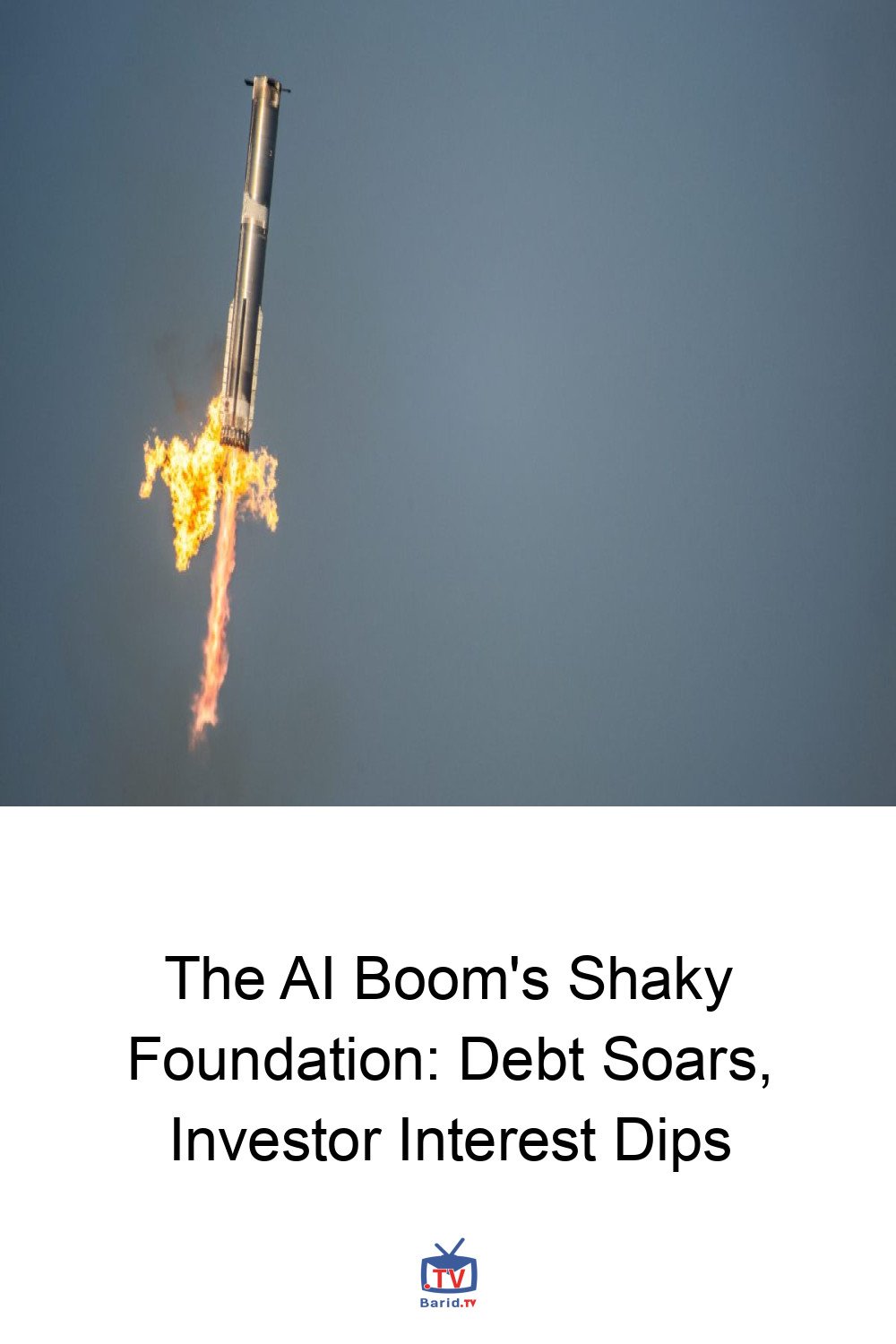
Major technology players, often dubbed “hyperscalers,” are pouring hundreds of billions annually into developing and expanding AI infrastructure. This colossal investment isn’t solely funded by robust cash flows or new equity; bond markets have become a critical, and increasingly strained, source of capital. Since the dawn of 2025, giants like Alphabet, Meta, Amazon, and Oracle have collectively issued over $300 billion in bonds. Even AI chip powerhouse Nvidia recently entered the fray with a $25 billion bond sale, its first in five years, while SpaceX, now an AI contender with its xAI acquisition, added another $25 billion in bonds shortly after its monumental $86 billion IPO.
An Unrelenting Demand for Capital
The demand for capital shows no signs of abating. Projections indicate that the top five hyperscalers alone are expected to issue an astounding $300 billion in bonds annually in the coming years, a substantial leap from $175 billion in 2026. JPMorgan further estimates a staggering $375 billion in debt proceeds from 2026 to 2030, excluding SpaceX’s contributions. This relentless pursuit of funding underscores the immense financial commitment required to sustain the AI race.
Investor Jitters: A Cooling Appetite for AI Debt
However, as the supply of AI-related debt skyrockets, investor enthusiasm appears to be waning. A recent “surprise” $25 billion bond sale by Amazon, for instance, required the e-commerce giant to offer an additional 18 to 21 basis points of yield on its longest-dated debt to attract buyers. This move was a direct response to dipping demand, with orders falling from 3.2 times the bonds on offer in March to a mere 2.5 times. “Investors are pushing back,” noted Bank of America, suggesting increased uncertainty in the hyperscaler debt market.
Wider Spreads and Higher Borrowing Costs
Torsten Slok, Chief Economist at Apollo Global, highlighted a concerning trend: the “cover ratio”—investor orders per dollar of bonds—for hyperscalers has plummeted from nearly 5x in February 2026 to below 2x by July. This stark decline signals that investors are demanding wider spreads and more attractive terms to absorb new supply, inevitably driving up borrowing costs for these tech titans. Furthermore, the sheer volume of debt has led tech giants to issue bonds in various currencies, as the dollar bond market, the world’s largest, approaches saturation. This AI-driven debt also faces stiff competition from the U.S. Treasury, which is flooding the market with debt to finance a federal deficit projected to hit $2 trillion this fiscal year.
Market Tremors: From Bonds to Stocks
The growing bearishness in the bond market is already reverberating through the secondary market and impacting stock valuations. SpaceX’s debt, for example, has seen a significant sell-off, pushing yields higher and trading at levels reminiscent of “junk bonds.” This financial strain compounds the difficulties faced by stock investors. SpaceX’s equity has fallen below its IPO price and is now 45% off its peak. The broader sell-off has also hit once-unassailable chip stocks, with Nvidia, briefly the world’s most valuable company, recently ceding its top spot back to Apple.
The Chinese AI Challenge and Economic Headwinds
Adding another layer of complexity is the emergence of competitive, lower-cost Chinese AI models. The recent launch of Moonshot’s Kimi K3 model, claiming superior performance to OpenAI and Anthropic models at a significantly lower cost, has sparked fresh concerns. A potential shift by users to these more affordable alternatives could lead to reduced revenue and capital expenditure cuts for U.S. AI companies. Such a scenario would have profound ripple effects across the U.S. economy, where AI-related investment has accounted for over half of recent real GDP growth. Citi Research warns that a decline in AI investment could trigger a mild recession, exacerbated by falling equity prices impacting consumer spending and savings rates.
A Precarious Future for the AI Gold Rush?
The AI boom, while undeniably transformative, is navigating increasingly turbulent financial waters. The convergence of soaring debt, diminishing investor appetite, rising borrowing costs, and emerging global competition paints a picture of a sector facing significant headwinds. The sustainability of this rapid expansion hinges on a delicate balance, and any misstep could have far-reaching economic consequences, challenging the narrative of an unstoppable AI gold rush.
For more details, visit our website.
Source: Link