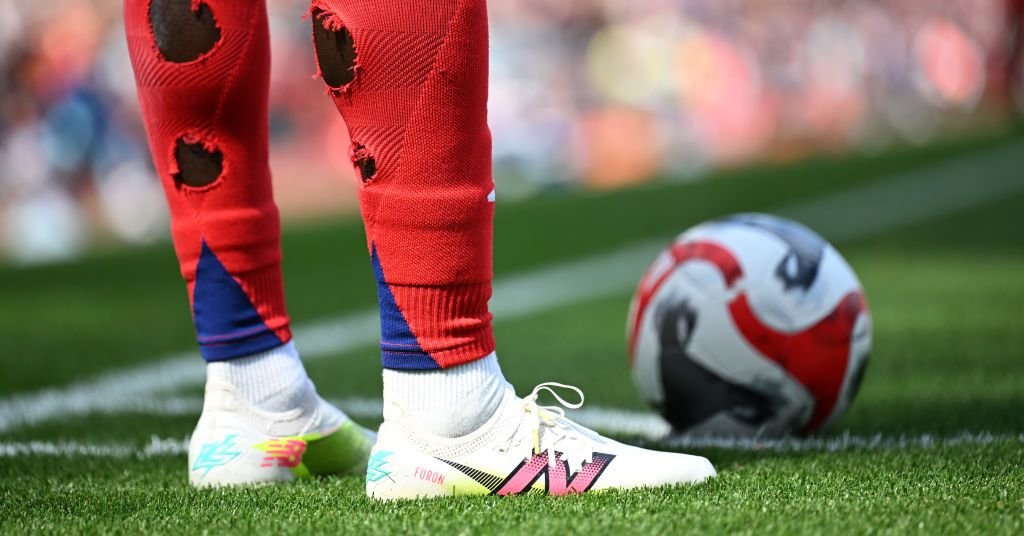

The global spectacle of the World Cup often brings with it not just breathtaking goals and dramatic upsets, but also intriguing trends that capture the attention of fans and analysts alike. Among the most curious sights at recent tournaments, including the upcoming 2026 World Cup, is the recurring image of elite soccer players taking to the pitch with strategically cut holes in the calves of their socks. This seemingly simple modification has sparked a flurry of online theories, but what truly lies behind this widespread practice?
A Decade-Old Phenomenon: More Than Just a World Cup Whim
While social media might suggest this is a fresh competitive edge, the practice of altering socks is far from new. It has been a quiet fixture in major international competitions like the European Championships and the Olympic Games for over a decade. Yet, despite its prevalence, scientific research has largely remained silent on whether these modifications genuinely enhance performance.
The Design Dilemma: Form-Fitting vs. Freedom
Professional soccer socks are engineered for purpose. They are designed to be form-fitting, serving crucial roles beyond merely holding shin guards in place. These high-tech garments offer support to the ankle, the arch of the foot, and the calf, while also managing moisture and minimizing foot movement within the cleat to boost stability. This design philosophy, rooted in decades of athletic wear evolution, relies heavily on synthetic fibers like polyester, nylon, and spandex, which have become lighter and more durable over time.
However, a significant number of players have voiced complaints about these socks feeling excessively tight, leading to uncomfortable tingling and numbness in the calf area. The discomfort can be so pronounced that, mid-game, some athletes resort to cutting holes in the calf section, believing it “releases tension” and allows for better movement.
The Biomechanical Perspective: Muscle Expansion Under Pressure
The sensation of tightness isn’t merely psychological; it has a tangible biomechanical basis. During the explosive movements inherent in soccer—sprinting, sudden stops, and rapid changes in direction—the calf’s largest muscle, the gastrocnemius, contracts and visibly increases in thickness. This dynamic change in muscle shape occurs thousands of times throughout a single match. For some athletes, this repeated expansion, coupled with the constant compression from a tightly woven sock, creates a distinct feeling of pressure and restriction.
Intuition vs. Evidence: The Scientific Void
Among players, the act of cutting socks has evolved into an almost instinctive ritual. The intuitive explanation is that slitting the fabric allows the muscle to “breathe,” thereby alleviating pressure and potentially warding off pain or cramps. Yet, sports medicine specialists and recovery experts caution that this belief lacks scientific backing. Extensive research into compression garments, when properly designed and fitted, actually suggests they can be beneficial, helping to mitigate muscle inflammation post-exertion rather than causing issues that require cutting.
Despite the absence of physiological evidence supporting performance benefits, the trend persists and spreads across the professional soccer landscape. Currently, it remains largely an anecdotal phenomenon, driven by individual player experience rather than empirical data. Importantly, the rules of the game do not prohibit such sock modifications, provided the equipment remains safe and shin guards are adequately covered (unlike a torn jersey, which is not permitted).
The Power of Perception: Comfort and Confidence
Given the scientific void, many specialists propose that the phenomenon’s enduring popularity might be rooted in the psychological realm—specifically, the player’s perception of comfort. In the high-stakes world of elite sports, an athlete’s feeling of comfort can profoundly impact their confidence. If a soccer player genuinely believes their attire is restrictive, then eliminating that perceived discomfort, even through a simple act like cutting a sock, can foster a sense of freedom to run, accelerate, or change direction. This feeling of liberation can be powerful, even if objective performance metrics remain unchanged.
While there’s no definitive proof that cutting socks offers a competitive advantage or reduces injury risk, it’s crucial to acknowledge that the sensation of discomfort is real. The perception of pressure, restriction, or comfort is a complex interplay of individual anatomy, personal sensitivity, and past experiences. What feels restrictive to one player might be perfectly fine for another wearing identical equipment.
For now, it appears the cut-sock trend is here to stay. The available evidence strongly suggests its impact is primarily psychological, aligning it with other sports rituals where belief and comfort play a significant role. It’s a testament to the intricate relationship between an athlete’s mind, body, and their chosen gear on the grand stage of global football.
For more details, visit our website.
Source: Link