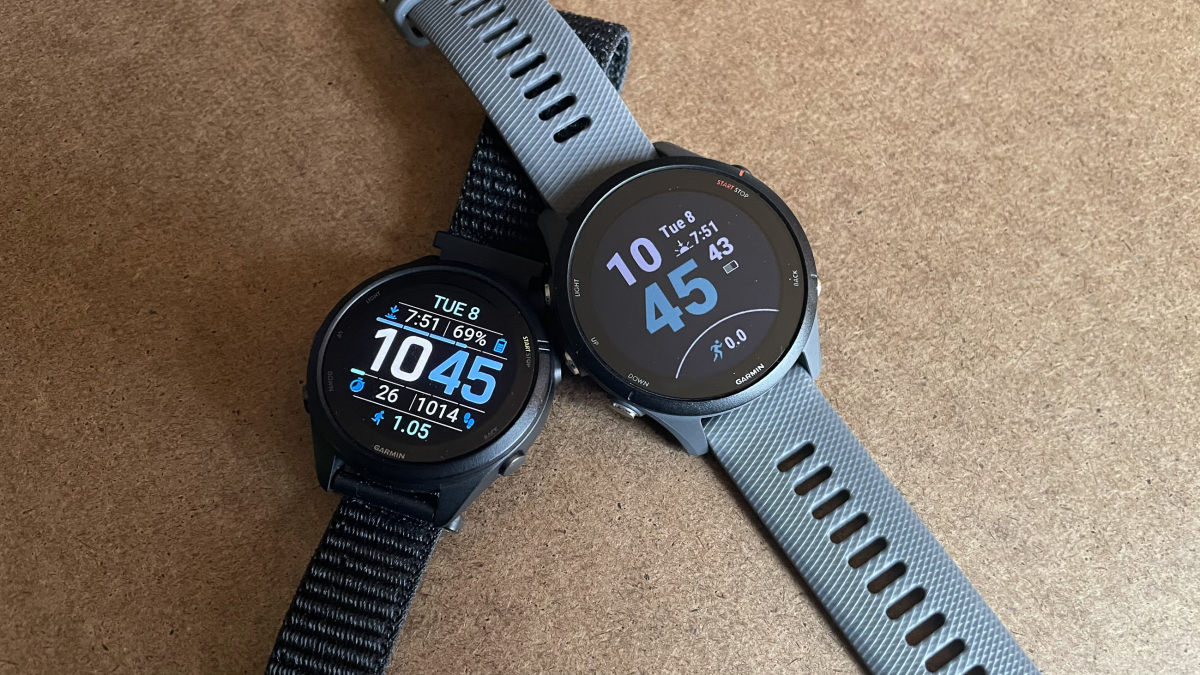

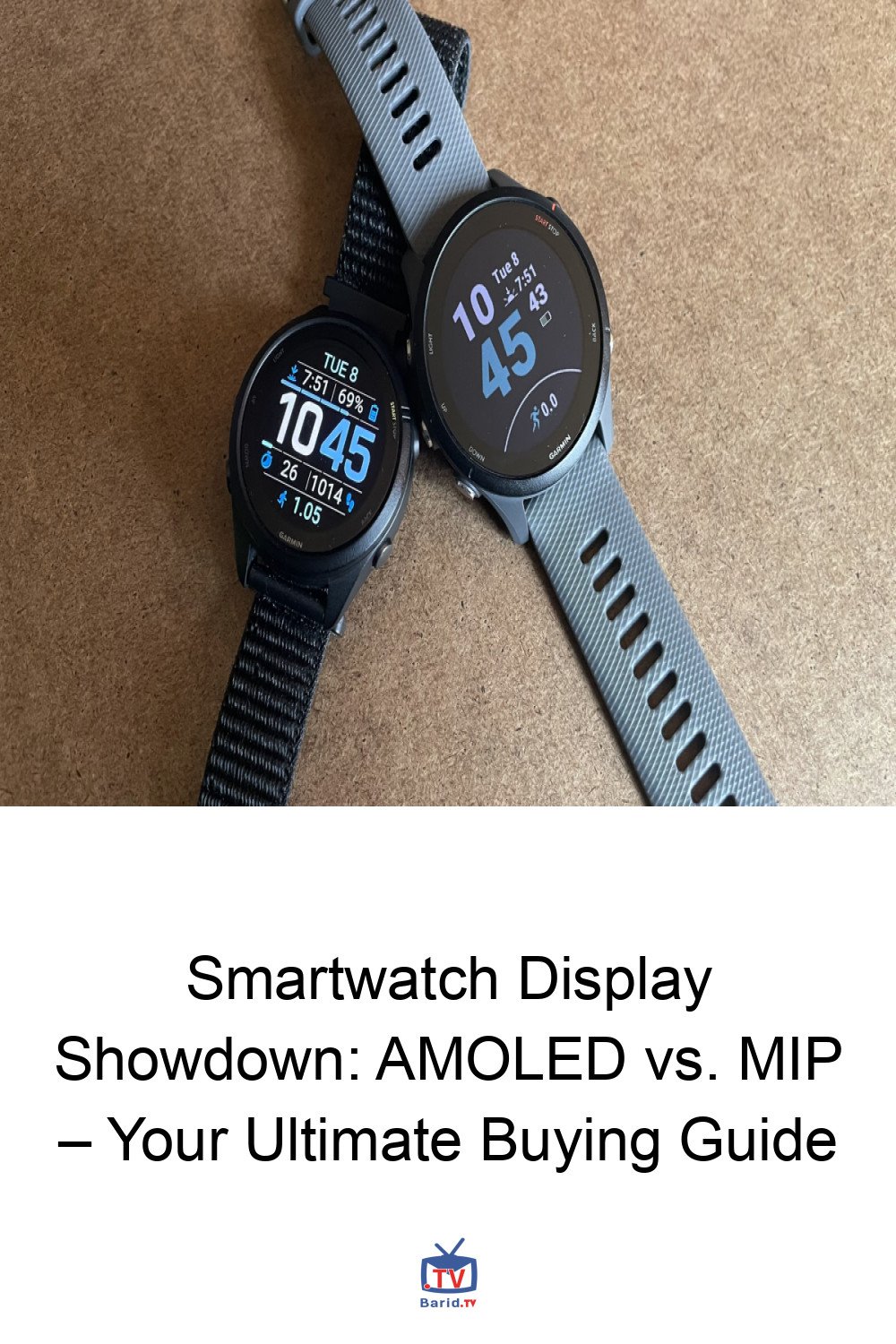
In the bustling market of fitness watches and smartwatches, a crucial decision often flies under the radar for many consumers: the display technology. While sleek, vibrant AMOLED screens now dominate the landscape, a loyal contingent of users still champions the robust, always-on nature of older Memory-in-Pixel (MIP) displays. If you’re navigating the options for your next wrist companion, especially when considering both cutting-edge and tried-and-true models, understanding the nuances between these two technologies is paramount. Let’s delve into the core differences, advantages, and disadvantages to help you make an informed choice.
Understanding the Core Technologies: AMOLED vs. MIP
At a fundamental level, AMOLED and MIP screens operate on distinct principles, leading to vastly different user experiences. Forget the engineering jargon; we’ll focus on what these differences mean for your daily use.
AMOLED: The Modern Powerhouse
Active-Matrix Organic Light-Emitting Diode (AMOLED) displays are likely what you’re accustomed to on your smartphone. They feature tiny pixels that generate their own light. When a pixel is off, it’s truly black, contributing to incredible contrast. These displays are:
- Bright and Vibrant: Offering a full spectrum of rich, saturated colors and deep blacks.
- Sharp and High-Resolution: Delivering crisp text and detailed graphics.
- Excellent in Low Light: Highly visible in the dark thanks to their self-illuminating pixels.
However, this brilliance comes at a cost: AMOLED screens consume power whenever they are active, and in extremely bright, direct sunlight, they can sometimes appear washed out, making readability challenging.
MIP: The Reflective Veteran
Memory-in-Pixel (MIP) displays, often referred to as memory LCDs, do not produce their own light. Instead, they work by reflecting ambient light, much like traditional LCD watches or e-readers. This reflective nature is their superpower, but also their limitation:
- Superior Sunlight Readability: The brighter the ambient light, the clearer the display becomes, making them ideal for outdoor activities.
- Ultra-Low Power Consumption: They require minimal power to maintain an image, especially when the backlight is off, leading to exceptional battery life.
- Always-On Capability: A key advantage, as they can display information continuously without significant battery drain.
On the flip side, MIP screens offer a more limited color palette, are less vibrant, and generally have lower resolution compared to their AMOLED counterparts. They also require a backlight to be visible in dark conditions.
Key Differences in User Experience
Beyond the technical specifications, how do these differences translate into real-world use?
Resolution, Brightness, and Aesthetics
- AMOLED: Expect a premium, modern aesthetic with vibrant colors, deep blacks, and smooth animations. They excel at displaying detailed maps, complex watch faces, and notifications with clarity.
- MIP: Often described as more “old-fashioned” or “rugged,” MIP displays prioritize function over flashy visuals. While less vibrant, their clarity in direct sunlight is unmatched, a critical factor for many athletes and outdoor enthusiasts.
Battery Life
This is arguably the most significant differentiator. MIP displays, especially when the backlight is off, can remain “always-on” for weeks, sometimes even months, on a single charge, particularly with solar-charging variants. AMOLED screens, while offering an “always-on display” (AOD) mode, will drain battery significantly faster in this setting, typically requiring charging every few days.
Touchscreen Functionality
While AMOLED displays are almost universally touch-enabled, MIP displays can also incorporate touchscreens. The Coros Pace 3, for instance, features a MIP display with touch capabilities, whereas the Garmin Forerunner 55 does not. It’s worth noting that many sports watches allow you to disable the touchscreen if you prefer button-only navigation.
Which Watches Feature Which Display?
The market is currently in a transitional phase, with most new, premium smartwatches adopting AMOLED. However, MIP displays remain prevalent, particularly in models geared towards extreme endurance or specific outdoor activities.
Watches with AMOLED (or Similar) Displays:
- Apple Watches (All Series)
- Samsung Galaxy Watches
- Google Pixel Watches
- Fitbit Charge 5 & 6
- Coros Pace Pro & Pace 4
- Garmin Forerunner series (e.g., 165, 265, 965, 70, 170, 570, 970)
- Garmin Instinct 3 AMOLED
- Garmin Vivoactive 5 & 6
- Garmin Venu series (2, 3, 4)
- Garmin Fenix 8 AMOLED
- Polar Vantage, Ignite 3, Grit X2 Pro
- Suunto Race, Suunto Run
Watches with MIP (or Similar) Displays:
- Coros Pace 3, Apex 2, Apex 2 Pro, Vertix 2
- Garmin Forerunner series (e.g., 55, 255, 955, and other non-65/70 models)
- Garmin Instinct, Instinct 2, Instinct E, and Instinct 3 Solar (often 2-color LCD)
- Garmin Vivoactive 4 and earlier
- Garmin Fenix 7 and earlier
- Garmin Fenix 8 Solar (and most other solar-charging watches)
- Polar Pacer, Pacer Pro, Grit X, Grit X Pro
- Suunto Core, 9 Baro, 9 Peak
It’s important to note that while many MIP models are older, they often offer comparable functionality to their AMOLED counterparts. A prime example is the Garmin Forerunner 255 (MIP) and 265 (AMOLED), which share many features but differ significantly in display and price. Furthermore, MIP screens are almost exclusively used in solar-charging watches, as the reflective nature of MIP is compatible with integrated solar panels, a feature not yet viable with AMOLED technology.
The Always-On Advantage of MIP
One of the most compelling arguments for MIP screens is their inherent “always-on” capability without the significant battery penalty seen in AMOLED AOD modes. Like e-ink, a MIP display constantly shows information. In daylight, you can glance at your watch and immediately see your stats without needing to raise your wrist or press a button to activate a backlight. This seamless, instant access to data is invaluable for athletes and those who prefer a traditional watch experience.
Making Your Choice
Ultimately, the “better” display depends entirely on your priorities:
- Choose AMOLED if: You prioritize vibrant colors, high resolution, sharp graphics, excellent low-light visibility, and a modern, premium aesthetic, and you don’t mind more frequent charging.
- Choose MIP if: You prioritize extreme battery life, superior readability in direct sunlight, an always-on display without battery compromise, and a rugged, functional design, even if it means sacrificing some visual vibrancy.
Consider your primary use case – are you an avid outdoor adventurer, or do you mostly use your watch indoors and appreciate a vibrant display for notifications and smart features? Both technologies offer compelling benefits, ensuring there’s a perfect watch display for every wrist.
For more details, visit our website.
Source: Link