
Nuclear’s New Spark: Startups Achieve Critical Milestone, But Commercial Grid Remains Distant
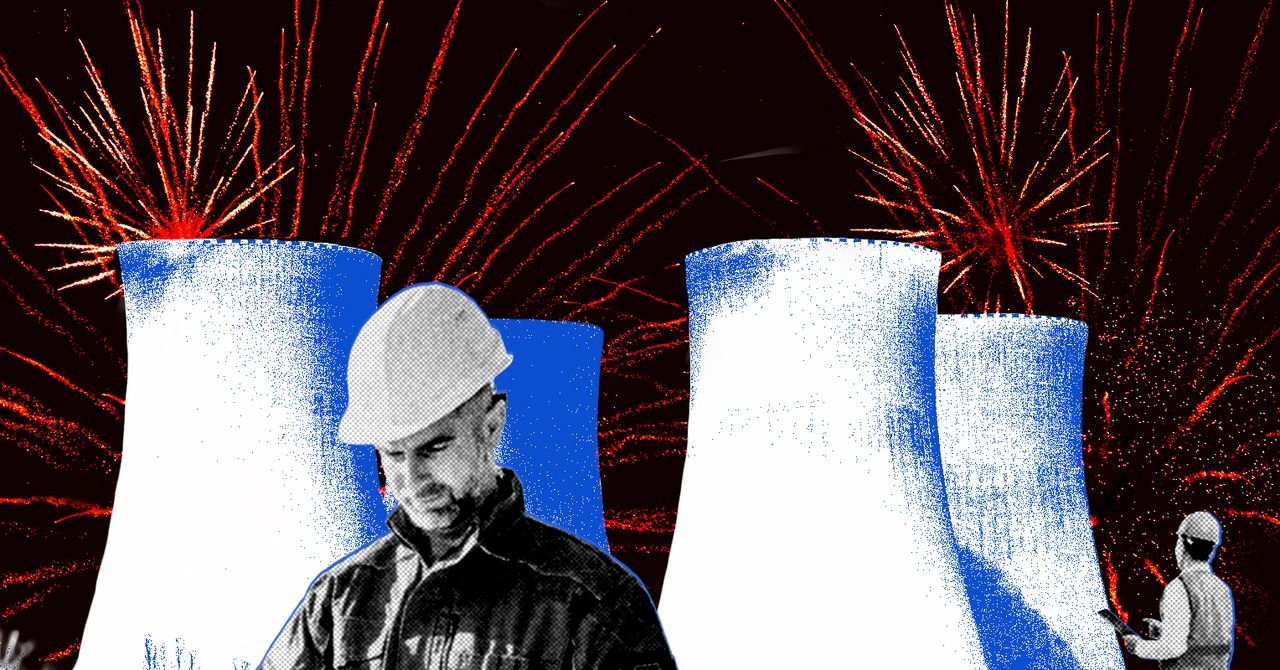
As the nation celebrated its independence, a different kind of fireworks lit up the energy sector. Three pioneering nuclear startups have achieved a significant milestone, turning on new reactors as part of a Department of Energy (DoE) pilot program. This initiative, championed by Energy Secretary Chris Wright, aims to ignite “America’s nuclear renaissance” – a bold push to develop and deploy the next generation of atomic energy.
Other companies within the program are poised to follow suit, nearing “criticality”—the crucial point where a nuclear reactor sustains a chain reaction, a fundamental step toward generating power. This accelerated timeline aligns with an executive order issued by President Donald Trump last year, setting an ambitious July 4th deadline.
However, while the achievement is a public relations boon for the industry, experts caution that the journey to widespread commercial deployment of these innovative reactor designs is still long. “These prototypes mean everything and nothing,” states Adam Stein, director of the Nuclear Energy Innovation program at the Breakthrough Institute. “They do a lot for the companies reaching criticality, but even for those companies, they’re not commercial products. They’re test reactors.”
A Shift from Traditional Nuclear
For decades, the American nuclear landscape has been dominated by massive, light-water reactors. The vision of smaller, more innovative designs has largely remained elusive, stymied by a labyrinthine regulatory environment and the prohibitive upfront costs for smaller entities. Stein notes, “The industry has long been viewed as stuck—a nuclear reactor was always 10 years away.”
The pilot program, he argues, is a powerful counter-narrative. “It shows that’s not true, if you intentionally move faster. It changes the narrative, and it changes the perception. That means a lot for the investment community.” Indeed, Silicon Valley investors and tech leaders are increasingly eyeing smaller nuclear reactors as a solution for 24/7 carbon-free energy, particularly for power-hungry data centers.
Accelerating the Renaissance: Policy and Partnership
Regulatory Streamlining Fuels Progress
The Trump administration has actively responded to calls from the tech sector to streamline regulations and expedite the development of advanced nuclear designs. The executive order, issued in May 2025, set an aggressive target for at least three reactors to achieve criticality by the country’s 250th anniversary on July 4th. This was followed by the Department of Energy’s quiet move in February to slash environmental and safety regulations for reactors under its purview, including those in the pilot program.
Similar regulatory adjustments are reportedly underway at the Nuclear Regulatory Commission (NRC), which oversees commercially sold reactors. Stein emphasizes that shortening processes for requirements like environmental impact statements, which can typically take years, has created “significant time savings” for participating companies.
National Labs: The Unsung Heroes
Beyond regulatory relief, the pilot program’s success is also attributed to robust support from federally funded national laboratories. Valar Atomics, for instance, achieved criticality late last year at Los Alamos National Laboratory, utilizing its own fuel core alongside key structural components provided by the lab. The company replicated this success with a second reactor at a state-funded lab in Utah this month. Similarly, Antares Nuclear and Deployable Energy, the other startups meeting the July 4th deadline, also reached criticality at national labs.
Matt Loszak, cofounder and CEO of Aalo Atomics (another pilot program participant nearing criticality), credits the government’s prioritization of new reactor development for his company’s rapid progress. “Before, you’d try to get a signature, and maybe it would sit on someone’s desk for five weeks,” he recounts. “Now, it’s like, done the next day, because it’s a priority for the nation.”
The Road Ahead: From Lab to Grid
Beyond Criticality: Powering the Future
While achieving criticality is a monumental technical feat, it doesn’t automatically translate to electricity generation. Aalo’s reactor, for example, currently lacks the sodium component essential for its final commercial design. However, Valar’s reactor recently made headlines by powering an Nvidia chip during a brief demonstration, marking it as the first advanced reactor in the U.S. to provide electricity.
It’s crucial to distinguish between achieving criticality in a controlled lab setting—a feat accomplished by numerous college campuses nationwide—and readiness for grid connection or deployment to power a data center. The latter requires far more rigorous testing and validation.
Navigating Commercialization
Commercial products will still face the extensive licensing process with the Nuclear Regulatory Commission, a journey that has historically spanned years. While regulatory cuts from the Trump administration could significantly shorten this timeline, the full path to widespread commercial viability and integration into the national energy infrastructure remains a complex and challenging endeavor. The promise of a nuclear renaissance is tangible, but the hard work of turning prototypes into reliable, grid-scale power sources has only just begun.
For more details, visit our website.
Source: Link