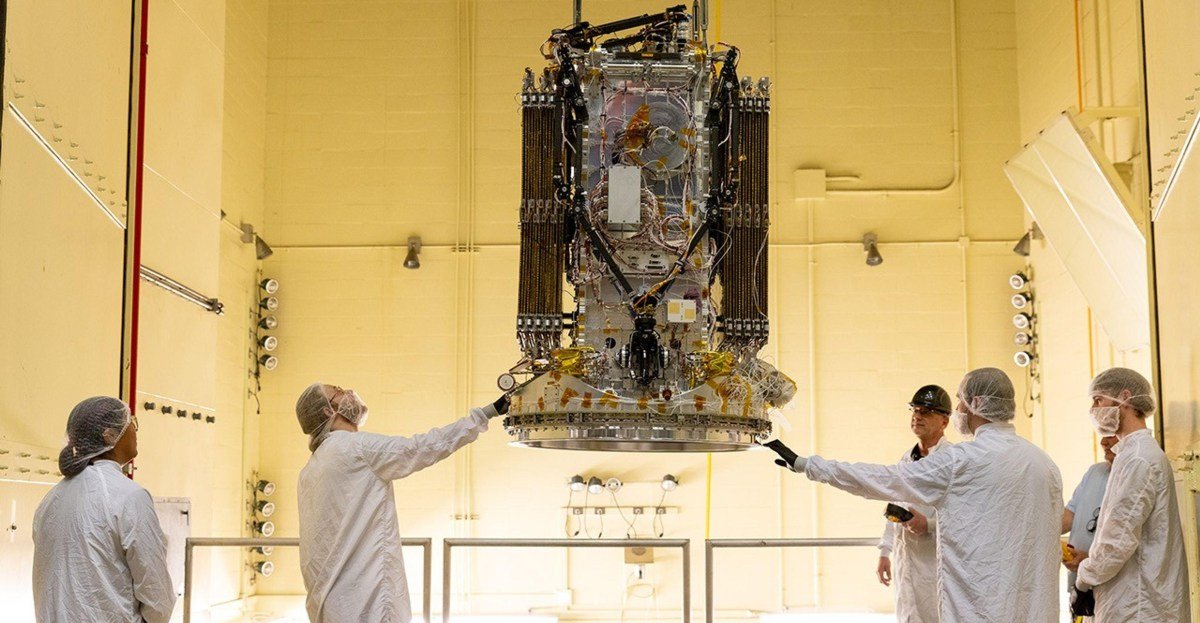

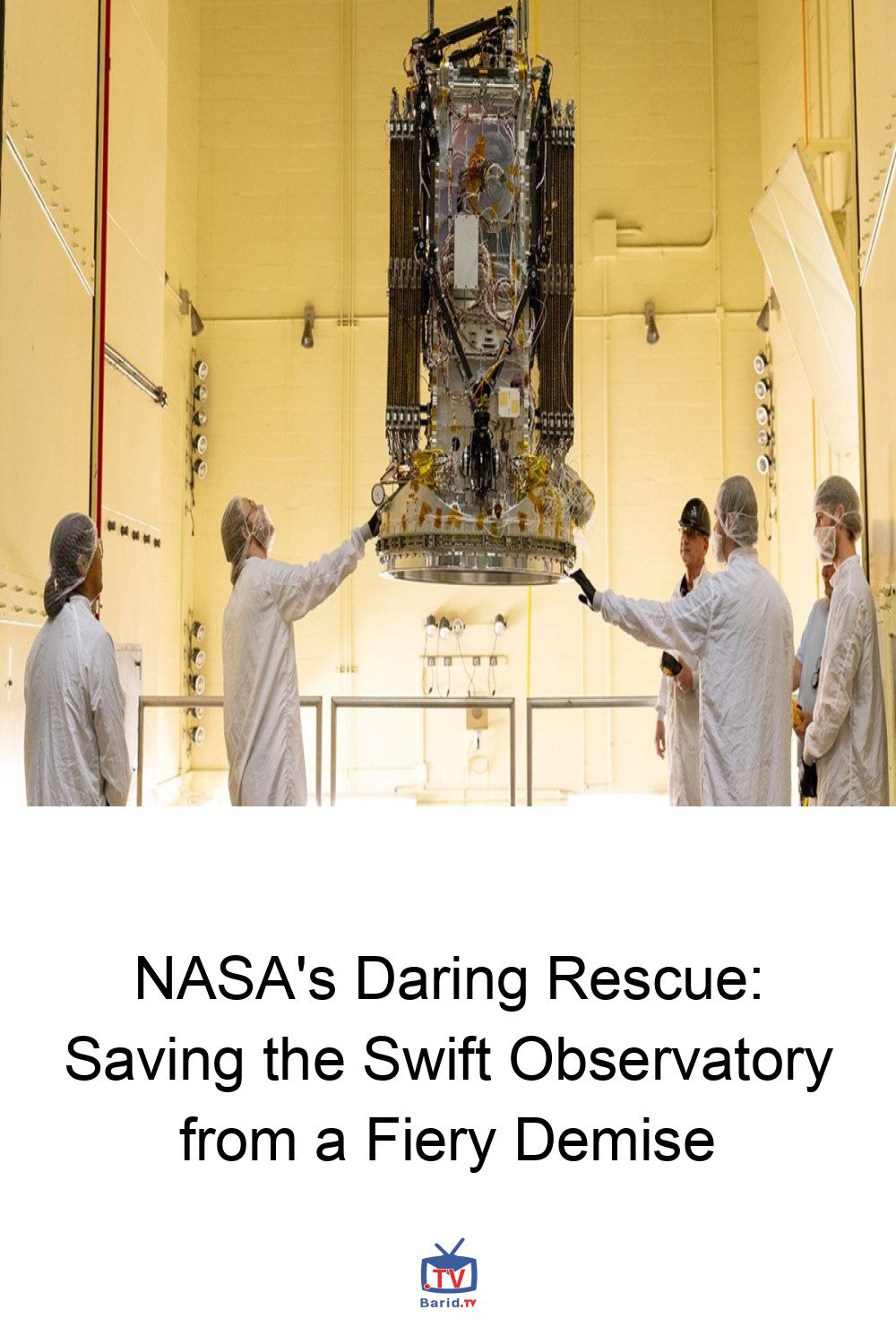
In a dramatic race against time, NASA has initiated an emergency mission to prevent the invaluable Neil Gehrels Swift Observatory from plummeting back to Earth. Launched in 2004, the half-billion-dollar space telescope, a cornerstone of gamma-ray burst research, found its orbit dangerously degraded by recent solar storms, threatening a fiery re-entry into Earth’s atmosphere as early as this year.
A High-Stakes Orbital Rescue Mission
The urgency of the situation prompted NASA to enlist the rapid innovation of Katalyst Space Technologies. In an extraordinary feat of engineering and project management, Katalyst developed and launched its “Link” spacecraft in a mere nine months. This expedited timeline was critical, as experts warned that Swift would be beyond saving by October.
The Link spacecraft, which successfully launched on a Friday, is now on an intercept course with the Swift Observatory. Swift, lacking its own propulsion system, is currently circling Earth at an altitude of 224 miles. Link’s audacious goal is to rendezvous with Swift and gently boost its orbit by approximately 150 miles, returning it to a safe operational altitude.
The Mechanics of a Cosmic Lifeline
The mission’s complexity is underscored by its rapid development. For a cost of $30 million, Katalyst designed a three-armed spacecraft specifically engineered to grapple and reposition a satellite of Swift’s magnitude. This intricate maneuver, performed at orbital velocities, requires unparalleled precision and represents a significant leap in space salvage capabilities.
The Enduring Legacy of the Swift Observatory
The Neil Gehrels Swift Observatory is far more than just another satellite; it’s a vital eye on the cosmos. Its primary mission involves the detection and study of gamma-ray bursts (GRBs), the most powerful explosions in the universe. Data from Swift has been instrumental in unraveling the mysteries of the early universe, providing crucial insights into star formation, black holes, and the evolution of galaxies.
Saving Swift means preserving a critical asset for astronomical discovery, ensuring its continued contribution to humanity’s understanding of the cosmos for years to come. This emergency mission not only highlights the ingenuity of space engineers but also underscores the profound value placed on our scientific instruments orbiting above.
For more details, visit our website.
Source: Link